

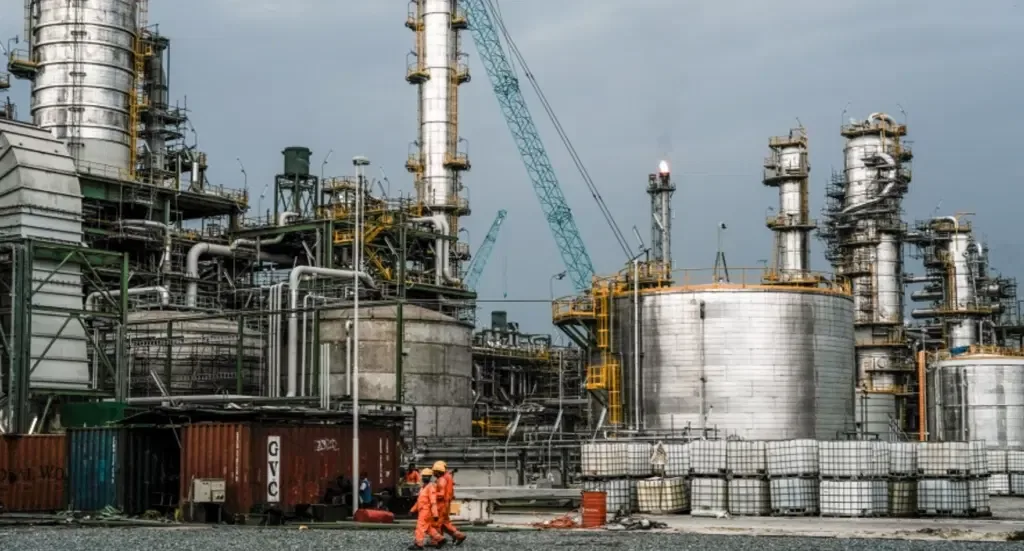
The Dangote Refinery has insisted that domestic crude oil must be available and commercially viable for it to operate sustainably. According to the refinery, the central issue is not the volume of crude offered under the Domestic Crude Supply Obligation (DCSO) framework, but the quantity that is genuinely available for purchase at competitive market prices.
The Group Vice President, Oil & Gas and Fertiliser, Dangote Industries Limited, Devakumar Edwin, explained that the refinery has consistently raised concerns about inadequate availability of domestic crude. In a recent statement, Edwin noted that the refinery has faced challenges in securing crude supplies directly from domestic producers, resulting in a substantial portion of the allocated crude being sourced through International Oil Companies (IOCs) and third parties.
Devakumar Edwin, Group Vice President, Oil & Gas and Fertiliser, Dangote Industries Limited, has emphasized the importance of domestic crude oil in sustaining the refinery's operations. According to him, the refinery is ready and willing to purchase Nigerian crude oil, provided it is available in sufficient volumes and at competitive market prices.
The Dangote Refinery has encountered situations where crude is offered at prices that are significantly above prevailing market benchmarks. This, according to Edwin, makes domestically sourced crude less competitive than alternative supplies available on the international market. He added that additional layers of intermediaries introduce premiums, increasing the cost of crude acquisition and affecting the overall economics of domestic refining.
Edwin noted that the higher crude costs translate into higher costs of refined petroleum products for the local market. He emphasized that the refinery's objective is to maintain the economics of domestic refining and enable the delivery of petroleum products to Nigerians at affordable and competitive prices.
The Domestic Crude Supply Obligation (DCSO) framework aims to ensure that Nigerian refineries source at least 70% of their crude oil requirements from domestic producers. However, the Dangote Refinery has faced challenges in meeting this requirement, leading to calls for the review of the framework.
Key Facts
- 15.5 million barrels of crude oil were rejected by the Dangote Refinery in the second quarter of 2026.
- The refinery has consistently raised concerns about inadequate availability of domestic crude.
- Devakumar Edwin has emphasized the importance of domestic crude oil in sustaining the refinery's operations.
- The Dangote Refinery has encountered situations where crude is offered at prices that are significantly above prevailing market benchmarks.
- The refinery has sourced a substantial portion of its crude from International Oil Companies (IOCs) and third parties.