

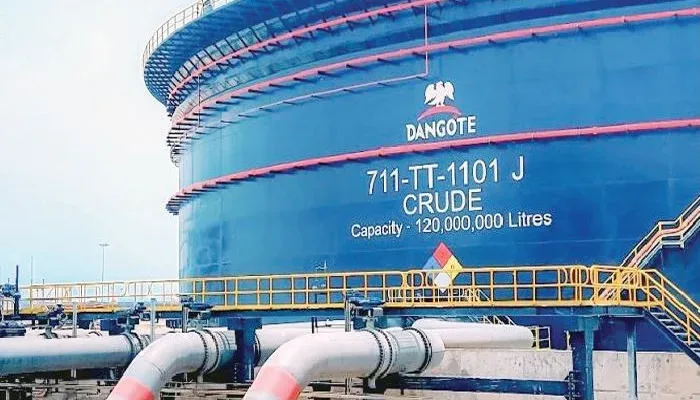
Dangote Petroleum Refinery and Petrochemicals has accused International Oil Companies operating in Nigeria of selling Nigerian crude through third parties, making local crude less competitive. The refinery has faced significant challenges in securing crude directly from domestic producers.
According to a statement by Devakumar Edwin, Group Vice President, Oil & Gas and Fertiliser, Dangote Industries Limited, the refinery remains committed to sourcing Nigerian crude and supporting the Domestic Crude Supply Obligation framework. However, he noted that adequate volumes must be available at commercially viable prices.
The refinery has faced significant challenges in securing crude directly from domestic producers since the commencement of the DCSO framework. As a result, a substantial portion of the crude allocated under the arrangement has had to be sourced through International Oil Companies and third parties rather than directly from Nigerian upstream producers.
Edwin stated that using IOCs and third parties often results in additional premiums and transaction costs, making Nigerian crude more expensive than alternative supplies available on the international market. This process introduces additional premiums and transaction costs that can drive crude prices above internationally recognised benchmarks published by agencies such as Platts and Argus.
In many cases, this has made domestically sourced crude less competitive than alternative supplies available on the international market. Edwin's position is straightforward: the refinery is ready and willing to purchase Nigerian crude oil, provided it is available in sufficient volumes and at competitive market prices.
The additional costs arising from intermediaries ultimately affect the price of refined petroleum products in the domestic market. Higher crude costs translate into higher costs of refined petroleum products for the local market, ultimately affecting consumers.
The clarification comes as fresh data from the Nigerian Upstream Petroleum Regulatory Commission shows that domestic crude supplies to local refineries rose sharply in the second quarter, with 53.7 million barrels supplied during the period.
Context: The Domestic Crude Supply Obligation framework, implemented to ensure that local refineries receive a significant portion of domestically produced crude, has been marred by challenges in securing adequate volumes directly from domestic producers.
Key Facts:
- 15.5 million barrels of crude were rejected by the refinery in the second quarter of 2026
- 53.7 million barrels of domestic crude were supplied to local refineries in the second quarter of 2026
- Dangote refinery has faced significant challenges in securing crude directly from domestic producers since the commencement of the DCSO framework
- Additional premiums and transaction costs from using IOCs and third parties have made Nigerian crude more expensive than alternative supplies on the international market
- The refinery remains committed to sourcing Nigerian crude and supporting the DCSO framework