

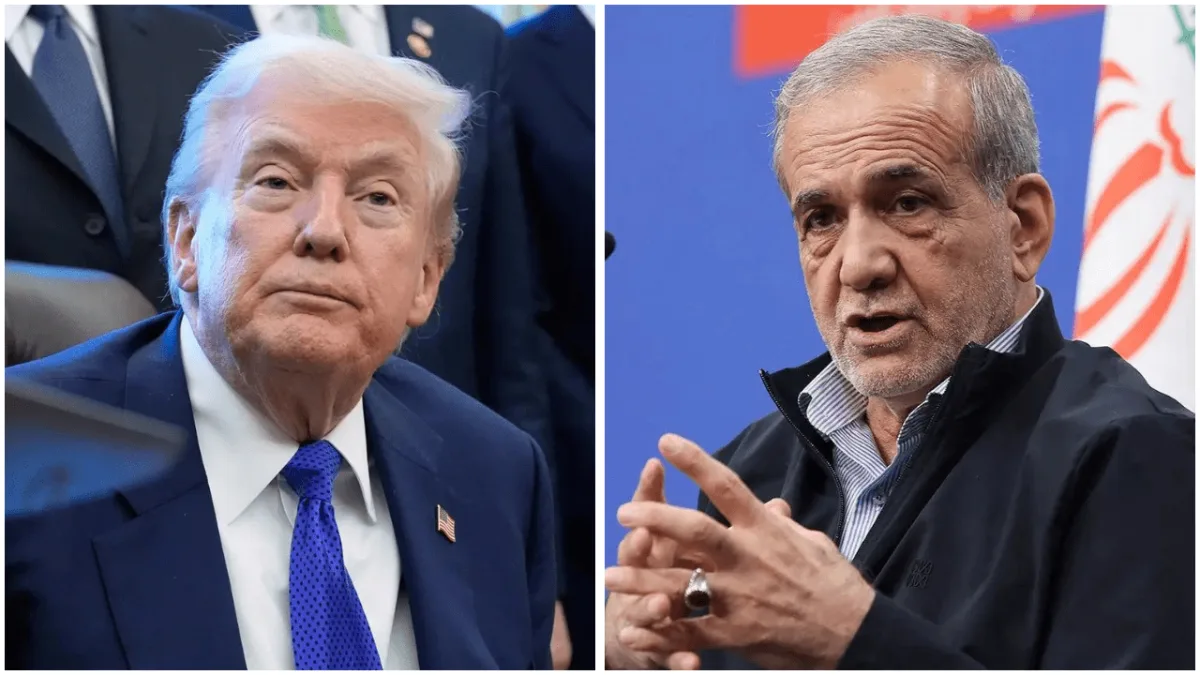
The United States has proposed a massive $300 billion reconstruction and economic development package for Iran as part of a sweeping peace framework designed to end the four-month war, reopen the Strait of Hormuz, and pave the way for a comprehensive agreement on Tehran’s nuclear programme.
The commitment was contained in the officially released text of the Islamabad Memorandum of Understanding between the United States and Iran. This makes it one of the largest economic components of any US-Iran agreement to date, according to Reuters.
Under the 14-point memorandum, first published by CNN, the United States and its regional partners would develop a “definitive, mutually agreed plan” worth at least $300 billion for the reconstruction and economic development of Iran.
The mechanism for implementing the package is expected to be negotiated over a 60-day period, culminating in a final agreement.
The US/Israel-Iran war lasted roughly four months, during which both sides and their regional allies suffered heavy losses in lives, infrastructure, and economic stability. The United States and its partners faced significant military expenditures, personnel casualties, and disruptions to global energy and shipping routes. Iran and its allies endured thousands of deaths, displacement of millions of people, severe infrastructure damage, loss of trade revenues—especially from oil—and widespread economic strain from sanctions and blockades.
Against this backdrop of mutual losses and regional destabilisation, the proposed $300 billion reconstruction package is presented as a recovery mechanism to rebuild Iran’s damaged economy and stabilise the wider region after the conflict. However, the memorandum leaves unanswered questions about how the proposed $300 billion package would be financed, implemented and maintained—issues negotiators are expected to address during the 60-day talks.
The proposal emerged as the United States published the full text of the memorandum on Wednesday, after criticism that details of the agreement hadn't been made public.
A senior US administration official described the framework as a phased arrangement linking Iranian compliance on security and nuclear issues to increasing economic relief.
“This is fundamentally an agreement that allows us to open the Strait of Hormuz immediately, commit the Iranians to destroying the nuclear stockpile, and then gives us a dial where if the Iranians dial up their good behaviour, we respond by dialling up the kind of economic and sanctions relief that can make them a more prosperous country,” the official said.
The memorandum is expected to be formally signed on Friday, triggering negotiations to reach a comprehensive deal within 60 days.
While the agreement contains provisions covering military de-escalation, maritime security and nuclear oversight, the proposed reconstruction package stands out as its most significant economic component.
According to the text, Washington would work with regional partners to mobilise at least $300 billion for Iran’s development. It would also grant the licenses, waivers and permissions required to facilitate related financial transactions.
The proposal comes alongside broader commitments by the United States to ease economic pressure on Iran.
The memorandum states that Washington intends to negotiate the termination of all sanctions imposed on Iran, including unilateral US sanctions and other international restrictions, according to a mutually agreed schedule.
In the interim, the US Treasury Department would issue waivers allowing the export of Iranian crude oil, petroleum products and derivatives, as well as related banking, insurance and transportation services.
“The United States of America undertakes that immediately upon the signing of this MOU and until the termination of sanctions, US Department of Treasury will issue waivers for the export of Iranian crude oil, petroleum products and derivatives, and all associated services, including banking transactions, insurances, transportation,” the 10th point of the text reads.
The United States also pledged to make Iran’s frozen or restricted assets available, with both sides expected to negotiate the procedures governing their release.
The economic package is closely tied to provisions aimed at restoring commercial shipping through the Strait of Hormuz, a critical artery for global energy supplies.
The memorandum requires the United States to begin lifting its naval blockade immediately after signing and to fully remove it within 30 days.
Iran, in turn, would facilitate the safe passage of commercial vessels through the Persian Gulf and the Sea of Oman free of charge for 60 days, while undertaking demining and other maritime safety measures.
Analysts say the reopening of the strategic waterway could help stabilise global energy markets and restore investor confidence.