

'We will never back down over the Strait of Hormuz,' warns a senior Iranian military spokesman.
The United States has fired dozens of rockets at Iranian military targets, prompting Tehran to issue a stark warning that it will now consider infrastructure across the Middle East as legitimate targets.
Iran had already warned that it would retaliate against US allies in the Gulf if American forces struck its power plants and bridges. Now, with the latest US attacks reported to have killed at least 30 people, Tehran has made good on that threat.
On Friday, Iranian state TV quoted a senior armed forces spokesperson as saying: 'If the Americans strike the infrastructure of the Islamic Republic, then all infrastructure across the region will become legitimate targets for Iran.'
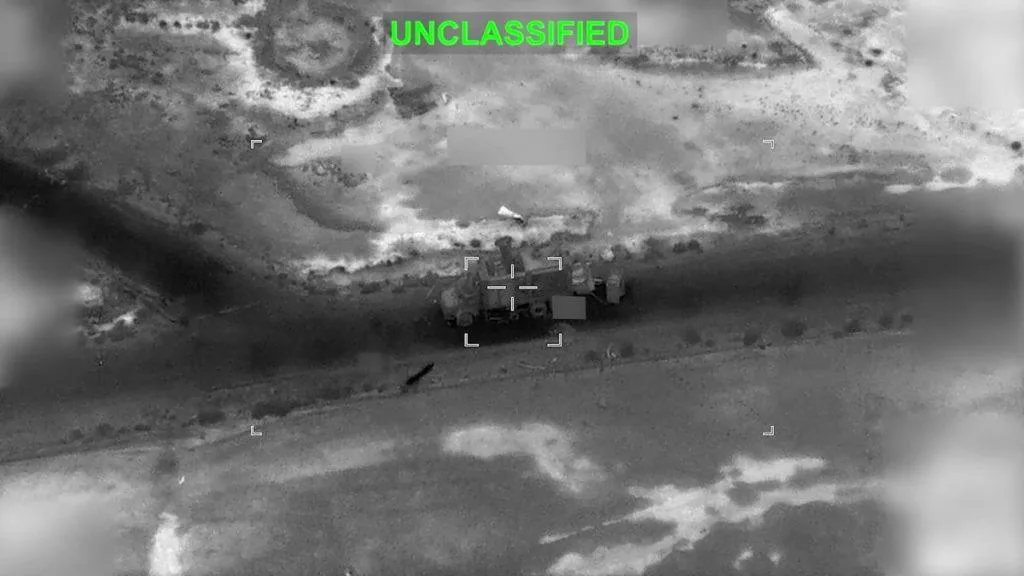
The comments came after a flurry of US airstrikes against Iranian targets, with the US military saying it had hit 'dozens of Iranian military targets' in response to attacks on commercial shipping.
The renewed fighting is a major escalation of the war in the Middle East, which broke out in February with massive US-Israeli strikes against Iran.
In June, a preliminary deal was signed in an effort to bring an end to the conflict, but it appears to have fallen apart.
The deal had aimed to establish a framework for a long-term truce between the US and Iran, but it was never implemented.
Iran has long been at odds with the US over its nuclear program, which Washington claims is a threat to regional security.
The country has been under intense international pressure to dismantle its nuclear facilities, but Tehran has refused to comply.
US President Donald Trump had previously threatened to hit Iranian power plants and bridges unless Tehran returned to the negotiating table.
The White House has said that the president remains 'open to diplomacy,' but that the US will no longer tolerate Iranian aggression.
Iran's top negotiator, Mohammad Bagher Ghalibaf, has warned that a deal 'only has meaning when its clauses are valid and being implemented.'
The US has also reimposed its blockade on Iran's ports, adding to the heightened tensions in the region.
The Gulf nation of Qatar has been one of the hardest hit by the renewed fighting, with several blasts reported in the capital Doha.
The city's airport and railway station were hit, causing widespread disruptions.
The US has also attacked an air base in Bahrain, a key ally in the region.
'I officially declare that if the Americans strike the infrastructure of the Islamic Republic, then all infrastructure across the region will become legitimate targets for Iran,' said the Iranian state TV quoted spokesperson.
The comments came as Iranian state media reported that the country had struck a US air base in Jordan with ballistic missiles.
The attack was in response to a US strike near a children's cancer hospital, which Iran claims was a 'barbaric' act.
Iran's Revolutionary Guards said they had fired the missiles in response to the US strike.
In a statement, the guards warned that they would not stand idly by while the US 'targeted innocent people.'
Hani, a 34-year-old teacher from Ahvaz, said the strikes were 'very intense.'
'There were at least 11, 12 explosions,' he said, his voice shaking with emotion.
'My ears are exploding.'
Pakistan's foreign office has called on all sides to 'end violence and resume technical-level talks' under a memorandum of understanding it helped mediate last month.
The country has been a key player in negotiations between the US and Iran, and has been keen to see a peaceful resolution to the conflict.