

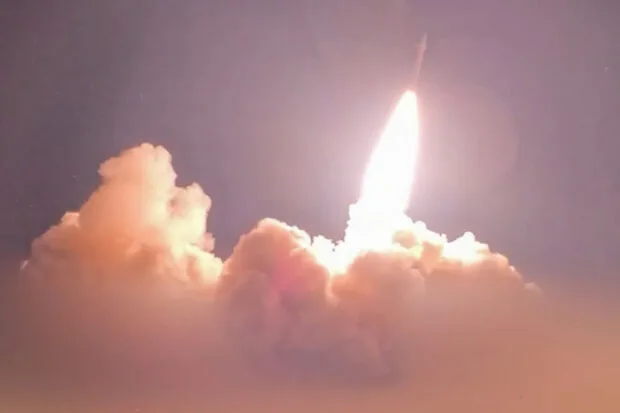
The United States struck Iran and Tehran attacked US allies in the Gulf on Thursday as the foes battled over the vital Strait of Hormuz in the renewed Middle East war. The rekindled fighting came a month after the signing of a preliminary deal that aimed to end the conflict, which broke out in 2018.
The US military launched a series of airstrikes against Iranian targets in retaliation for Iran's downing of a US drone, which was operating over the Strait of Hormuz. Iranian military leaders announced the country's ballistic missile units were on high alert, and the country's air force began patrolling the skies over the Gulf.
The conflict has already caused chaos in the region, with oil prices skyrocketing to their highest level in nearly four months. The US has vowed to protect its allies in the Gulf, including Saudi Arabia and the United Arab Emirates, but the escalation has raised concerns about a broader conflict involving other regional powers.
Iran's Supreme Leader, Ayatollah Ali Khamenei, accused the US of 'trying to provoke a war' and vowed to retaliate, while the US Secretary of State, Antony Blinken, warned that any further aggression by Iran would be met with 'firm and decisive action'.
As tensions escalate, the United Nations has issued a statement calling for calm and the resumption of talks between the two nations. The Organization of the Petroleum Exporting Countries (OPEC) has also warned that a prolonged conflict in the Gulf could have severe implications for global oil supplies.
The Strait of Hormuz is a critical waterway that connects the Persian Gulf to the Gulf of Oman and the Indian Ocean, making it a vital route for oil exports from the Middle East. The recent attacks have disrupted oil flows from major producers such as Saudi Arabia and the UAE.
In the past week, the US has deployed an additional 1,000 troops to the region, bringing the total to over 20,000. The deployment, which was announced by Defence Secretary Lloyd Austin, is part of the US military's efforts to strengthen its presence in the region and deter Iranian aggression.
US officials have expressed concerns that Iran's actions could lead to a broader conflict in the region, potentially drawing in other countries such as Iraq and Syria. Meanwhile, Iran has accused the US of 'meddling' in the region and violating international law.
The situation remains fluid, with both sides warning of further action. As the crisis deepens, the international community is bracing for the worst, with many fearing a wider conflict could have devastating consequences for global security and the economy.
US and Iranian troops have been facing off in the region for months, with both sides accusing each other of aggression. The conflict has already resulted in the deaths of several Iranian soldiers and US military personnel.
The situation is further complicated by the presence of several other regional powers, including Saudi Arabia and the UAE, which have been drawn into the conflict. Both countries have close ties with the US and have expressed support for US efforts to contain Iranian aggression.
In the midst of the crisis, the US and its allies have been trying to strengthen their military presence in the region. The US has recently completed a series of major military exercises in the region, involving personnel and equipment from several countries.
Key Facts
- The United States has deployed over 20,000 troops to the region.
- The US has launched a series of airstrikes against Iranian targets in the Gulf.
- The conflict has already resulted in the deaths of several Iranian soldiers and US military personnel.
- The situation remains fluid, with both sides warning of further action.
- The international community is bracing for the worst, with many fearing a wider conflict could have devastating consequences for global security and the economy.
Additional reporting by: Our correspondent in Tehran, who cannot be named for security reasons.
This is a developing story. Please check back for updates.