

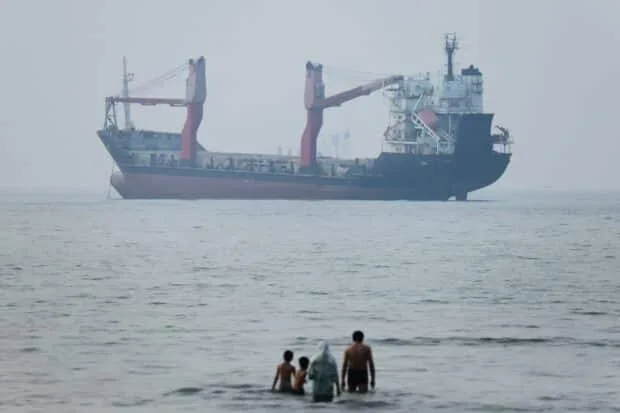
Iran's Revolutionary Guards said Sunday the Strait of Hormuz would be closed 'until further notice' after they fired warning shots at a vessel they said used an unauthorised route, state media reported. The move threatens to complicate further efforts to salvage US-Iran negotiations after both sides exchanged strikes over the past few days and traded threats. News outlets Axios and Politico reported that Washington had given Tehran until Saturday to stop firing on commercial ships transiting Hormuz and formally acknowledge that the waterway is open. The Strait of Hormuz is a critical shipping route for global energy supplies, with Iran's Revolutionary Guards controlling access to one of the world's busiest sea lanes. The US has vowed to continue supporting the security of the Gulf and the Strait of Hormuz.
A key roadblock to a final agreement is the status of the Revolutionary Guards, a hardline military force that answers directly to Supreme Leader Ali Khamenei. Iran's nuclear deal offers a pathway for the US to remove sanctions on the Revolutionary Guards, but it was one of the key sticking points in the talks. The Revolutionary Guards' move to close the Strait of Hormuz is seen as a hardening of Iran's stance against the US. Iran's economy has been heavily impacted by US sanctions, and many Iranians blame the US for their country's economic woes. The shutdown is already causing concern among oil traders and shipping companies in Asia and the Gulf, who are bracing for disruption to vital trade routes.
Iran's oil exports have been significantly reduced since the US re-imposed sanctions on the country in 2020.
Iran's Revolutionary Guards are a powerful force within the Islamic Republic, answering directly to the Supreme Leader. Ali Khamenei appointed Esmail Ghaani as the head of the Revolutionary Guards in 2019. Ghaani previously served as the head of the Quds Force, the Revolutionary Guards' external operations branch, and has been accused of leading numerous operations against Iranian dissidents and opposition groups. The US has designated the Revolutionary Guards a terrorist organisation, and the EU has blacklisted the group for its role in human rights abuses. The shutdown of the Strait of Hormuz is a major escalation in tensions between the US and Iran, with both sides trading blows over the past few days.
So far, there have been no reports of major casualties or damage, but the situation remains extremely volatile. The US has deployed naval ships, including the USS Abraham Lincoln, to the Gulf in recent weeks. Iran has also mobilised its military forces, with reports suggesting that Iranian fighters jets are on high alert. With the situation in the Gulf extremely volatile, many are bracing for further military action in the coming days. The shutdown of the Strait of Hormuz is a major development that could have far-reaching consequences for global energy supplies and the stability of the Middle East.