

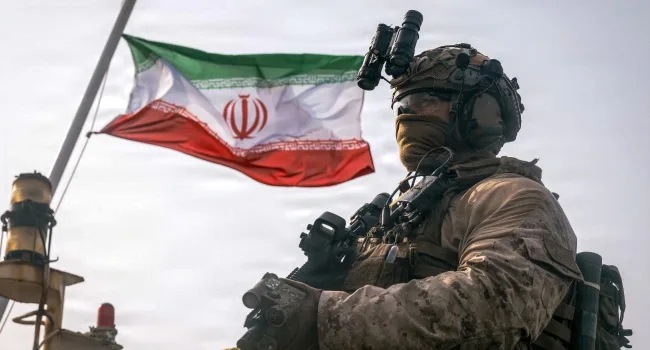
The single sharpest fact: The US has widened its strikes on Iran, targeting provinces beyond the Strait of Hormuz, as the war resumes.
The US expanded the scope of its strikes on Iran on Monday, targeting provinces around the country, including a city hosting a nuclear power plant, as the Islamic Republic kept up its attacks in the region.
The war resumed after a weeks-long lull prompted by an agreement signed in June, and oil prices surged to a one-month high as the foes battled to control the vital Strait of Hormuz.
As its truce with the US collapsed, Tehran reimposed its blockade of the waterway through which a fifth of world oil supplies transited prior to the war, while Washington hit back by again blockading Iran’s ports.
US Secretary of State Marco Rubio called on countries around the world to share the burden of protecting global shipping. He said, “It’s clear that Iran, at least some people in Iran, want to control the straits and hold that as leverage against the world.”
The US had focused its strikes since the return to war mainly on areas near Hormuz, on Monday, attacks hit provinces elsewhere in the country, including in the centre and the north, according to state media and local authorities.
All of the provinces hit host military bases and air defence systems. In Bushehr, home to the country’s only operational civilian nuclear power plant, governor Mohammad Mozaffari told state news agency IRNA: “A few minutes ago, several locations in Bushehr city were hit by the American enemy’s projectiles.”
In East Azerbaijan province in the north, the head of the local crisis management unit, Majid Farshi, told IRNA that “one person was martyred and several others injured” in an attack there.
Iran’s Revolutionary Guards announced on Monday that they had hit targets in Syria, Jordan and Kuwait overnight. In Syria, Iranian forces launched “a surprise attack on the enemy special operations command centre in the Al-Tanf region”, according to a Guards statement carried by state media.
The US said it withdrew its troops from Tanf in February. In Jordan, the Guards said it targeted US military aircraft stationed at Aqaba Airport “with ballistic missiles, causing severe damage to a number of them.”
The Guards also said they hit US military targets based in Kuwait, including an early-warning radar system that was “completely destroyed.”
The Strait of Hormuz is a crucial waterway for global oil trade. Ship On Fire. In the Hormuz Strait, meanwhile, sailors abandoned a vessel set on fire in an attack, according to the UK Maritime Trade Operations agency.
“The vessel was struck by an unknown projectile. The crew safely abandoned the vessel and have been recovered by a tug boat. The fire has not been extinguished, and the vessel is currently adrift,” UKMTO said.
Iran’s Revolutionary Guards had earlier said that two oil tankers trying to transit the strait “exploded and were brought to a halt”, according to a statement reported by Tasnim news agency.
US Central Command (CENTCOM) said on Sunday that it successfully completed the ninth consecutive night of strikes against Iran, while Rubio said he would “continue to try” to reach a diplomatic solution.
The fresh fighting came after a weekend in which the US announced three new US military fatalities and one service member missing in action. Two were killed during Iranian missile and drone attacks on Jordan on Friday, while another service member died in northern Iraq during the controlled detonation of unexploded ordnance from a downed Iranian drone, CENTCOM said.
In another attack, Iranian forces launched “a surprise attack on the enemy special operations command centre in the Al-Tanf region”, according to a Guards statement carried by state media.
The US said it withdrew its troops from Tanf in February. The fresh fighting marks a significant escalation in the ongoing conflict between the US and Iran.
The Strait of Hormuz is a crucial waterway for global oil trade. Iran’s Revolutionary Guards had earlier said that two oil tankers trying to transit the strait “exploded and were brought to a halt”, according to a statement reported by Tasnim news agency.
Iran’s health ministry reported that 50 people had been killed in recent fighting and more than 500 wounded. The deaths brought to 17 the confirmed number of American military fatalities since the conflict began with a massive US-Israeli strike on the Islamic Republic.
The war resumed after a weeks-long lull prompted by an agreement signed in June, and oil prices surged to a one-month high as the foes battled to control the vital Strait of Hormuz.
The US had focused its strikes since the return to war mainly on areas near Hormuz, on Monday, attacks hit provinces elsewhere in the country, including in the centre and the north, according to state media and local authorities.
And the war shows no signs of slowing down.
In this picture obtained from Iran’s ISNA news agency on June 18, vessels are seen anchored in Bandar Abbas along the Strait of Hormuz.
Iran's Revolutionary Guards announced on Monday that they had hit targets in Syria, Jordan and Kuwait overnight. And these are the latest developments in the conflict between the US and Iran.