

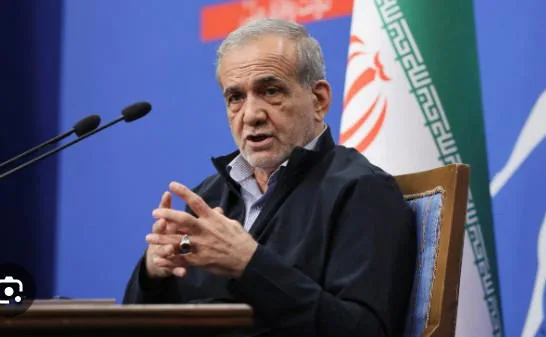
Iranian President Masoud Pezeshkian made a stunning statement yesterday, saying that his country is in a full-scale war with the United States. This came after months of heightened tensions between the two nations. The reality is that today the Islamic Republic of Iran is engaged in a full-scale war, Pezeshkian said, adding that we must be realistic and accept the natural consequences of this resistance.
Pezeshkian's comments were made during a televised address to the nation, where he reiterated Iran's stance on its nuclear program and warned of severe repercussions if the US were to impose further sanctions. The statement has left many wondering what this means for the international community and if diplomatic efforts will be able to bring an end to the conflict.
Iran and the US have been at odds for years, primarily over Iran's nuclear program and Washington's withdrawal from the 2015 Iran nuclear deal. The ongoing tensions have led to increased military presence in the region, with both countries engaging in a series of confrontations.
Iran's economy has been severely affected by the sanctions imposed by the US, and the country has struggled to meet its foreign exchange obligations. The country's currency, the rial, has plummeted in value, causing widespread inflation and economic hardship for its citizens.
The US has been critical of Iran's human rights record and its involvement in regional conflicts. In response, Iran has accused the US of meddling in its internal affairs and trying to undermine its sovereignty.
In the wake of Pezeshkian's statement, many are left wondering what this means for the future of US-Iran relations. Will diplomatic efforts be enough to bring an end to the conflict, or will the situation escalate further?
The reality is that today the Islamic Republic of Iran is engaged in a full-scale war, Pezeshkian said.
Iranian President Masoud Pezeshkian has been in office since 2019, when he replaced Hassan Rouhani. Pezeshkian has been a vocal advocate for Iran's nuclear program and has criticized the US for its withdrawal from the 2015 Iran nuclear deal.
Iran's nuclear program has been a major point of contention between the two nations. The US has accused Iran of secretly developing nuclear weapons, which Iran denies. The two countries have held several rounds of talks, but a deal has yet to be reached.
Iran's economy has been severely affected by the sanctions imposed by the US. The country has struggled to meet its foreign exchange obligations, and its currency, the rial, has plummeted in value. This has led to widespread inflation and economic hardship for its citizens.
The US has been critical of Iran's human rights record and its involvement in regional conflicts. In response, Iran has accused the US of meddling in its internal affairs and trying to undermine its sovereignty.
Iran's nuclear program has been a major point of contention between the two nations. The US has accused Iran of secretly developing nuclear weapons, which Iran denies. The two countries have held several rounds of talks, but a deal has yet to be reached.
Iran's economy has been severely affected by the sanctions imposed by the US. The country has struggled to meet its foreign exchange obligations, and its currency, the rial, has plummeted in value. This has led to widespread inflation and economic hardship for its citizens.
Key Facts
- Iran's economy has been severely affected by US sanctions.
- The country's currency, the rial, has plummeted in value.
- Iran's human rights record has been criticized by the US.
- The two countries have held several rounds of talks on the nuclear program.
- Iran's nuclear program has been denied by the Iranian government.