

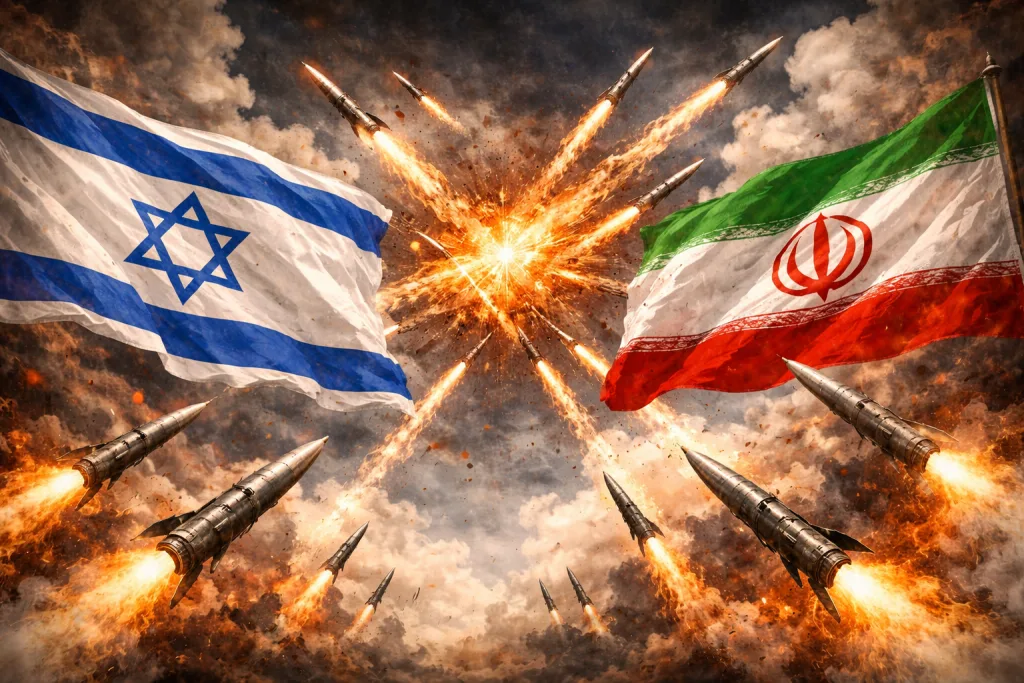
Israeli ministers and opposition leaders have roundly rejected the United States-Iran deal announced Monday to end the Middle East war, with far-right officials declaring Israel isn't bound by the agreement.
National Security Minister Itamar Ben Gvir was the first Israeli official to react, posting on Telegram that "Trump's agreement doesn't bind us… we aren't party to this agreement. It doesn't safeguard our security." He demanded Israel not withdraw from any territory captured in Lebanon and insisted on the dismantling of Hezbollah.
Finance Minister Bezalel Smotrich echoed the sentiment, calling the deal "bad for Israel." He acknowledged the joint US-Israeli campaign had weakened Iran but said Israel would have to "continue the campaign to bring down the regime ourselves, using creative means, and ensure that Iran never acquires nuclear weapons." Smotrich also called for a stronger campaign in Lebanon, saying, "This is our war, our soldiers, and the immediate security of our northern residents."
Opposition figures also condemned the agreement. Former Prime Minister Naftali Bennett, a leading contender in Israel's upcoming election, called the deal a "dangerous turn for Israel's security." He outlined a strategic plan to collapse the Iranian regime through diplomatic, intelligence, economic, technological, and military means.
Yair Golan, head of the left-wing Democrats Party, argued the deal erased Israel's military gains. "With the stroke of a pen, enormous military achievements — achieved through the courage of our pilots and the sacrifice of our soldiers — have been erased, while Netanyahu stood on the sidelines: weak, ill, isolated, and without influence," he said.
Golan also claimed the deal pours billions into Iran's regime, leaves nuclear infrastructure intact, and fails to resolve the ballistic missile threat.
The deal, brokered by the Trump administration, aims to end the Middle East war that has involved Israel, Iran, and Hezbollah. But Israeli leaders across the spectrum see it as a surrender that undermines years of military effort.
"Trump's agreement doesn't bind us… we aren't party to this agreement. It doesn't safeguard our security." — Itamar Ben Gvir
The strong opposition signals that Israel may continue unilateral military operations in Lebanon and against Iran, even as the US moves toward de-escalation. The deal's fate could also become a major issue in Israel's upcoming elections.
- Deal announced June 15, 2026, by the United States and Iran
- Israeli National Security Minister Itamar Ben Gvir says Israel isn't bound by the agreement
- Finance Minister Bezalel Smotrich calls it "bad for Israel" and vows to continue campaign against Iran
- Opposition leader Naftali Bennett calls it a "dangerous turn for Israel's security"
- Yair Golan says the deal erases military achievements and leaves nuclear infrastructure intact