

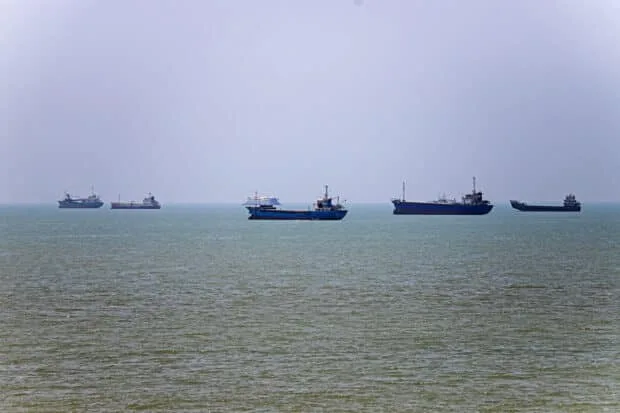
Iran said it was once again closing the vital Strait of Hormuz on Saturday over Israeli attacks in Lebanon, as Iranian and US negotiators prepared to converge on Switzerland for talks on implementing a deal to end the Middle East war.
The US announced a renewed ceasefire in Lebanon on Friday afternoon, a stipulation under the deal it signed with Iran. But Israeli forces disregarded the truce, carrying out a wave of deadly strikes in Lebanon after four of their soldiers were killed in combat. Iran accused Israel of violating the ceasefire, which was meant to remain in place until a comprehensive peace deal is reached.
Leaked reports from the Israeli military indicate that the strikes were coordinated between the Israeli Defense Forces (IDF) and the Israeli Air Force (IAF). The attacks targeted multiple sites, including Hezbollah strongholds in southern Lebanon. Witnesses in the affected areas reported hearing loud explosions and observing buildings reduced to rubble.
US Secretary of State, Antony Blinken, had been scheduled to meet with Iran's Foreign Minister, Hossein Amir-Abdollahian, in Switzerland to discuss the implementation of the Middle East peace deal. The talks were part of a broader effort to de-escalate the conflict in the region.
Iran's closure of the Strait of Hormuz risks further escalating tensions in the Middle East. The waterway is a critical artery for global energy supplies, with millions of barrels of oil passing through it daily. A prolonged closure could send shockwaves through international markets, fuel price hikes, and economic instability worldwide.
Iran's decision to close the Strait of Hormuz is the latest development in a long-standing conflict between Iran and Israel. The two nations have a history of tensions, with Iran accusing Israel of violating its sovereignty and Israel claiming Iran is threatening its national security.
Iran's closure of the Strait of Hormuz is also a significant development in terms of global trade. The waterway is a crucial passage for oil exports from countries such as Saudi Arabia and Iraq. A prolonged closure could have a devastating impact on these countries' economies and the global energy market.
The US has called on Israel to respect the ceasefire and engage in talks with Iran to resolve their differences peacefully. Meanwhile, Iranian officials have insisted that their decision to close the Strait of Hormuz is a defensive measure aimed at protecting their national security.
Iran, a major oil producer, has long been under international pressure to open up its oil industry to foreign investment. The country's decision to close the Strait of Hormuz could further complicate these efforts, as international investors become increasingly wary of doing business with a nation seen as volatile and unpredictable.
The conflict between Iran and Israel has been ongoing for decades, with each side accusing the other of aggression and belligerence. The situation has escalated in recent years, with both sides trading military blows and engaging in a propaganda war.
Iran's closure of the Strait of Hormuz underscores the complexity and volatility of the conflict in the Middle East. As global trade and politics become increasingly intertwined, the stakes are high for all parties involved.
The closure of the Strait of Hormuz also has significant implications for the global economy, with many countries relying on this critical waterway for their energy imports. The situation is being closely watched by diplomats and policymakers worldwide, who are scrambling to prevent a major escalation of the conflict.