

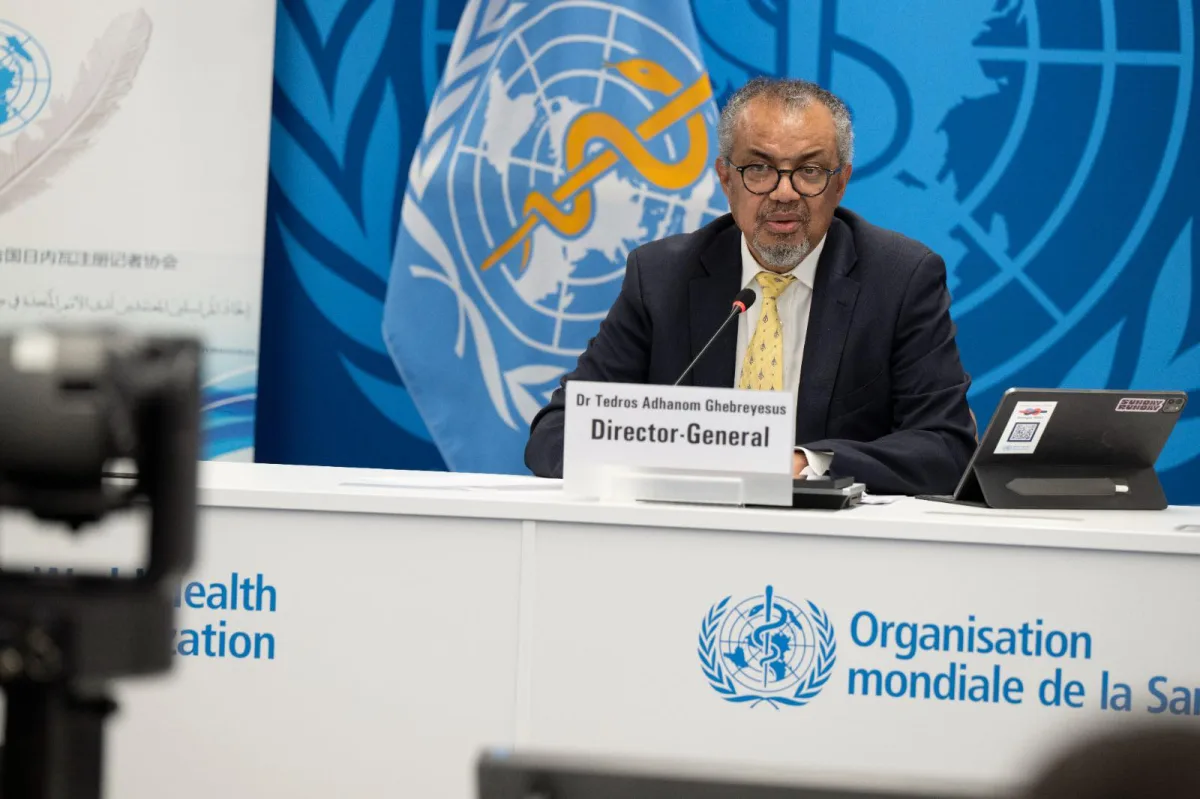
The World Health Organisation (WHO) has declared the latest outbreak of the Bundibugyo strain of Ebola virus disease in the Democratic Republic of the Congo (DRC) and neighbouring Uganda a Public Health Emergency of International Concern (PHEIC). This declaration is the organisation's second-highest alert level under international health regulations. It's a significant declaration because it indicates a high-risk disease that requires immediate attention.
The outbreak itself is a major concern. The Bundibugyo strain of Ebola has no approved vaccine or treatment, making it a high-risk disease. The WHO has expressed particular concern over this strain due to its potential to spread quickly across borders. They're worried because it can spread rapidly and cause a lot of harm.
So, how did we get to this point? The outbreak first came to light earlier in May after health authorities detected an unusual pattern of severe illness in parts of eastern DRC. The WHO was alerted of a high-mortality outbreak of unknown illness in Mongbwalu Health Zone, Ituri Province, Democratic Republic of the Congo (DRC), including deaths among health workers. They didn't know what was causing it at first, but they knew it was serious.
The first currently known suspected case, a health worker, reported onset of symptoms including fever, hemorrhaging, vomiting and intense malaise on 24 April 2026. The case died at a medical centre in Bunia. Following laboratory analysis, the DRC Ministry of Public Health, Hygiene and Social Welfare officially declared the country’s 17th Ebola outbreak on 15 May. This was after the Institut National de Recherche Biomédicale (INRB) in Kinshasa confirmed Bundibugyo virus disease in eight of 13 blood samples tested.
The Bundibugyo virus is a Risk Group 4 pathogen, placing it among the world’s deadliest infectious diseases. It's a highly infectious and deadly virus. By mid-May, the outbreak had spread across three health zones in Ituri Province – Rwampara, Mongbwalu and Bunia. There were 246 suspected cases and 80 deaths recorded at that time.
The WHO stated, “The case is an elderly man who was admitted to a private hospital on 11 May with severe symptoms and died on 14 May. A clinical sample collected was confirmed as Bundibugyo virus on 15 May 2026.” They're trying to track the spread of the disease.
The outbreak was first reported in Ituri Province in northeastern DRC, near the borders with Uganda and South Sudan. According to the Africa Centres for Disease Control and Prevention (Africa CDC), authorities had recorded at least 336 suspected cases and 88 deaths. These numbers are likely underestimates, and they're still rising.
The Director-General of Africa CDC, Jean Kaseya, said delayed detection slowed the response and allowed the virus to spread undetected for weeks. Mr Kaseya said the outbreak began in April, and they don't fully understand the scale of transmission yet. They're still trying to figure out how bad it is.
The disease has since spread into neighbouring Uganda, further complicating containment efforts. Uganda’s Ministry of Health confirmed its first imported case on 15 May, involving an elderly man who crossed the border from the DRC. This makes containment even harder.
But what does this mean for the region? The WHO emergency declaration is expected to accelerate international funding and response efforts. Neighbouring countries remain vulnerable because of regional trade and population movement. They're at risk because people and goods are moving across borders.
The WHO warned that official figures may underrepresent the true scale of the outbreak. “There are significant uncertainties to the true number of infected persons and geographic spread associated with this event at the present time. In addition, there is limited understanding of the epidemiological links with known or suspected cases,” the agency said. They're not sure how many people are infected or where the disease is spreading.
Public health experts say countries with strong travel, trade and migration links with countries in Central and East Africa, particularly through regional air routes and informal cross-border movements, remain vulnerable. This includes Nigeria, which has a history of successfully containing Ebola in 2014. Nigeria's experience shows that it's possible to contain the disease with the right measures.
- The WHO has declared the Ebola outbreak in DRC and Uganda a Public Health Emergency of International Concern.
- The Bundibugyo strain of Ebola has no approved vaccine or treatment.
- The outbreak has spread across three health zones in Ituri Province – Rwampara, Mongbwalu and Bunia – with 246 suspected cases and 80 deaths recorded.
- The disease has since spread into neighbouring Uganda, with at least two confirmed cases.
- Neighbouring countries remain vulnerable because of regional trade and population movement.
The WHO advised countries against imposing travel bans or shutting borders, warning that such measures are often ineffective. Instead, the organisation urged countries to strengthen traveller advisories, border screening, contact tracing and localised isolation measures to contain the outbreak. They think these measures will be more effective in stopping the spread of the disease.
Yet, the challenge remains. The outbreak revives memories of the country’s successful containment of Ebola in 2014 after an infected Liberian-American diplomat, Patrick Sawyer, arrived in Lagos. Through aggressive contact tracing, isolation measures and public awareness campaigns, Nigeria contained the outbreak. They were able to stop the spread of the disease.
But for now, the focus is on containing the current outbreak. The WHO emergency declaration is a call to action for the international community to support the response efforts in DRC and Uganda. And as the situation continues to evolve, it's clear that swift and coordinated action is needed to prevent further spread of the disease. The international community must act quickly to help contain the outbreak.