

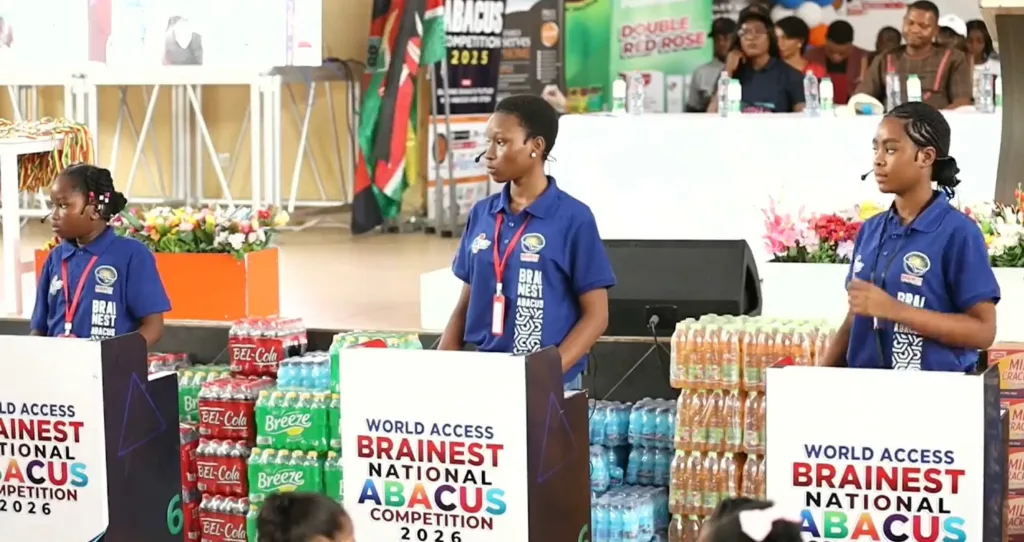
"Today’s programme has actually opened my eyes and, for that matter, the eyes of the Ministry of Education. We’ve realised over the years that we have put a lot of interventions in place to help children to read, but it looks as if we’ve given little or no regard to numeracy."
Isaac Atta Baah, Head of Unit for Early Childhood Education and Principal Programmes Officer at the Ministry of Education, made this statement during the 2026 World Access Brainest National Abacus Competition in Accra. The competition, which attracted over 2,000 pupils from 100 schools across Ghana, aims to promote mathematics among children.
The single sharpest fact in the story is that the Ministry of Education has been giving little attention to numeracy compared to literacy in basic education. This is according to Isaac Atta Baah, who observed that the ministry has introduced several interventions to improve children’s reading skills but limited efforts in numeracy.
The competition, which drew online participation from students in the United Kingdom, Canada, and the United States, had a striking outcome
- 90% of the awards went to girls. Mr. Baah attributed this to sustained investment in programmes that support girls. However, he expressed concern about the growing performance gap between boys and girls and the need for targeted support for boys.
Mr. Baah stated that education policies should ensure equal opportunities for both boys and girls to succeed. He also expressed concern over the number of boys who drop out of school and take up commercial motorcycle riding, known as 'okada', at an early age. The 'okada' phenomenon is a common sight in Ghana, where many teenage boys abandon school to ride motorcycles.
Key Facts
- The Ministry of Education has introduced several interventions to improve children’s reading skills but limited efforts in numeracy.
- 90% of the awards at the 2026 World Access Brainest National Abacus Competition went to girls.
- The competition had over 2,000 pupils from 100 schools across Ghana.
- The competition received online participation from students in the United Kingdom, Canada, and the United States.
- The Ministry of Education plans to expand the numeracy-focused programme nationwide.
Looking ahead, the organisers of the competition hope to expand it to reach more public schools, allowing every Ghanaian child to benefit from the programme. The event also drew support from the Ghana Education Service, which has backed the initiative consistently.
Isaac Atta Baah’s proposal to expand the numeracy-focused programme nationwide would first be discussed by the ministry’s management before a decision is taken. He expressed confidence in the Honourable Minister’s support for the initiative, citing the Minister as a ‘listening minister’.
The sharp realization by the Education Ministry that numeracy has been given little attention in basic education comes at a time when Ghana is striving to improve its education system. The competition highlights the need for stronger national interventions to improve pupils’ numeracy skills.
This development is crucial for Ghana’s future as a strong, educated workforce is essential for its economic growth and development. The Ministry of Education’s decision to strengthen numeracy in basic education could have far-reaching implications for the country’s education system and its future.
Mr. Baah also acknowledged the growing performance gap between boys and girls in mathematics and science. He attributed the improvement in girls’ performance to sustained investment in programmes that support girls. However, he expressed concern about the need for targeted support for boys, who are often seen to excel in mathematics and science.
In his concluding remarks, Mr. Baah encouraged the winners to remain focused and the non-winners to come back stronger. He also lauded the organisers of the competition for their effort in promoting mathematics among children.