

The UK's inflation rate has just fallen to 2.8%, down from 3.3% the previous month. This drop is largely due to lower electricity and gas prices.
The decrease in inflation is significant, because it's the first time in a while that the UK has seen a slowdown in inflation. The Office for National Statistics said the annual inflation rate fell to 2.8% in April, which is lower than what economists had expected.
Grant Fitzner, the chief economist at the statistics office, explained that the drop in inflation was due to the government's energy bill support package. It reduced variable and fixed tariffs, and lower global wholesale energy prices also helped.
The UK isn't out of the woods yet. The war in Iran is expected to drive inflation sharply higher in the coming months. The Bank of England is forecasting that inflation could hit 6.2% early next year under its worst-case scenario.
The UK chancellor, Rachel Reeves, said the decisions she made in the budget last year have kept inflation down, despite global instability. She also announced that she will unveil sweeping reforms to give parliament the authority to approve critical energy and infrastructure projects.
The war in Iran is not our war, but one we will need to respond to, and the decisions I took in the budget last year have kept inflation down as we deal with global instability, said Rachel Reeves.
Reeves is due to announce more measures to reduce the cost of living, including a cancellation of a fuel duty increase that is due to take effect in September. She also plans to freeze rail fares and lift the two-child limit.
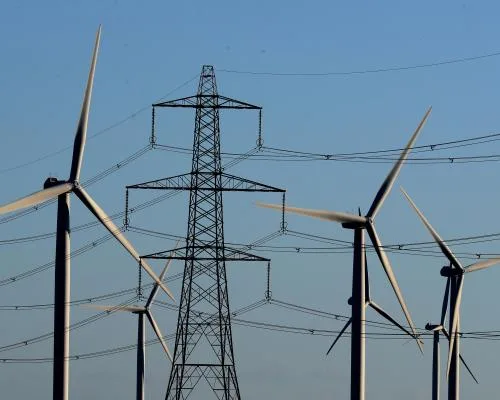
The Treasury spokesperson said that vital infrastructure delivery has been delayed by judicial reviews of projects. Reeves wants parliament to take back control to get Britain building the power plants, wind farms, and grid connections that will bring bills down, strengthen energy security, and deliver growth.
Asian stocks fell, extending a losing streak, as inflation fears hammered bonds. Investors are awaiting quarterly results from Nvidia, the world's most valuable company, later today.
Japan's Nikkei dropped 1.5%, while South Korea's Kospi lost 1.6%. Hong Kong's Hang Seng index slipped 0.67%, and China's CSI300 was flat.
The UK's inflation rate is closely watched, because it affects the cost of living for millions of people. The decrease in inflation is good news, but the potential increase due to the war in Iran is a concern.
- UK inflation rate fell to 2.8% in April
- Decrease is due to lower electricity and gas prices
- War in Iran may drive inflation sharply higher in coming months
- Bank of England forecasts inflation could hit 6.2% early next year
- UK chancellor Rachel Reeves to announce measures to reduce cost of living
The UK's economic plan is being closely watched, as the country deals with global instability. The government's decisions will have a significant impact on the cost of living for millions of people.
The situation is complex, with many factors at play. The war in Iran, the energy bill support package, and the potential increase in inflation are all interconnected. They're affecting each other, and it's hard to predict what will happen next.
The UK's economic stability is at risk. The government must take careful decisions to ensure that the country can weather the storm. It's a challenging situation, and they won't be able to please everyone.
The UK's inflation rate is just one part of the economic puzzle. The country's growth, employment rate, and trade relationships are all important factors. They're all connected, and they're all crucial to the UK's economic stability.
The global economy is closely watching the UK's situation. The war in Iran, the energy crisis, and the potential increase in inflation are all having a ripple effect on markets around the world. It's a complex situation, and it's affecting many countries.
The situation is developing, and it's hard to predict what will happen next. The UK's economic stability is at risk, and the government must take careful decisions to ensure that the country can weather the storm. They can't afford to make mistakes, or it could have serious consequences.