

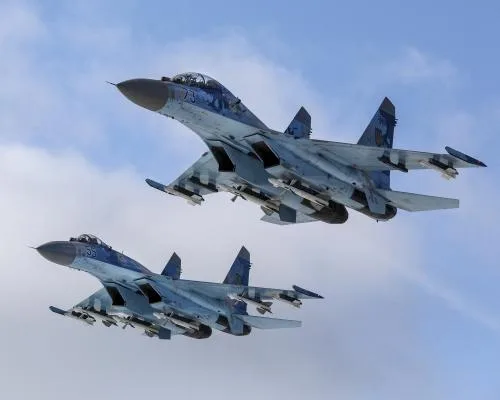
A Russian Su-27 jet flew within six metres of an unarmed RAF Rivet Joint spy plane flying at 500mph over the Black Sea. This incident, which occurred last month, is one of two mid-air incidents John Healey, the UK defence secretary, describes as 'dangerous and unacceptable'.
The Su-27 jet conducted six passes in front of the RAF spy plane, potentially risking a collision that could've triggered a diplomatic crisis between the two countries. On a second occasion, a Russian Su-35 jet flew close enough to the British spy plane that it triggered its emergency systems, including disabling the autopilot.
The RAF Rivet Joint is a spy plane with a crew of up to 30, capable of a wide range of electronic surveillance at a range of about 150 miles. It would've been monitoring Russian activity as part of a Nato patrol. John Healey said, 'This incident is another example of dangerous and unacceptable behaviour by Russian pilots, towards an unarmed aircraft operating in international airspace.'
'These actions create a serious risk of accidents and potential escalation,' Healey said. 'I'd like to pay tribute to the outstanding professionalism and bravery of the RAF crew who continued with their mission despite these dangerous actions.'
This is the most dangerous Russian action against a British Rivet Joint aircraft since a plane fired a missile over the Black Sea in 2022, the MoD said on Wednesday. Russia has been increasing its military activity in Europe. Lithuanian politicians sheltered underground on Wednesday, and air traffic at Vilnius airport was temporarily suspended after a drone violated the country’s airspace.
A day earlier, Russia’s ambassador to the UN claimed Moscow had information that Ukraine planned to launch military drones from Latvia and other Baltic states. Latvia dismissed the comments as 'pure fiction'. Two Russian frigates escorted oil tankers and a suspected arms shipment through the North Sea and Dover strait last month, requiring a month-long surveillance patrol by the Royal Navy.
Last month, Healey revealed the UK had tracked three Russian submarines that loitered over critical undersea infrastructure in the North Atlantic for a month before sailing away. The UK's commitment to defend Nato, its allies, and its interests from Russian aggression remains unchanged despite the incidents. John Healey is the UK defence secretary, appointed to the role in a cabinet reshuffle.
The RAF Rivet Joint aircraft is based on the Boeing 707 and has been in service since 2014. The aircraft is equipped with a range of sensors and communication systems, allowing it to gather intelligence and conduct surveillance over a wide area. The Rivet Joint is operated by the RAF’s 51 Squadron, which is based at RAF Waddington in Lincolnshire.
The incident highlights the ongoing tensions between Russia and the West, particularly in the context of the conflict in Ukraine. Russia's actions have been widely condemned by Western nations, and the incident is likely to further strain relations between Russia and the UK.
Key Facts
- A Russian Su-27 jet flew within six metres of an RAF spy plane over the Black Sea.
- The incident occurred last month and is one of two mid-air incidents described as 'dangerous and unacceptable' by the UK defence secretary.
- The RAF Rivet Joint is a spy plane with a crew of up to 30, capable of a wide range of electronic surveillance at a range of about 150 miles.
- Russia has been increasing its military activity in Europe, including the deployment of submarines and frigates.
- The UK has tracked three Russian submarines that loitered over critical undersea infrastructure in the North Atlantic for a month before sailing away.
The incident is a reminder of the risks and challenges faced by military personnel operating in international airspace. The bravery and professionalism of the RAF crew who continued with their mission despite the dangerous actions of the Russian pilots are a testament to the skill and dedication of the UK’s military personnel. They're highly trained to handle such situations, and their response was commendable.
The UK's commitment to defending Nato, its allies, and its interests from Russian aggression remains unchanged despite the incidents. The UK will continue to work with its allies to ensure the safety and security of international airspace, and to counter the threats posed by Russian military activity. The consequences of such incidents could be severe, so it's essential that all parties involved take steps to reduce tensions and prevent further incidents.
In the context of international relations, the incident highlights the need for clear communication and de-escalation mechanisms to prevent accidents and misunderstandings. The UK and its allies must continue to work together to address the challenges posed by Russian military activity, and to ensure the stability and security of the region. This includes increasing cooperation on intelligence gathering, surveillance, and defence systems, as well as promoting diplomatic efforts to reduce tensions and promote dialogue. They can't afford to underestimate the importance of cooperation in such matters.
As the situation continues to unfold, it's essential to consider the potential implications of such incidents on regional and global security. The UK and its allies must remain vigilant and proactive in addressing the challenges posed by Russian military activity, and in promoting stability and security in the region. This requires a comprehensive approach, including diplomatic, military, and economic measures, to counter the threats posed by Russian aggression and to promote a more stable and secure international environment. They won't be able to achieve this without a unified effort.
The incident involving the Russian Su-27 jet and the RAF Rivet Joint spy plane over the Black Sea is a serious and concerning development. It highlights the risks and challenges faced by military personnel operating in international airspace, and the need for clear communication and de-escalation mechanisms to prevent accidents and misunderstandings. The UK and its allies must continue to work together to address the challenges posed by Russian military activity, and to ensure the stability and security of the region. They're working tirelessly to achieve this goal, and it's crucial that they don't give up. The situation is complex, and it won't be resolved overnight, but with persistence and cooperation, they can find a way to reduce tensions and promote peace.