

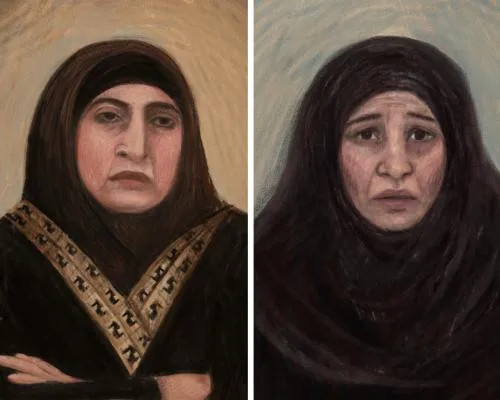
In a shocking turn of events, two Australian women, Kawsar Ahmad and her daughter Zeinab Ahmad, have been charged with slavery offences that allegedly occurred while they lived under Islamic State rule in Syria. The pair, who were arrested by officers from the Victorian joint counter-terrorism team at Melbourne airport on Thursday, appeared before the Melbourne magistrates court on Monday. Kawsar Ahmad, 53, also known as Abbas, and Zeinab Ahmad, 31, are accused of knowingly keeping an enslaved woman in their home, with Kawsar allegedly complicit in the buying of an enslaved woman for US$10,000. The charges are a stark reminder of the brutal reality of life under Islamic State rule, where civilians were often subjected to forced labor, sex trafficking, and other forms of exploitation. The case has sparked widespread outrage and raised questions about the Australian government's handling of citizens who have traveled to conflict zones.
The alleged offences occurred between 1 June 2017 and 1 November 2018, in various locations in eastern Syria, including Mayadin, Hajim, Gharanij, Bahra, Abu Hamam, and Walaa. According to court documents, Kawsar Ahmad is accused of intentionally exercising "any or all of the powers attaching to the right of ownership" over a person, in circumstances "where the conduct was committed intentionally or knowingly as part of a widespread or systemic attack directed against a civilian population". Zeinab Ahmad faces the same two charges, highlighting the gravity of the allegations against the pair. The case is a complex one, with the Australian federal police alleging that the offences were terrorism-related and that the pair will oppose bail. As the case unfolds, it's likely to raise difficult questions about the role of Australian citizens in conflict zones and the government's responsibility to protect its citizens.
The arrest of Kawsar Ahmad and Zeinab Ahmad marks a significant development in the Australian government's efforts to hold its citizens accountable for their actions in conflict zones. The case is a reminder that the consequences of traveling to such areas can be severe, with the risk of being caught up in violent extremism or even committing crimes against humanity. The Australian government has been grappling with the issue of how to deal with citizens who have traveled to conflict zones, with some calling for stricter laws to prevent Australians from joining extremist groups. As the case against Kawsar Ahmad and Zeinab Ahmad proceeds, it's likely to spark a renewed debate about the government's approach to the issue.
The story of Kawsar Ahmad and Zeinab Ahmad is a complex and disturbing one, highlighting the brutal reality of life under Islamic State rule. The pair's alleged involvement in slavery and human trafficking is a stark reminder of the horrors that civilians faced in conflict zones. As the case unfolds, it's likely to raise difficult questions about the role of Australian citizens in such zones and the government's responsibility to protect its citizens. The alleged offences are a serious breach of human rights and international law, and the case will be closely watched by human rights groups and governments around the world.
Key Facts
- Kawsar Ahmad and Zeinab Ahmad are two Australian women charged with slavery offences that allegedly occurred while they lived under Islamic State rule in Syria.
- The pair were arrested by officers from the Victorian joint counter-terrorism team at Melbourne airport on Thursday.
- Kawsar Ahmad, 53, also known as Abbas, and Zeinab Ahmad, 31, are accused of knowingly keeping an enslaved woman in their home.
- Kawsar Ahmad is accused of intentionally exercising "any or all of the powers attaching to the right of ownership" over a person.
- Zeinab Ahmad faces the same two charges as her mother.
- The alleged offences occurred between 1 June 2017 and 1 November 2018, in various locations in eastern Syria.
- The Australian federal police will allege the offences were terrorism-related and are expected to oppose bail.
- Kawsar Ahmad and Zeinab Ahmad appeared before the Melbourne magistrates court on Monday and were remanded in custody.
Background on Islamic State
Islamic State, also known as ISIS, is a militant Sunni Islamist organization that has been responsible for numerous human rights abuses and atrocities in the Middle East. The group's ideology is based on a radical interpretation of Islam, and it has been known to use violence and intimidation to achieve its goals. Islamic State has been responsible for the deaths of thousands of people, including civilians, soldiers, and journalists. The group has also been accused of war crimes, including the use of child soldiers, forced labor, and sex trafficking. The alleged involvement of Kawsar Ahmad and Zeinab Ahmad in slavery and human trafficking is a stark reminder of the brutal reality of life under Islamic State rule.
Islamic State's rise to power in 2014 was marked by a series of military victories in Iraq and Syria, where the group was able to seize large swaths of territory. The group's leader, Abu Bakr al-Baghdadi, declared the establishment of a caliphate, which was recognized by few countries. Islamic State's rule was marked by brutality and repression, with the group imposing harsh penalties on those who disobeyed its rules. The group's ideology was also marked by a strong anti-Western sentiment, with the group viewing the United States and its allies as enemies of Islam. As the case against Kawsar Ahmad and Zeinab Ahmad proceeds, it's likely to raise difficult questions about the role of Australian citizens in conflict zones and the government's responsibility to protect its citizens.
The defeat of Islamic State in 2019 marked a significant turning point in the conflict, but the group's legacy continues to be felt. The alleged involvement of Kawsar Ahmad and Zeinab Ahmad in slavery and human trafficking is a stark reminder of the brutal reality of life under Islamic State rule. The case is a complex one, with the Australian federal police alleging that the offences were terrorism-related and that the pair will oppose bail. As the case unfolds, it's likely to raise difficult questions about the role of Australian citizens in conflict zones and the government's responsibility to protect its citizens.
The Australian Government's Response
The Australian government has been grappling with the issue of how to deal with citizens who have traveled to conflict zones, with some calling for stricter laws to prevent Australians from joining extremist groups. The government has introduced a range of measures aimed at preventing Australians from traveling to conflict zones, including the introduction of a new law that makes it an offence to travel to a declared area without a valid reason. The government has also increased funding for counter-terrorism efforts and has worked to strengthen its relationships with international partners to combat terrorism.
The case against Kawsar Ahmad and Zeinab Ahmad marks a significant development in the Australian government's efforts to hold its citizens accountable for their actions in conflict zones. The government has been working to strengthen its laws and policies to prevent Australians from joining extremist groups, and the case is a stark reminder of the consequences of traveling to such areas. The Australian federal police will allege the offences were terrorism-related and are expected to oppose bail, highlighting the gravity of the allegations against the pair. As the case unfolds, it's likely to raise difficult questions about the role of Australian citizens in conflict zones and the government's responsibility to protect its citizens.
The Australian government's response to the case has been swift and decisive, with the pair being arrested and charged with slavery offences. The government has also been working to provide support to those affected by the conflict, including victims of slavery and human trafficking. The case is a complex one, and the government's response will be closely watched by human rights groups and governments around the world. As the case proceeds, it's likely to raise difficult questions about the role of Australian citizens in conflict zones and the government's responsibility to protect its citizens.
The Human Cost of Conflict
The case against Kawsar Ahmad and Zeinab Ahmad is a stark reminder of the human cost of conflict, particularly for civilians who are caught up in the fighting. The alleged involvement of the pair in slavery and human trafficking is a brutal reminder of the horrors that civilians faced in conflict zones. The case is a complex one, with the Australian federal police alleging that the offences were terrorism-related and that the pair will oppose bail. As the case unfolds, it's likely to raise difficult questions about the role of Australian citizens in conflict zones and the government's responsibility to protect its citizens.
The human cost of conflict is a significant one, with civilians often bearing the brunt of the fighting. The case against Kawsar Ahmad and Zeinab Ahmad is a stark reminder of the brutal reality of life under Islamic State rule, where civilians were often subjected to forced labor, sex trafficking, and other forms of exploitation. The alleged offences are a serious breach of human rights and international law, and the case will be closely watched by human rights groups and governments around the world. As the case proceeds, it's likely to raise difficult questions about the role of Australian citizens in conflict zones and the government's responsibility to protect its citizens.
The alleged involvement of Kawsar Ahmad and Zeinab Ahmad in slavery and human trafficking is a stark reminder of the brutal reality of life under Islamic State rule, where civilians were often subjected to forced labor, sex trafficking, and other forms of exploitation. The case is a complex one, and the government's response will be closely watched by human rights groups and governments around the world.
The Road Ahead
The case against Kawsar Ahmad and Zeinab Ahmad is a complex one, with the Australian federal police alleging that the offences were terrorism-related and that the pair will oppose bail. The pair are expected to apply for bail in June, with Zeinab's application expected on 4 June and Kawsar's application expected on 16 June. The case is likely to raise difficult questions about the role of Australian citizens in conflict zones and the government's responsibility to protect its citizens. As the case unfolds, it's likely to be closely watched by human rights groups and governments around the world.
The road ahead for Kawsar Ahmad and Zeinab Ahmad is a uncertain one, with the pair facing serious charges related to slavery and human trafficking. The case is a complex one, and the government's response will be closely watched by human rights groups and governments around the world. The alleged offences are a serious breach of human rights and international law, and the case will be closely watched by human rights groups and governments around the world. As the case proceeds, it's likely to raise difficult questions about the role of Australian citizens in conflict zones and the government's responsibility to protect its citizens.
The case against Kawsar Ahmad and Zeinab Ahmad marks a significant development in the Australian government's efforts to hold its citizens accountable for their actions in conflict zones. The case is a complex one, with the Australian federal police alleging that the offences were terrorism-related and that the pair will oppose bail. The pair's alleged involvement in slavery and human trafficking is a stark reminder of the brutal reality of life under Islamic State rule, where civilians were often subjected to forced labor, sex trafficking, and other forms of exploitation. As the case unfolds, it's likely to raise difficult questions about the role of Australian citizens in conflict zones and the government's responsibility to protect its citizens.
Conclusion
The case against Kawsar Ahmad and Zeinab Ahmad is a complex and disturbing one, highlighting the brutal reality of life under Islamic State rule. The pair's alleged involvement in slavery and human trafficking is a stark reminder of the horrors that civilians faced in conflict zones. The case is a complex one, with the Australian federal police alleging that the offences were terrorism-related and that the pair will oppose bail. As the case unfolds, it's likely to raise difficult questions about the role of Australian citizens in conflict zones and the government's responsibility to protect its citizens. The alleged offences are a serious breach of human rights and international law, and the case will be closely watched by human rights groups and governments around the world.
The case against Kawsar Ahmad and Zeinab Ahmad marks a significant development in the Australian government's efforts to hold its citizens accountable for their actions in conflict zones. The government has been working to strengthen its laws and policies to prevent Australians from joining extremist groups, and the case is a stark reminder of the consequences of traveling to such areas. The Australian federal police will allege the offences were terrorism-related and are expected to oppose bail, highlighting the gravity of the allegations against the pair. As the case proceeds, it's likely to raise difficult questions about the role of Australian citizens in conflict zones and the government's responsibility to protect its citizens.
The case against Kawsar Ahmad and Zeinab Ahmad is a reminder that the consequences of traveling to conflict zones can be severe, with the risk of being caught up in violent extremism or even committing crimes against humanity. The Australian government has been grappling with the issue of how to deal with citizens who have traveled to conflict zones, with some calling for stricter laws to prevent Australians from joining extremist groups. As the case unfolds, it's likely to raise difficult questions about the role of Australian citizens in conflict zones and the government's responsibility to protect its citizens. The alleged offences are a serious breach of human rights and international law, and the case will be closely watched by human rights groups and governments around the world.