

The single sharpest fact in one or two punchy sentences. Who did what, where, when, and why it matters. Not a summary of everything — the one thing that makes someone stop scrolling. A reader who only reads this paragraph must understand what happened.
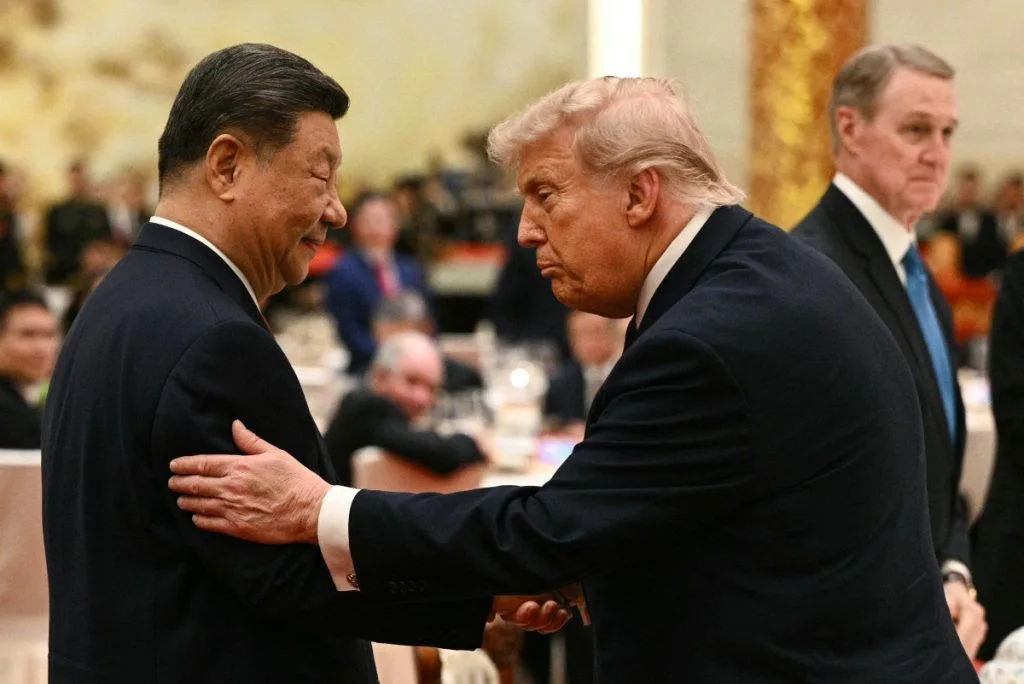
China has imposed export controls on 10 US companies involved in defence and rare earths mining in response to Washington's blacklist of Chinese firms, according to a statement from China's commerce ministry. The move comes a month after US President Donald Trump visited Beijing, seeking to stabilise fraught relations during talks with Chinese counterpart Xi Jinping.
Trade tensions have been escalating amid US-China rivalry, with both sides stunting each other in tech and defence. Washington released a new blacklist this month of 80 companies and their subsidiaries it said were aiding the Chinese military. That saw tech giants Alibaba and Baidu added, as well as electric vehicle giant BYD, prompting Beijing to threaten retaliation.
China's new export controls come 'in response to the US government's egregious act of adding to its so-called 'Chinese military enterprise list'', the commerce ministry said. The 10 entities include Aveox, which holds aerospace defence contracts with the US military, and Oshkosh Defense, which produces military vehicle fleets. It also lists US rare earths producers MP Materials and USA Rare Earth.
Exporters are prohibited from providing dual-use items to the listed entities, China's commerce ministry said. Any relevant export activities currently underway must cease immediately. The ban also applies to 'organisations or individuals in any country or region… transferring or providing dual-use items originating in China to said entities', it said.
China's finance ministry simultaneously announced a ban on agencies involved in public procurement from buying products made by 46 US firms, including Lockheed Martin, Raytheon, and Boeing's defence division. Companies with US investments operating in China are excluded, according to a statement from the finance ministry. Measures would take effect from Monday.
A proposed US$14 billion arms package to Taiwan was 'under review', said US Secretary of State Marco Rubio this month. Since his meeting with Xi in May, Trump has sought to publicly present an image of strong bilateral ties.
This move by China marks a sharp escalation in trade tensions between the two global powers. It remains to be seen how far-reaching China's actions will be and whether it will lead to further retaliation from the US.
The sanctions by China come after a month of tense relations between the two countries, following Trump's visit to Beijing. Trump's efforts to present a strong image of bilateral ties have been put to the test as both sides continue to trade barbs over defence and tech issues.
In recent months, both the US and China have been engaged in a high-stakes game of cat and mouse. Washington has been trying to curtail China's growing military influence, while Beijing has pushed back by imposing its own set of restrictions.
China is not the only country that has been taking a tough stance on defence and tech issues. Other countries, including Japan and South Korea, have also been imposing their own set of restrictions on defence and tech exports to the US.
The implications of China's sanctions on the US are far-reaching. The restrictions would severely limit the ability of US companies to export defence and tech products to China, causing significant losses to the US economy.
The sanctions would also impact the Chinese economy, particularly in the area of defence and tech. China's defence industry would be severely impacted, with many Chinese companies relying heavily on imports from the US.
Key Facts:
- 10 US companies have been sanctioned by China, including aerospace defence contractors and rare earths producers.
- The sanctions come in response to Washington's blacklist of Chinese firms.
- The ban applies to 'organisations or individuals in any country or region… transferring or providing dual-use items originating in China to said entities'.
- 46 US firms have been banned from selling products to Chinese government agencies involved in public procurement.
- A proposed US$14 billion arms package to Taiwan was 'under review' by US Secretary of State Marco Rubio this month.