

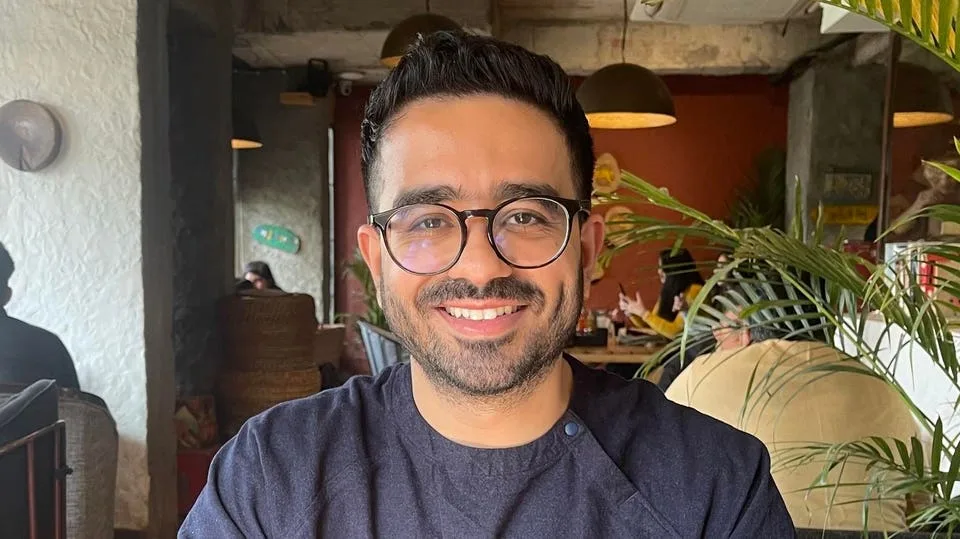
In a country of 1.4 billion people, more than half of whom are under the age of 30, the question of who speaks for young Indians isn't a small one. Anshul Tewari has spent nearly two decades trying to answer it. As founder of Youth Ki Awaaz, India's largest civic participation platform, he's built a community of 200,000 monthly contributors and a WhatsApp-based polling engine that pulses tens of thousands of young people daily on everything from climate anxiety to mental health.
Anshul Tewari started Youth Ki Awaaz at 17, driven by frustration that the news wasn't built for young people. He wanted to create a space where they could discuss real issues impacting their generation. This desire led him to start a blog in 2008, with the first post titled The Global Warning, about climate change and why he, a young person in India, cared about it. He didn't want to just write about it; he wanted to start a conversation.
The platform has always been deliberately unpolished, not filtered through adult editors. This approach matters because it allows young people to speak up without needing formal training in articulation. The stories on the platform are raw and real, reflecting the lived experiences of young Indians. Anshul Tewari believes that this rawness is essential, as it gives policymakers a genuine understanding of what young people are going through. They can't just rely on polished reports; they need to hear the real voices.
Four years ago, Anshul Tewari added a WhatsApp polling bot to Youth Ki Awaaz. The logic behind this move was to add a layer of quantitative data to the existing qualitative dataset of young people's lived experiences. This combination could provide valuable insights into what young people are feeling and how to build solutions for them. The polling bot, named Yoot, asks one question a day, allowing participants to earn points and grow in their regional ranking. Today, 25,000 to 30,000 people respond daily.
It's a significant number, and it's growing every day.
The conversation has absolutely increased - we see young farmers talking about it, young entrepreneurs building solutions. There was a clear inflection point. But data consistently shows a moment of powerlessness alongside that awareness: the imagination that climate change could be an election issue, that we could demand corporate accountability for it, isn't fully there yet. It's not that young people don't care; they just don't know how to make a difference.
On mental health, Youth Ki Awaaz has been asking questions about how young people understand loneliness. The data reveals that young men and boys respond very differently than young women. Globally, data shows young men are comfortable confessing to AI chatbots, but in India, this acceptance isn't seen. For India's national mental health programs to work, they can't import a Western framework and apply it; they need to understand the local context. They need to listen to young people and understand their needs.
Youth Ki Awaaz is also learning about language and its impact on how communities perceive climate change. When asked if they experience climate change, many say no. However, when asked about specific impacts like schools being hotter, freshwater resources disappearing, or monsoons becoming shorter but harder, they acknowledge these changes. This indicates that the term 'climate change' might be a Westernized construct that doesn't resonate with all communities. Decision-makers need to speak the language people are comfortable using to achieve significant shifts in climate action.
They can't just use jargon; they need to use language that matters to people.
The city of Indore is a clear example of Youth Ki Awaaz's impact. Initially, people didn't recognize climate change's impacts through an expert-driven lens. However, when the organization went deeper, narratives about a massive sparrow population that had disappeared, significant increases in vector-borne diseases, and monsoons causing more waterlogging due to inadequate infrastructure emerged. These narratives already existed; Youth Ki Awaaz just needed to tap into them. Now, the city is developing a climate resilience framework informed directly by adolescent input.
It's a big deal, and it's a step in the right direction.
Anshul Tewari believes that policymakers typically want simplification, but Youth Ki Awaaz generates complexity by providing a mechanism for participatory governance. The organization's outputs are frameworks, not verdicts, allowing policymakers to approach complexity rather than flattening it. Anshul Tewari's strongest belief is that if a young person experiences changemaking, this instinct stays with them regardless of their future career or life choices. They won't forget the experience, and it will shape their decisions.
Anshul Tewari founded Youth Ki Awaaz at 17. The platform has 200,000 monthly contributors. A WhatsApp-based polling engine reaches tens of thousands daily. Youth Ki Awaaz has partnered with India's Ministry of Housing and Urban Affairs to create the Adolescents for Climate Transformation (ACT) Indore Framework. These are significant numbers, and they're making a difference.
Anshul Tewari is an Ashoka Fellow, and his work with Youth Ki Awaaz is changing how young Indians engage with climate policy and mental health discussions. His approach emphasizes the importance of listening to young people and creating spaces where their voices can be heard. As India continues to grapple with the challenges of climate change and mental health, platforms like Youth Ki Awaaz will play a critical role in shaping the country's response. They'll ensure that the voices of young people are at the forefront of these discussions, and that's what matters. India's young people won't be ignored; they'll be heard, and they'll make a difference.