

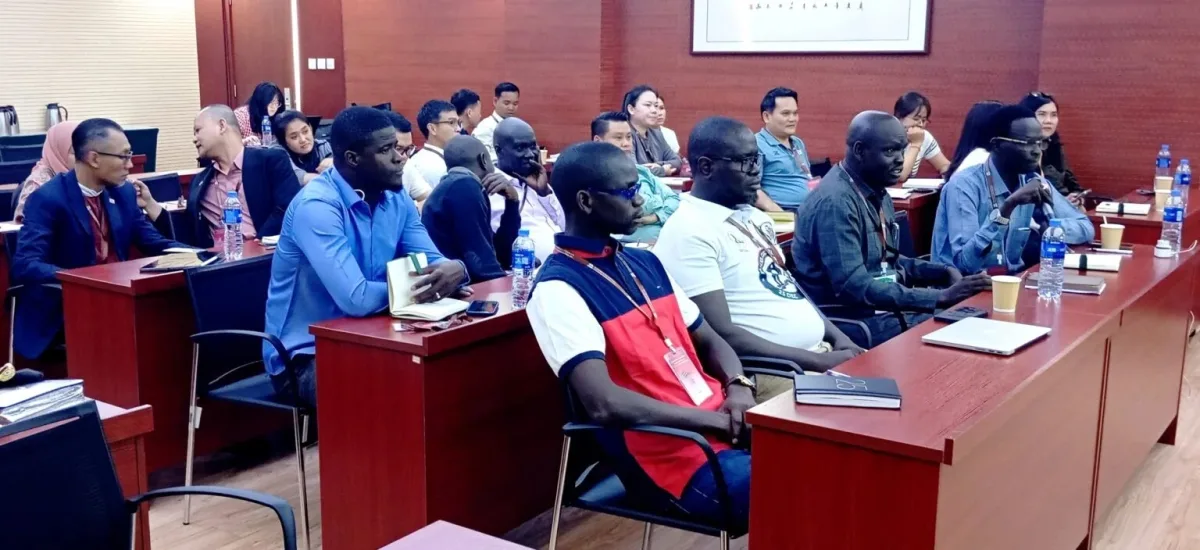
African delegates gathered in Beijing have condemned the ongoing xenophobic attacks against foreign African nationals in South Africa, calling the violence a betrayal of the continent's founding ideals.
The delegates are in China for the Ethnic Policy and Practice Seminar, organised by the Academy for International Business Officials under China's Ministry of Commerce. They spoke with the News Agency of Nigeria on the sidelines of the training programmes.
Yusupha Bojang of The Gambia's National Council for Civic Education said Africans must see themselves as one people, regardless of colonial-era borders.
“We first have to recognise that in Africa we are all one. These boundaries are artificial creations. We should treat each other as brothers and sisters,” he said.
Bojang said frustrations over domestic problems shouldn't be aimed at fellow Africans who are living lawfully in another country.
“If you have any problem, it should be channelled to your government, not innocent citizens legitimately carrying out their activities,” he added.
He called on Africans to speak with one voice against xenophobia and urged unity, saying “when we see wrongs happening, we should all come out to condemn them because it can happen to anybody.”
Jallow Gibbi, a journalist with Dunia Radio in The Gambia, said he was embarrassed and saddened by reports of Africans attacking fellow Africans.
“When I watched the news, I was embarrassed to see Africans fighting Africans. It isn't humanitarian and it shouldn't happen,” he said.
Gibbi called on African leaders and international organisations to promote peace and unity. He noted that information from Gambian diplomatic authorities indicated that no Gambian citizen had been reported affected, but advised nationals to remain vigilant.
Richard Jombi James of South Sudan's Ministry of Culture, Museum and National Heritage described African unity as essential to the continent's progress.
“We are all Africans from the north to the south, east and west. We can't attack ourselves. We are one Africa, one people,” he said.
Kawu Muhammed Lawan of Nigeria's Federal Ministry of Arts, Culture, Tourism and Creative Economy said the reports were particularly troubling given the support many African countries provided during South Africa's anti-apartheid struggle.
“Looking at all the efforts other African countries made to end apartheid in South Africa, it's embarrassing to witness hostility against fellow Africans today,” he said.
Lawan urged African leaders to take practical steps to protect citizens across the continent and strengthen regional integration.
Emmanuel Nok, a legal practitioner with South Sudan's Ministry of Culture, Museum and National Heritage, said Africans should reject violence and discrimination against one another.
“We feel hurt as Africans when we see fellow Africans being hunted by other Africans. We should condemn such behaviour because it goes against the spirit of African brotherhood,” he said.
Nok noted that many African countries host citizens from neighbouring states and stressed that peaceful coexistence remained vital for economic development and regional cooperation.
The delegates called on governments, regional organisations and civil society groups to promote tolerance, strengthen social cohesion and uphold the principles of African unity.
They also urged Africans to focus on common development goals, saying stronger cooperation would advance peace, prosperity and integration across the continent.
Xenophobic attacks against foreign nationals have flared periodically in South Africa, often targeting Africans from other countries. The violence has drawn condemnation from across the continent and raised questions about the strength of Pan-African solidarity in practice.