

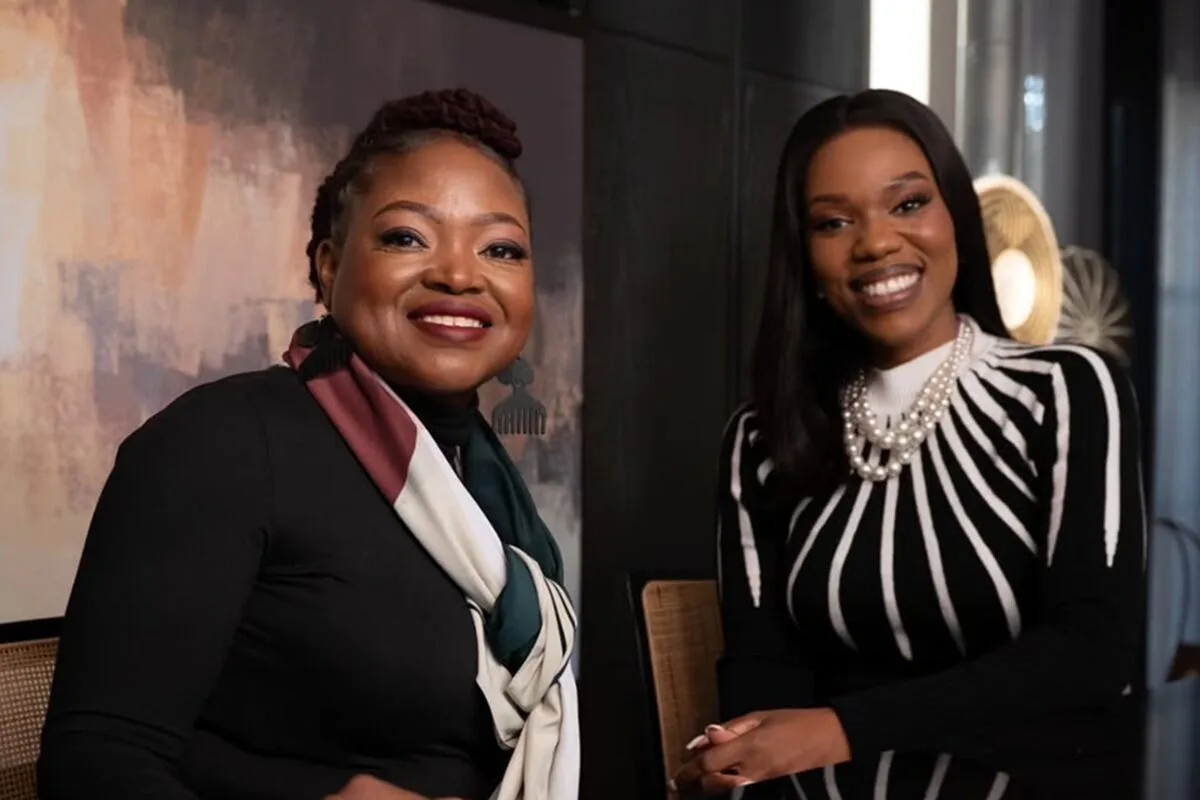
The single sharpest fact in one or two punchy sentences. Zimbabwean author Sukoluhle 'Sue' Nyathi's novel 'The Polygamist' has taken the world by storm with the Netflix series, based on her book, exploring the complex lives of women in polygamous relationships. The series has caught the attention of people worldwide, sparking conversations about representation, oppression, and the importance of telling our stories.
Sukoluhle 'Sue' Nyathi is a Zimbabwean writer who has had a whirlwind of a year with the success of 'The Polygamist'. Nyathi recently appeared on Lungelo KM's Engineer Your Life Podcast, where she delved into her own story and the thought process behind bringing 'The Polygamist' to life. 'Let's get into the polygamist, it's classified as fiction,' Lungelo KM said. 'Fiction sometimes is called faction. People often say there's more truth in fiction than nonfiction. Because you know we also derive fiction [from] things you observe, which are based on truth,' responded Nyathi.
The original book is set in Harare in Zimbabwe, not Bulawayo as many people assume. Nyathi explained that the book arose from her observations when she had just started her corporate career, moving from Bulawayo to the big bustling capital city of Harare. 'I was raised in a conservative Catholic home... when I was in Harare, I started to see this phenomenon of men who were purportedly monogamous, but they are having other secret wives, and secret lives in parallel,' Nyathi said. 'There's this deception around it. You have children who are being born in the setup, some don't even know about what's happening with the other siblings, and it was convoluted, and it was interesting for me.'
Nyathi chose to focus on the women's perspectives, not the men's. 'I didn't want to tell the story from the point of view of a man: I didn't want to centre the man, simply because I think men will come up with 1001 reasons why, you know, they want to have multiple partners and be in polygamous relationships,' Nyathi said. 'I just wanted to, you know, centre the women, the voices of the women who find themselves in a situation like this, and why they would choose it, but without judgment.'
When it came to writing the characters, Nyathi explained that she lives in the character, embodying them as she writes. 'When I write, I live in the character, I embody that character,' Nyathi said. 'So I become Matipa, I become Joyce, and that's how I write those characters.'
The response to 'The Polygamist' has been overwhelmingly positive. 'I like the response. I mean, I remember Amnesty International posted. They said: 'If you've watched The Polygamist, if you are in a situation where you are married to Jonasi, this is the steps you can take,' Nyathi said. 'So, for me, seeing that kind of response also moves me, because it shows a care for, you know, people who are oppressed, people who are in pain, who don't know where to go. ... You see that, and you think, 'okay, there's a story out there, maybe I'm not alone, I'm not suffering alone, maybe the other people who are going through the same thing', and it also empowers people to act.'
The Polygamist has sparked conversations about representation, oppression, and the importance of telling our stories. Nyathi's decision to focus on the women's perspectives sets a powerful precedent for storytelling in Africa, where women's voices are often marginalized.
Sukoluhle 'Sue' Nyathi's success with The Polygamist is a testament to the impact of nuanced storytelling in Africa. Her work highlights the complexities of polygamous relationships, exploring the nuances of power, oppression, and resilience.
The Polygamist is more than just a story – it's a reflection of the world we live in today. Nyathi's decision to focus on the women's perspectives sets a powerful precedent for storytelling in Africa, where women's voices are often marginalized.
The Polygamist has sparked conversations about representation, oppression, and the importance of telling our stories. Nyathi's decision to focus on the women's perspectives sets a powerful precedent for storytelling in Africa, where women's voices are often marginalized.
Key Facts • The original book 'The Polygamist' is set in Harare in Zimbabwe. • Nyathi observed the phenomenon of men having secret wives and lives in parallel during her corporate career. • Nyathi chose to focus on the women's perspectives in her story. • The Polygamist has sparked conversations about representation, oppression, and the importance of telling our stories. • Amnesty International posted about the importance of seeking help in polygamous relationships. • Nyathi's success with The Polygamist highlights the impact of nuanced storytelling in Africa. • The Polygamist sets a powerful precedent for storytelling in Africa, where women's voices are often marginalized.