

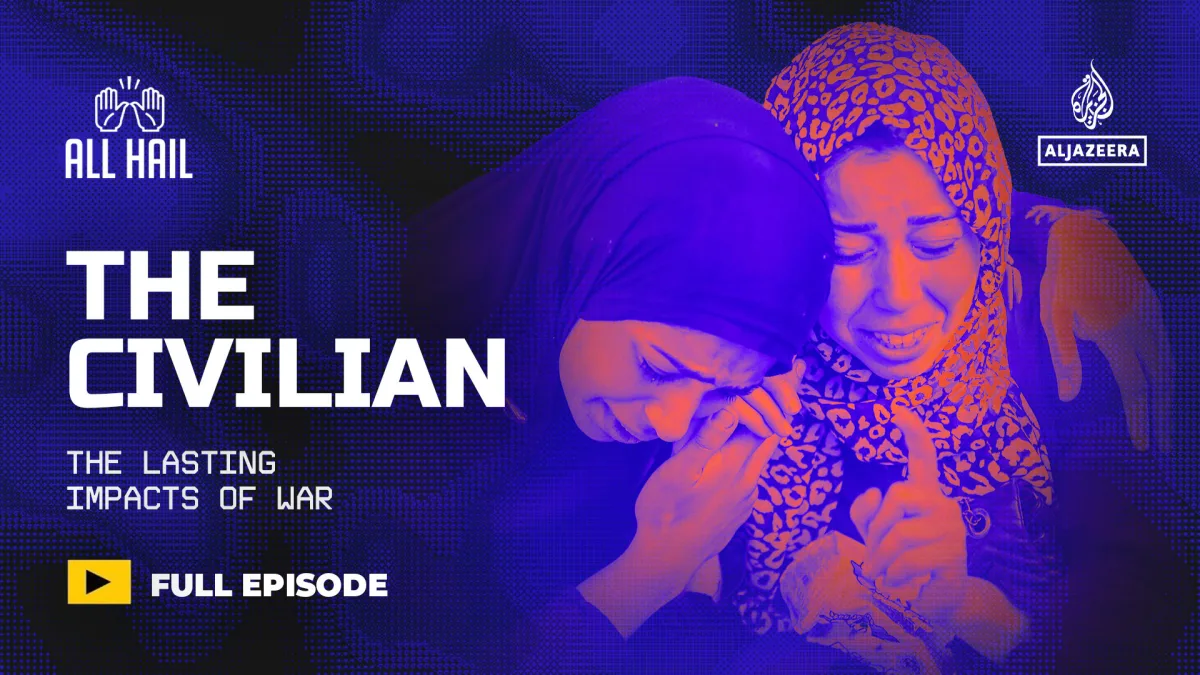
The single most striking fact about war is that it doesn't really end when the fighting stops. For hundreds of thousands of people, today's wars and genocides will never truly end.
The violence that civilians endure leaves deep, lasting scars - physical, psychological, and life-altering. Long after the fighting stops, those wounds continue to shape daily life and entire communities for decades to come. They're a constant reminder of the devastating impact of war on civilians.
And this is what Ali Rae explores in episode three of All Hail the Military, a five-part series that reveals the systems, power, and hidden complicities that sustain global militarism - and the profound impact it has on us all. The series highlights the complex and multifaceted nature of war's impact on civilians.
One key aspect of war's impact on civilians is the physical scars it leaves. These can range from injuries sustained during the fighting to long-term health problems caused by the destruction of healthcare systems and the environment. For example, in some conflict zones, civilians have been exposed to toxic chemicals and radiation, leading to increased rates of cancer and birth defects. This exposure can have a lasting impact on civilians' health and well-being.
But the psychological scars of war can be just as debilitating. Civilians who have lived through war often experience anxiety, depression, and post-traumatic stress disorder (PTSD). These conditions can make it difficult for people to work, maintain relationships, and even care for themselves and their families. They can't escape the trauma they've experienced, and it affects every aspect of their lives.
The life-altering impact of war on civilians is also evident in the way it disrupts communities and economies. When wars destroy infrastructure, such as roads, schools, and hospitals, it can take years or even decades to rebuild. This can lead to a lack of access to basic necessities like healthcare, education, and employment opportunities. It's a huge challenge for civilians to recover from the destruction caused by war.
In addition to the human toll, war also has a significant economic impact on civilians. The cost of rebuilding and recovering from war can be staggering, and it often falls on the civilians who have already suffered the most. For example, in some countries, the cost of rebuilding infrastructure and providing humanitarian aid has been estimated to be in the billions of dollars. This cost can be overwhelming for civilians, and it's a major obstacle to their recovery.
As Ali Rae's series highlights, the impact of war on civilians is not just a matter of individual suffering, but also a broader societal issue. The systems and power structures that sustain global militarism have a profound impact on the lives of millions of people around the world. They're affected by the conflict, and it's essential to consider this when addressing the issue.
The fact that wars leave lasting scars on civilians for generations is a sobering reminder of the need for sustainable and long-term solutions to conflict. It's not just about stopping the fighting, but also about addressing the root causes of war and supporting civilians in their recovery and rebuilding efforts. We can't ignore the impact of war on civilians; we must take action to mitigate it.
The impact of war on civilians is a complex and multifaceted issue, and it requires a comprehensive and nuanced approach to address. By exploring the systems, power, and hidden complicities that sustain global militarism, we can gain a deeper understanding of the root causes of conflict and work towards creating a more just and peaceful world. We must consider the various factors that contribute to the issue and develop effective solutions.
Key Facts
- Hundreds of thousands of people are affected by wars and genocides that will never truly end.
- The violence civilians endure leaves deep, lasting scars - physical, psychological, and life-altering.
- Wars disrupt communities and economies, leading to a lack of access to basic necessities like healthcare, education, and employment opportunities.
- The cost of rebuilding and recovering from war can be staggering, and it often falls on the civilians who have already suffered the most.
- The impact of war on civilians is a broader societal issue, perpetuated by systems and power structures that sustain global militarism.
“The violence that civilians endure leaves deep, lasting scars”
— physical, psychological, and life-altering.
Long after the fighting stops, those wounds continue to shape daily life and entire communities for decades to come.
The need for sustainable and long-term solutions to conflict is more pressing than ever. By supporting civilians in their recovery and rebuilding efforts, and addressing the root causes of war, we can work towards creating a more just and peaceful world. We must prioritize the needs of civilians and develop effective solutions to address the issue.
It's crucial to remember that the impact of war on civilians is not just a matter of individual suffering, but also a broader societal issue. The systems and power structures that sustain global militarism have a profound impact on the lives of millions of people around the world. They're affected by the conflict, and it's essential to consider this when addressing the issue.
In order to address this issue, it's essential to consider the role of power and hidden complicities in sustaining conflict. This includes the involvement of governments, corporations, and other actors in the production and trade of arms, as well as the ways in which militarism is perpetuated through ideology and culture. We can't ignore the role of these factors in sustaining conflict; we must address them.
By exploring these issues and working towards comprehensive solutions, we can gain a deeper understanding of the root causes of conflict and work towards creating a more just and peaceful world. We must develop effective solutions that address the complex and multifaceted nature of the issue. It's not going to be easy, but it's not impossible either.
The impact of war on civilians is a complex and multifaceted issue, and it requires a comprehensive and nuanced approach to address. By considering the systems, power, and hidden complicities that sustain global militarism, we can work towards creating a more just and peaceful world. We must prioritize the needs of civilians and develop effective solutions to address the issue.
In the end, it's up to us to demand accountability from those in power and to support civilians in their recovery and rebuilding efforts. By doing so, we can create a world where the impact of war on civilians is minimized, and where sustainable and long-term solutions to conflict are prioritized. We can't do it alone, but we can work together to make a difference.
As we move forward, it's essential to remember the human cost of war and the lasting scars it leaves on civilians. By prioritizing peace, justice, and human rights, we can work towards creating a world where the impact of war on civilians is minimized, and where sustainable and long-term solutions to conflict are prioritized. We must keep the needs of civilians at the forefront of our efforts.
The road to recovery and rebuilding is long and difficult, but it's not impossible. By working together and prioritizing the needs of civilians, we can create a more just and peaceful world. We'll face challenges along the way, but we can overcome them if we work together. It won't be easy, but it's worth it.
And so, as we consider the impact of war on civilians, let's remember the importance of prioritizing peace, justice, and human rights. By doing so, we can work towards creating a world where the impact of war on civilians is minimized, and where sustainable and long-term solutions to conflict are prioritized. We must stay committed to this goal and work towards achieving it.
The need for sustainable and long-term solutions to conflict is more pressing than ever. By supporting civilians in their recovery and rebuilding efforts, and addressing the root causes of war, we can work towards creating a more just and peaceful world. We can't afford to wait; we must take action now.
In order to address this issue, it's essential to consider the role of power and hidden complicities in sustaining conflict. This includes the involvement of governments, corporations, and other actors in the production and trade of arms, as well as the ways in which militarism is perpetuated through ideology and culture. We must address these factors if we want to create a more just and peaceful world.
By exploring these issues and working towards comprehensive solutions, we can gain a deeper understanding of the root causes of conflict and work towards creating a more just and peaceful world. We must develop effective solutions that address the complex and multifaceted nature of the issue. It's a challenging task, but we can't give up.
The impact of war on civilians is a complex and multifaceted issue, and it requires a comprehensive and nuanced approach to address. By considering the systems, power, and hidden complicities that sustain global militarism, we can work towards creating a more just and peaceful world. We must prioritize the needs of civilians and develop effective solutions to address the issue.
In the end, it's up to us to demand accountability from those in power and to support civilians in their recovery and rebuilding efforts. By doing so, we can create a world where the impact of war on civilians is minimized, and where sustainable and long-term solutions to conflict are prioritized. We can make a difference if we work together.
As we move forward, it's essential to remember the human cost of war and the lasting scars it leaves on civilians. By prioritizing peace, justice, and human rights, we can work towards creating a world where the impact of war on civilians is minimized, and where sustainable and long-term solutions to conflict are prioritized. We must stay committed to this goal and work towards achieving it.
The road to recovery and rebuilding is long and difficult, but it's not impossible. By working together and prioritizing the needs of civilians, we can create a more just and peaceful world. We'll face challenges along the way, but we can overcome them if we work together. It's a long-term process, but it's worth it.
And so, as we consider the impact of war on civilians, let's remember the importance of prioritizing peace, justice, and human rights. By doing so, we can work towards creating a world where the impact of war on civilians is minimized, and where sustainable and long-term solutions to conflict are prioritized. We must stay committed to this goal and work towards achieving it.
The need for sustainable and long-term solutions to conflict is more pressing than ever. By supporting civilians in their recovery and rebuilding efforts, and addressing the root causes of war, we can work towards creating a more just and peaceful world. We can't afford to wait; we must take action now.
In order to address this issue, it's essential to consider the role of power and hidden complicities in sustaining conflict. This includes the involvement of governments, corporations, and other actors in the production and trade of arms, as well as the ways in which militarism is perpetuated through ideology and culture. We must address these factors if we want to create a more just and peaceful world.
By exploring these issues and working towards comprehensive solutions, we can gain a deeper understanding of the root causes of conflict and work towards creating a more just and peaceful world. We must develop effective solutions that address the complex and multifaceted nature of the issue. It's a challenging task, but we can't give up.
The impact of war on civilians is a complex and multifaceted issue, and it requires a comprehensive and nuanced approach to address. By considering the systems, power, and hidden complicities that sustain global militarism, we can work towards creating a more just and peaceful world. We must prioritize the needs of civilians and develop effective solutions to address the issue.
In the end, it's up to us to demand accountability from those in power and to support civilians in their recovery and rebuilding efforts. By doing so, we can create a world where the impact of war on civilians is minimized, and where sustainable and long-term solutions to conflict are prioritized. We can make a difference if we work together.
As we move forward, it's essential to remember the human cost of war and the lasting scars it leaves on civilians. By prioritizing peace, justice, and human rights, we can work towards creating a world where the impact of war on civilians is minimized, and where sustainable and long-term solutions to conflict are prioritized. We must stay committed to this goal and work towards achieving it.
The road to recovery and rebuilding is long and difficult, but it's not impossible. By working together and prioritizing the needs of civilians, we can create a more just and peaceful world. We'll face challenges along the way, but we can overcome them if we work together. It's a long-term process, but it's worth it.
And so, as we consider the impact of war on civilians, let's remember the importance of prioritizing peace, justice, and human rights. By doing so, we can work towards creating a world where the impact of war on civilians is minimized, and where sustainable and long-term solutions to conflict are prioritized. We must stay committed to this goal and work towards achieving it.
The need for sustainable and long-term solutions to conflict is more pressing than ever. By supporting civilians in their recovery and rebuilding efforts, and addressing the root causes of war, we can work towards creating a more just and peaceful world. We can't afford to wait; we must take action now.
In order to address this issue, it's essential to consider the role of power and hidden complicities in sustaining conflict. This includes the involvement of governments, corporations, and other actors in the production and trade of arms, as well as the ways in which militarism is perpetuated through ideology and culture. We must address these factors if we want to create a more just and peaceful world.
By exploring these issues and working towards comprehensive solutions, we can gain a deeper understanding of the root causes of conflict and work towards creating a more just and peaceful world. We must develop effective solutions that address the complex and multifaceted nature of the issue. It's a challenging task, but we can't give up.
The impact of war on civilians is a complex and multifaceted issue, and it requires a comprehensive and nuanced approach to address. By considering the systems, power, and hidden complicities that sustain global militarism, we can work towards creating a more just and peaceful world. We must prioritize the needs of civilians and develop effective solutions to address the issue.
In the end, it's up to us to demand accountability from those in power and to support civilians in their recovery and rebuilding efforts. By doing so, we can create a world where the impact of war on civilians is minimized, and where sustainable and long-term solutions to conflict are prioritized. We can make a difference if we work together.
As we move forward, it's essential to remember the human cost of war and the lasting scars it leaves on civilians. By prioritizing peace, justice, and human rights, we can work towards creating a world where the impact of war on civilians is minimized, and where sustainable and long-term solutions to conflict are prioritized. We must stay committed to this goal and work towards achieving it.
The road to recovery and rebuilding is long and difficult, but it's not impossible. By working together and prioritizing the needs of civilians, we can create a more just and peaceful world. We'll face challenges along the way, but we can overcome them if we work together. It's a long-term process, but it's worth it.
And so, as we consider the impact of war on civilians, let's remember the importance of prioritizing peace, justice, and human rights. By doing so, we can work towards creating a world where the impact of war on civilians is minimized, and where sustainable and long-term solutions to conflict are prioritized. We must stay committed to this goal and work towards achieving it.