

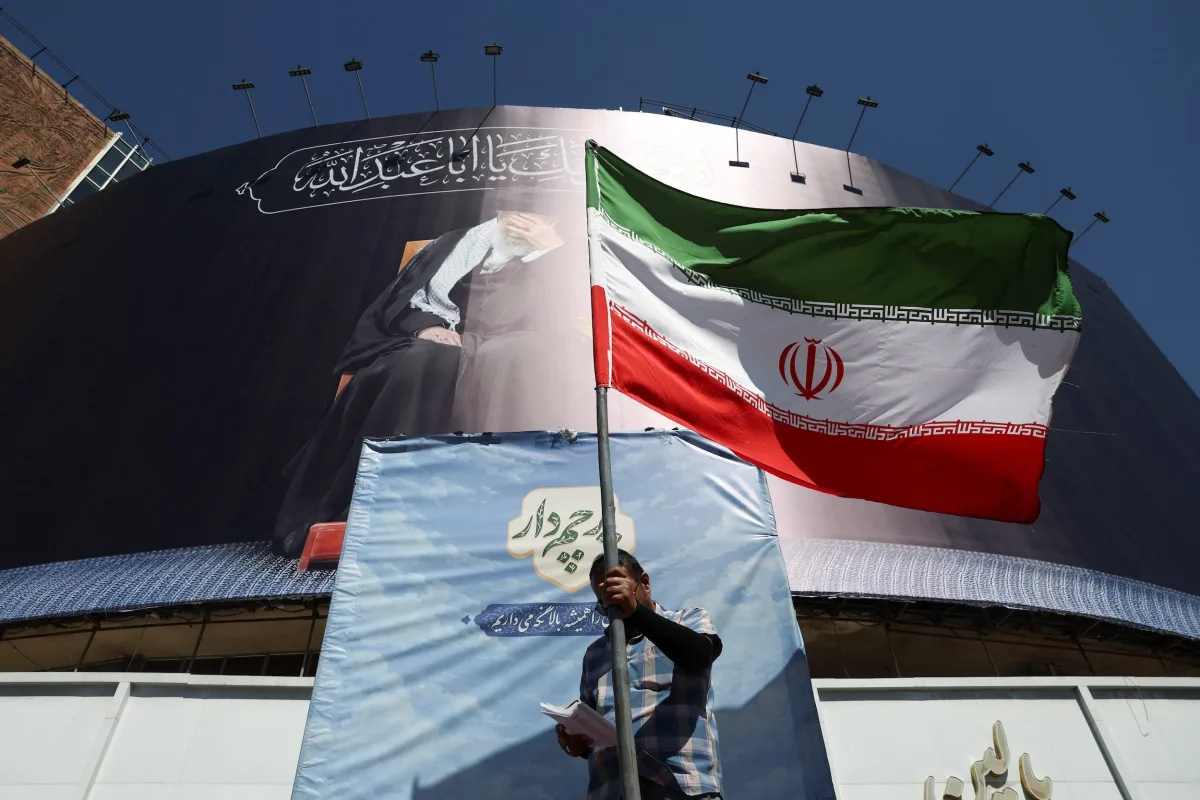
The United States and Iran have agreed to stop fighting — at least for now.
On Monday, Pakistan's Prime Minister Shehbaz Sharif announced that both sides had declared an immediate and permanent end of all military operations. The memorandum of understanding will be signed in Switzerland on Friday, June 17.
Here's what the preliminary deal covers, according to statements from US and Iranian officials.
Strait of Hormuz reopens, blockade lifted
US President Donald Trump said the Strait of Hormuz would reopen on Friday, and he had ordered the lifting of the US blockade on Iranian ports. A senior Iranian official confirmed the Strait would reopen to all commercial vessels once the memorandum is signed.
Iran's semi-official Fars news agency reported that marine traffic through the Strait would be regulated by Iran in coordination with Oman.
The Strait of Hormuz is a narrow waterway between Iran and Oman that handles about a fifth of the world's oil shipments. Its closure had sent global energy prices soaring.
Nuclear program frozen, weapons promise renewed
Both sides say Iran has agreed not to produce or acquire nuclear weapons — a promise Tehran has made for decades. The senior Iranian official said Iran would freeze its nuclear activity, stopping further uranium enrichment and expansion of nuclear facilities.
Trump said on Saturday there was no urgency to remove Iran's stockpile of nuclear material, and that the US would retrieve it "when all is calm." The senior Iranian official said the US had agreed that Iran could dilute its highly enriched uranium inside Iran under a future comprehensive agreement.
Trump also said there would be a strong inspections regime, but he didn't give specifics. US Senator Lindsey Graham said any final deal on Iran's nuclear program would have to be reviewed and approved by Congress.
Sanctions and frozen assets
The senior Iranian official said the US agreed not to impose new sanctions until a final deal was reached. The US would also waive oil sanctions on Iran for a specified period. After a final agreement, all US and UN sanctions would be lifted on an agreed timetable.
The official added that the US agreed to release $25 billion of Iran's frozen assets, including through direct cash transfers, cooperation among regional countries, and financial credit lines. Washington would also prepare a reconstruction and development plan for Iran in coordination with its regional allies, to be negotiated within 60 days.
Trump, however, said Iran wouldn't be provided with cash but that sanctions could potentially be lifted.
Lebanon included, but Israel pushes back
Sharif said the end of military operations would also include Lebanon. Iran's Supreme National Security Council said operations would stop permanently on Monday night, including in Lebanon. Iran's Foreign Minister Abbas Araqchi said there must be a complete halt to Israeli attacks on Lebanon, and that the US bears responsibility for implementing the framework.
But Israel's Defense Minister Israel Katz said the Israeli military would remain in security zones it has captured in Lebanon, Syria, and Gaza. He said Prime Minister Benjamin Netanyahu had made this clear to Trump.
Negotiations on the more difficult issues — Iran's nuclear program and US sanctions — will continue over the next 60 days. The memorandum will be published after Friday's signing in Switzerland.
For now, the guns have gone quiet. But the real test will be whether both sides can turn this pause into a lasting peace.