

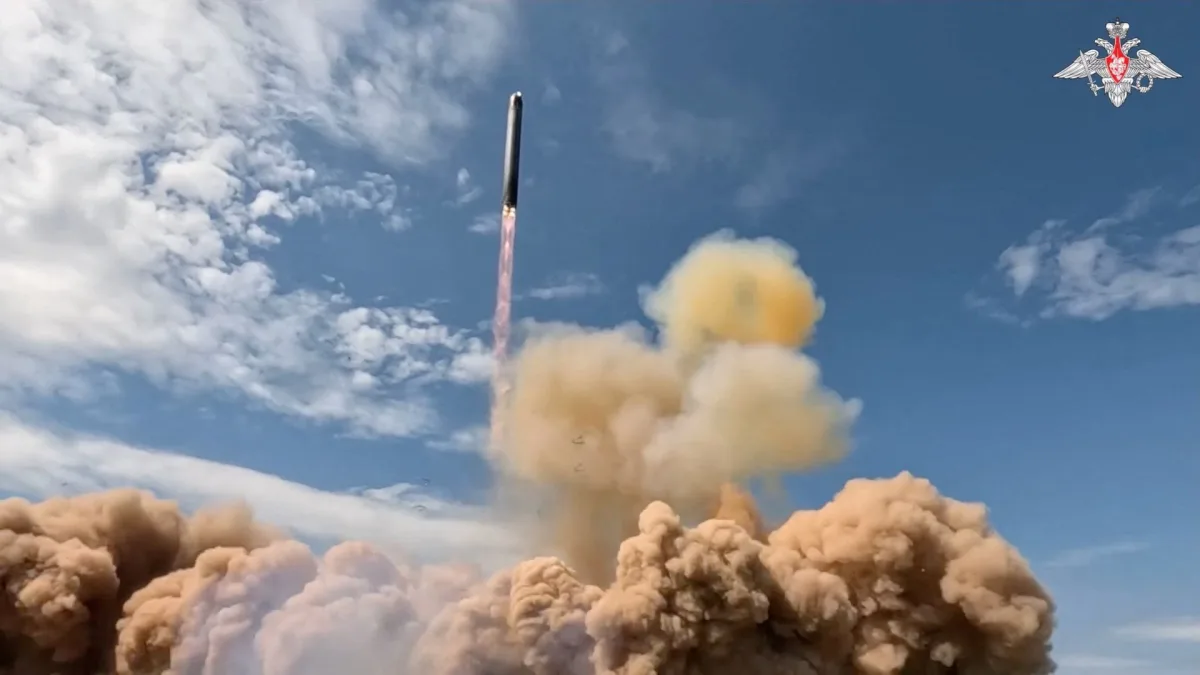
Vladimir Putin has announced that Russia will deploy the world's 'most powerful' nuclear missile by the end of this year. The declaration was made on May 12, 2026, and it's a move that could significantly impact global security.
And this isn't just any missile - it's the one Putin himself is calling the 'most powerful.' Yet, details about the missile's capabilities and range are still scarce. What we do know is that it's supposed to be deployed before 2026 comes to a close.
Key Facts
- The missile is set to be deployed by the end of 2026.
- Vladimir Putin described it as the 'world's most powerful' nuclear missile.
- The announcement was made on May 12, 2026.
Background
The development and deployment of nuclear missiles are complex processes, involving years of research, testing, and production. It's a field where Russia has been actively involved, with a history of producing sophisticated military equipment. But the claim of this being the 'most powerful' missile in the world is a significant one, and it's likely to draw attention from other nations.
'We will deploy the world's most powerful nuclear missile by the end of this year,' Vladimir Putin said.
The context of this announcement is crucial. It comes at a time when global tensions are high, and the threat of nuclear conflict, although still considered low, is a constant concern. Nations are always looking to upgrade their military capabilities, but the development of a 'most powerful' nuclear missile is a significant step.
Implications
The implications of this move are far-reaching. It could lead to an escalation in the nuclear arms race, with other countries feeling pressured to develop their own more powerful missiles. And it's not just about the military might - the economic burden of such developments is also significant.
But what does this mean for global security? The answer isn't straightforward. On one hand, the development of such a powerful missile could be seen as a deterrent, making other nations less likely to engage in conflict. On the other hand, it could also be perceived as a threat, leading to increased tensions and a higher risk of conflict.
The world is watching Russia's move closely, and the coming months will be crucial in understanding the full implications of this development.