

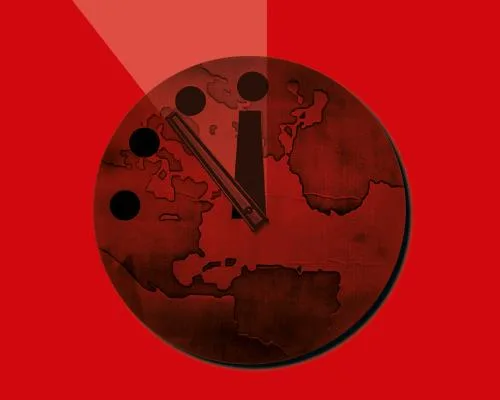
The Doomsday Clock, a large, quarter clock with no numbers, has been ticking away for over 70 years, counting down the seconds until the apocalypse. The clock was created in 1947 by a group of Manhattan Project nuclear scientists who wanted to warn the public and politicians of the dangers of nuclear war. Today, the clock is set by a group of leading scientists, academics, and diplomats who aim to reach a consensus on where to set the clock's hands.
The clock's latest setting, 85 seconds to midnight, is a stark warning to world leaders and citizens to take action to prevent global catastrophe. The threats to humanity are numerous and complex, including the risk of nuclear war, climate change, and the rise of artificial intelligence. The clock's setters believe that humanity has never stood so close to the brink, and that the odds are not in our favor. Alexandra Bell, the CEO of the Bulletin of the Atomic Scientists, the organization that sets the Doomsday Clock, says that the public has developed a false sense of security, and that the threat of nuclear war is still very real.
The Doomsday Clock has become a cultural icon, with its image appearing in music, art, and literature. The clock's setters have also broadened its scope to include other human-made threats, such as climate change and disruptive technologies. The clock is not just a warning, but also a call to action, urging world leaders and citizens to work together to prevent global catastrophe. The clock's setters believe that the first step to action is awareness, and that true awareness is not only knowledge but feeling.
The history of the Doomsday Clock is a fascinating one, with its creators, including Martyl Langsdorf and Eugene Rabinowitch, playing a crucial role in shaping the clock's message. The clock's hands have been moved over the years in response to various events, including the Cuban missile crisis and the rise of nuclear arms. Today, the clock is set by a committee of experts who assess the threats to humanity and decide where to set the clock's hands.
Key Facts
- The Doomsday Clock was created in 1947 by a group of Manhattan Project nuclear scientists.
- The clock's latest setting is 85 seconds to midnight, the closest it has ever been.
- The clock's setters include Alexandra Bell, CEO of the Bulletin of the Atomic Scientists.
- The threats to humanity include nuclear war, climate change, and the rise of artificial intelligence.
- The clock's setters believe that humanity has never stood so close to the brink.
- The clock's hands have been moved over the years in response to various events, including the Cuban missile crisis and the rise of nuclear arms.
- The clock is set by a committee of experts who assess the threats to humanity and decide where to set the clock's hands.
- The clock's creators include Martyl Langsdorf and Eugene Rabinowitch.
- The clock has become a cultural icon, with its image appearing in music, art, and literature.
The History of the Doomsday Clock
The Doomsday Clock has a rich and fascinating history, with its creators playing a crucial role in shaping the clock's message. The clock was created in 1947 by a group of Manhattan Project nuclear scientists who wanted to warn the public and politicians of the dangers of nuclear war. The clock's first setting was seven minutes to midnight, and its hands have been moved over the years in response to various events, including the Cuban missile crisis and the rise of nuclear arms.
The clock's creators, including Martyl Langsdorf and Eugene Rabinowitch, were a group of scientists who had worked on the Manhattan Project and had seen firsthand the devastating effects of nuclear war. They wanted to warn the public and politicians of the dangers of nuclear war and to urge them to take action to prevent it. The clock's message was simple: the threat of nuclear war is real, and it's up to us to prevent it.
The clock's history is also marked by its broadening scope, with the clock's setters including other human-made threats, such as climate change and disruptive technologies. The clock's setters believe that the first step to action is awareness, and that true awareness is not only knowledge but feeling. The clock's message is not just a warning, but also a call to action, urging world leaders and citizens to work together to prevent global catastrophe.
The Threats to Humanity
The threats to humanity are numerous and complex, including the risk of nuclear war, climate change, and the rise of artificial intelligence. The clock's setters believe that humanity has never stood so close to the brink, and that the odds are not in our favor. Alexandra Bell, the CEO of the Bulletin of the Atomic Scientists, says that the public has developed a false sense of security, and that the threat of nuclear war is still very real.
The risk of nuclear war is still a major concern, with the clock's setters warning that the threat of nuclear war is still very real. The rise of artificial intelligence is also a major concern, with the clock's setters warning that the development of AI could have devastating consequences if not managed properly. Climate change is also a major concern, with the clock's setters warning that the effects of climate change could be catastrophic if not addressed.
The clock's setters believe that the first step to action is awareness, and that true awareness is not only knowledge but feeling. The clock's message is not just a warning, but also a call to action, urging world leaders and citizens to work together to prevent global catastrophe. The clock's setters believe that humanity has the power to prevent global catastrophe, but that it will require cooperation and action from world leaders and citizens.
The Role of the Bulletin of the Atomic Scientists
The Bulletin of the Atomic Scientists is a non-profit organization that was founded in 1945 by a group of scientists who had worked on the Manhattan Project. The organization's mission is to inform the public and policymakers about the threats to humanity, including nuclear war, climate change, and the rise of artificial intelligence. The organization's founders, including J. Robert Oppenheimer and Albert Einstein, were a group of scientists who had seen firsthand the devastating effects of nuclear war and wanted to warn the public and politicians of the dangers of nuclear war.
The Bulletin of the Atomic Scientists is responsible for setting the Doomsday Clock, with a committee of experts assessing the threats to humanity and deciding where to set the clock's hands. The organization's CEO, Alexandra Bell, says that the public has developed a false sense of security, and that the threat of nuclear war is still very real. The organization's message is not just a warning, but also a call to action, urging world leaders and citizens to work together to prevent global catastrophe.
The Bulletin of the Atomic Scientists is also responsible for publishing a magazine that informs the public and policymakers about the threats to humanity. The magazine includes articles and analysis from experts in the field, as well as news and updates on the latest developments. The organization's website also includes a range of resources and information, including the Doomsday Clock, which is updated regularly to reflect the latest threats to humanity.
The Impact of the Doomsday Clock
The Doomsday Clock has had a significant impact on the public and policymakers, with its message of warning and call to action resonating with people around the world. The clock's image has appeared in music, art, and literature, and its message has been referenced in popular culture. The clock's setters believe that the first step to action is awareness, and that true awareness is not only knowledge but feeling.
The Doomsday Clock is a symbol of the threat of human extinction, and it's up to us to prevent it. We have the power to prevent global catastrophe, but it will require cooperation and action from world leaders and citizens. The clock's message is not just a warning, but also a call to action, urging us to work together to prevent global catastrophe.
The Doomsday Clock has also had a significant impact on policymakers, with its message of warning and call to action influencing policy decisions around the world. The clock's setters believe that the first step to action is awareness, and that true awareness is not only knowledge but feeling. The clock's message is not just a warning, but also a call to action, urging world leaders and citizens to work together to prevent global catastrophe.
The Future of the Doomsday Clock
The future of the Doomsday Clock is uncertain, with the clock's setters warning that the threats to humanity are still very real. The clock's setters believe that humanity has the power to prevent global catastrophe, but that it will require cooperation and action from world leaders and citizens. The clock's message is not just a warning, but also a call to action, urging us to work together to prevent global catastrophe.
The Doomsday Clock will continue to be set by a committee of experts who assess the threats to humanity and decide where to set the clock's hands. The clock's setters will continue to warn of the dangers of nuclear war, climate change, and the rise of artificial intelligence, and will urge world leaders and citizens to work together to prevent global catastrophe. The clock's message will continue to be a call to action, urging us to take action to prevent global catastrophe.
The future of the Doomsday Clock is also marked by its broadening scope, with the clock's setters including other human-made threats, such as pandemics and cybersecurity threats. The clock's setters believe that the first step to action is awareness, and that true awareness is not only knowledge but feeling. The clock's message is not just a warning, but also a call to action, urging world leaders and citizens to work together to prevent global catastrophe.