

The Rise of Illustration
For decades, people who draw the pictures in our favourite books have been treated like the folks who come in to paint the walls after the builders have gone home. That's changing next month with the launch of the Quentin Blake Centre for Illustration in Clerkenwell, London. Housed in a sprawling 17th-century industrial site, this new spot is set to be the biggest home for illustration anywhere on the planet. It's not just a dusty museum; it's a living laboratory for the art that shapes everything from our fashion and advertising to the animation on our screens.
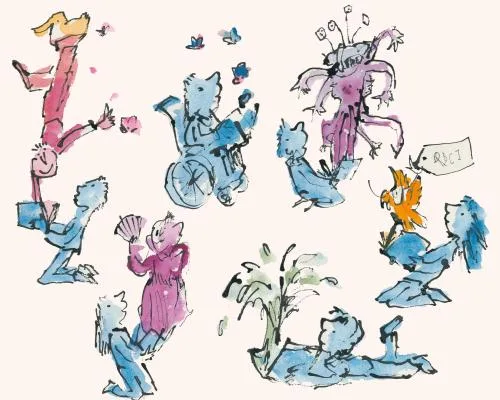
At the heart of this project is Quentin Blake himself, who is now 93 and showing no signs of slowing down. He has spent 75 years sketching the worlds we grew up in, famously bringing Roald Dahl's characters to life with his signature scratchy, dip-pen style. It's hard to even picture the BFG or the Twits without seeing his ink lines jumping off the page. Quentin Blake is handing over his personal archive of 40,000 drawings to the centre, ensuring that his legacy is properly stored for future generations of artists to study.
Quentin Blake himself notes that "more needs to be done to recognise the importance of all illustration as an art form. What is particularly wonderful about it is that it's a language everybody understands." The importance of illustration cannot be overstated, as it's the first thing a child grabs onto when opening a book.
Illustrators often tell you that they feel like second-class citizens in the book world, despite the fact that their work is the key to bringing a story to life. Axel Scheffler, known for his work on The Gruffalo, points out that the process is a partnership between words and pictures that shouldn't be pulled apart. He notes that while the text is important, the visual design is usually what catches the eye when you're walking through the woods on a themed trail. You don't just read a story; you enter a visual world that the illustrator built specifically for you.
Sarah McIntyre, an author-illustrator who knows the grind better than most, spent years fighting to get illustrators their fair share of credit. She launched the 'Pictures Mean Business' campaign a decade ago because the industry had a habit of forgetting who actually drew the magic. She highlights the sheer graft behind the craft, noting that while a simple story might take an hour to draft on a phone, the illustrations for that same book take months of nine-hour days to perfect. It's proper hard work, even if it looks effortless on the final 32 pages of a children's book.
Beyond just decorating a page, illustrators are now using their work to play games with the reader. Take Jon Klassen's 'I Want My Hat Back', for example, where the pictures tell a much darker, sharper story than the words suggest. While the bear is politely asking about his lost hat in the text, the images show he's clearly out for blood. It's a classic trick that teaches kids that sometimes what you see is the real truth, even when the narrator is being a bit dodgy with the facts.
The Evolution of Visual Storytelling
- The Quentin Blake Centre occupies a complex dating back to the 17th century. This historic site will be home to the largest collection of illustration in the world.
- Quentin Blake has been active as an illustrator for 75 years, creating some of the most beloved characters of our time. His archive of 40,000 drawings is a testament to his dedication to the craft.
- A typical picture book consists of exactly 32 pages of collaborative effort between author and illustrator. It's a long and complex process that requires skill and patience.
- Huw Aaron's 'Sleep Tight, Disgusting Blob' recently won the Waterstones children's book prize, showcasing the impact of illustration on the industry. This trend is part of a larger shift towards taking 'low-brow' art seriously.
- From the cave paintings of thousands of years ago to the digital memes we scroll through on our phones in Lagos or London, we have always used pictures to tell stories. As Matty Long, the creator of the 'Super Happy Magic Forest' series, puts it, "if the words are just repeating the picture, why have the words there at all?"
The best illustrators are adding subplots and hidden details that you only find after your tenth read-through. This shift towards valuing illustration is an attempt to drag the art form out of the margins and put it where it belongs. It's a space that doesn't just show us what's in a book, but how the sausage is made, so to speak. Whether you're an aspiring artist or just someone who remembers the joy of opening a new book for the first time, this is a bloody massive win for the industry. You can expect the site to function as a gallery, a workshop, and a national monument to the power of a single ink line.