

Vitalina Martynovska had spent four years pouring her soul into the National Chornobyl Museum, transforming it into a sleek, modern space that honored the 1986 nuclear disaster. She wanted to tell the raw story of the liquidators who cleaned up the mess and the thousands of people whose lives were irrevocably altered by the reactor explosion. The museum was finally ready for the public, reopening its doors on the 40th anniversary of the catastrophe, April 26, 2026. Then, less than a month later, the war came knocking in the most brutal way possible.
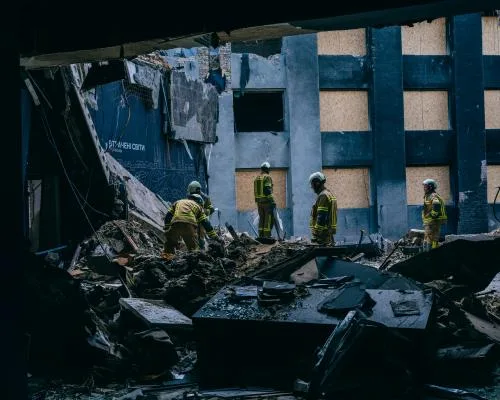
On the night of May 23, a massive wave of 60 missiles and 600 drones swarmed Kyiv. By 5am the next morning, Martynovska was staring at the smoking, charred skeleton of her life’s work. The museum, housed in a charming, historic building that used to be a fire station, had been devastated. The roof was gone, floors were hanging by a thread, and the precious laboratory was obliterated.
"Practically all of the museum has suffered damage," she said. "The building itself sustained significant damage, the roof was destroyed, the floor between the second and third storeys collapsed, and is no longer safe."
She didn't waste any time wallowing in grief. As soon as firefighters gave the nod, she and the chief curator ran into the burning building, dodging falling debris and wading through pools of water. They were grabbing whatever they could salvage while the roof above them groaned and crashed down. It's the kind of bravery you hope you'd have, but pray you never need. She managed to save an old earthenware jug, a small victory in a landscape of utter ruin.
Early counts suggest that 40% of the artefacts on display are now just dust. These weren't just random trinkets; we’re talking about old Bibles, icons, and ceramics that told the story of a lost world. Thankfully, the bulk of the museum’s 22,000-piece collection was tucked away safely in storage. Even so, finding the tail of a Russian missile among the wreckage of a museum dedicated to the most serious nuclear accident in history feels like a cruel, dark joke.
Across town, the National Art Museum of Ukraine (Namu) didn't fare much better. The force of the nearby blasts turned the building into a sieve, blowing out windows and sending panels from the massive wooden doors flying across the room. The elegant Apollo sculpture sitting on the roof is now cracked, and the ceilings are hanging down like jagged teeth. Yulia Lytvynets, the director of the museum, described the scene as the epicentre of a tornado.
Namu was already playing it smart, having moved its permanent collection of icons and modernist works to secure storage outside the city. They were hosting a temporary show called Sunrise, featuring works by 20th-century painter Anatoly Limarev. The temporary walls they built for the exhibit actually acted as barriers against the flying glass and debris, which saved the paintings from being shredded. Still, it wasn't a relaxing experience for the staff on the ground.
Veronika Bublei, the museum spokesperson, said the morning of the attack was pure chaos. "We had to pivot immediately from shock to survival mode, clearing out the exhibition and moving it to safety under heavy fire," she explained. Two students from the Kyiv-Mohyla Academy, who were there for an internship, ended up shovelling rubble instead of studying art history. It's certainly a placement they won't be forgetting in a hurry, even if it wasn't the kind of experience they signed up for.
This is about the erasure of a country's memory. When you attack a museum, you aren't just hitting a structure; you're attacking the things that define a nation's past. For the people of Kyiv, this isn't just news—it's a personal loss of the heritage that holds them together. As they mop up the water and cart away the bricks, they're holding onto the hope that the damage reports might be slightly less grim than they look today.