

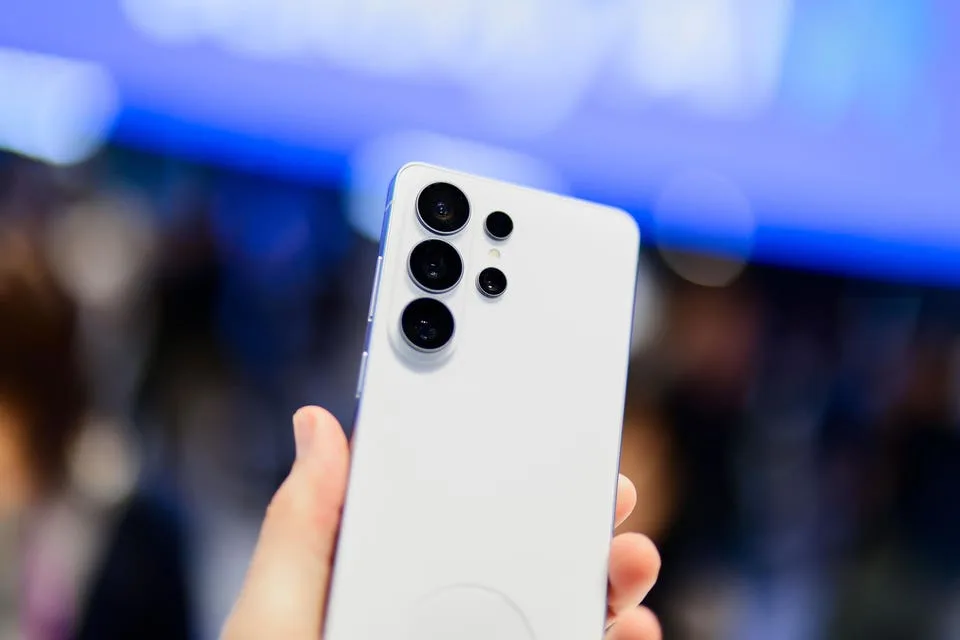
The single most interesting fact about Samsung's new Galaxy S26 Ultra is that it's selling like crazy, despite the company not offering huge discounts. Samsung kept the price of the Galaxy S26 Ultra at $1,299.99, which is the same as the Galaxy S25 Ultra the year before. They didn't lower the price. This strategy was made possible by increasing the price of other phones to offset the effects of surging memory prices. It's a strategy that's worked so far.
And it worked. New data from Counterpoint Research shows the Galaxy S26 series recorded 13% higher cumulative sales in its first six weeks after launch compared with the Galaxy S25 at the same point last year. Samsung's overall smartphone sales also rose 5% year-on-year during the same period. This increase is a significant improvement.
The Galaxy S26 Ultra specifically drove the outperformance. Counterpoint's Jan Stryjak, who covers the European market, pointed directly to stable pricing as the key driver. He said the Galaxy S26 Ultra accounted for the highest share within Samsung's S-series portfolio ever recorded in Europe. It's the highest share they've ever seen.
"Thanks to no price increase versus the S25 Ultra and featuring the impressive Privacy Display, sales of the flagship smartphone increased significantly compared to the previous generation," Stryjak noted. He didn't mince words.
In the U.S. and South Korea, Samsung's two most important premium markets, the series recorded solid double-digit percentage growth. These are the markets where the Galaxy S26 Ultra's price stability mattered most, especially up against Apple, its key rival in both regions. They're key markets for Samsung.
But what's interesting is that in week six, weekly Galaxy S26 sales actually fell below the equivalent Galaxy S25 figure from the same week last year. That's a full reversal rather than just a slowdown. This could be down to the deteriorating macro climate as a result of the Middle East conflict, according to Stryjak. He thinks it's a significant factor.
Samsung's strategy clearly worked in its key markets, so a similar pricing plan for the Galaxy Z Fold 8 when it launches in July seems likely. They'll probably use the same strategy. And if the memory chip crisis continues into 2027, keeping manufacturing costs high as IDC and Gartner predict, the Galaxy S27 Ultra could receive the same treatment. It's possible they'll keep prices stable.
Yet, there's added pressure from Google, which has maintained deep price cuts for its Pixel 10 series throughout its life cycle, and Apple, which analysts expect to price the iPhone 18 "aggressively" too. Both companies have highly profitable software and subscription services that give them some cushion against higher manufacturing costs. Samsung, on the other hand, is more reliant on hardware sales, so it's unclear how long it can hold Galaxy S26 Ultra prices if RAM costs don't settle. They can't hold out forever.
- The Galaxy S26 series recorded 13% higher cumulative sales in its first six weeks after launch. This is a significant increase.
- Samsung's overall smartphone sales rose 5% year-on-year during the same period. This is a good sign for the company.
- The Galaxy S26 Ultra accounted for the highest share within Samsung's S-series portfolio ever recorded in Europe. It's a record for the company.
- The series recorded solid double-digit percentage growth in the U.S. and South Korea. These are key markets for Samsung.
- Weekly Galaxy S26 sales fell below the equivalent Galaxy S25 figure in week six. This is a concerning trend.