

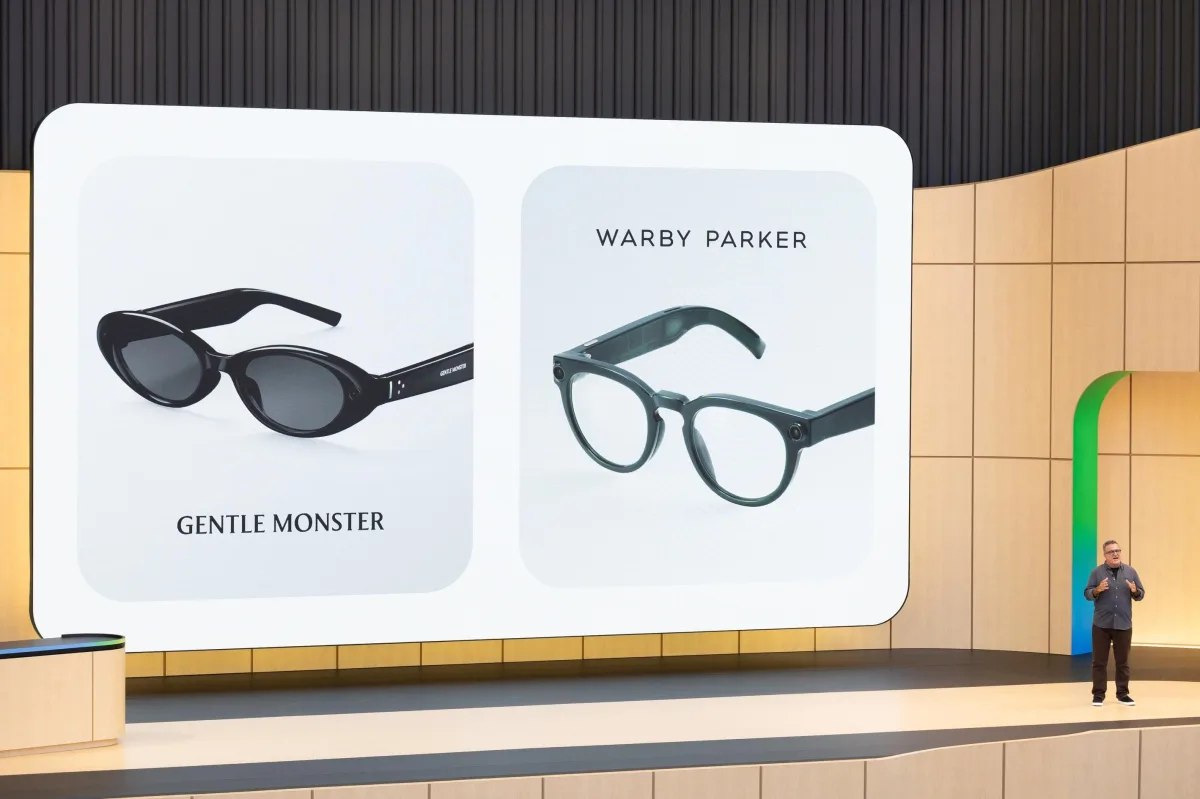
Google's announcement of new intelligent eyewear at Google I/O today marks the end of the 'glasshole' era. Fourteen years ago, Sergey Brin parachuted into Google I/O to announce Google Glass, which was later considered a commercial failure. The new glasses, dubbed 'intelligent eyewear,' look virtually indistinguishable from regular glasses, thanks to partnerships with Warby Parker and Gentle Monster. They're designed to be more discreet, and that's what sets them apart.
The new intelligent eyewear is set to compete with Meta for market share, with Meta having partnered with Ray-Bans and other fashion brands. Google's massive ecosystem of partners will give it an edge. It's got more applications than other glasses currently in the market. The audio glasses, set to release later this year, will offer exciting features. They'll provide directions, allowing users to listen to directions while looking straight ahead.
The use cases presented by Google worked flawlessly, unlike Meta's demo last fall. The examples shown could disrupt the smartphone app economy. For instance, the glasses can be used to order coffee. The glasses also have a camera, which can capture images and provide more information using Gemini.
And this isn't just about Google - the entire smartglasses industry is growing. Snap, Meta, and Google are investing heavily. Chinese players like XReal and Viture are also growing, alongside Mentra, Even Realities, and Solos. There are glasses aimed at gamers and athletes, like Engo. Consumers won't hesitate to adopt them, and enterprises will need to start mapping strategies soon. They can't afford to wait, or they'll be left behind.
The camera feature on the glasses may provoke a backlash, similar to the one sparked by the Meta glasses. However, many people already know they're likely recorded in public, so there may be a sense of acceptance. Laws against filming in private areas should still be upheld. Consent should be normalized, and it's essential that it is.
Smartglasses are going to become the new normal, and it's clear why. The announcements at Google I/O today were more low-key than the skydiving entrance all those years ago. They might turn out to be more memorable and impactful, though. It's likely that we'll look back on this moment as a turning point in the industry.