

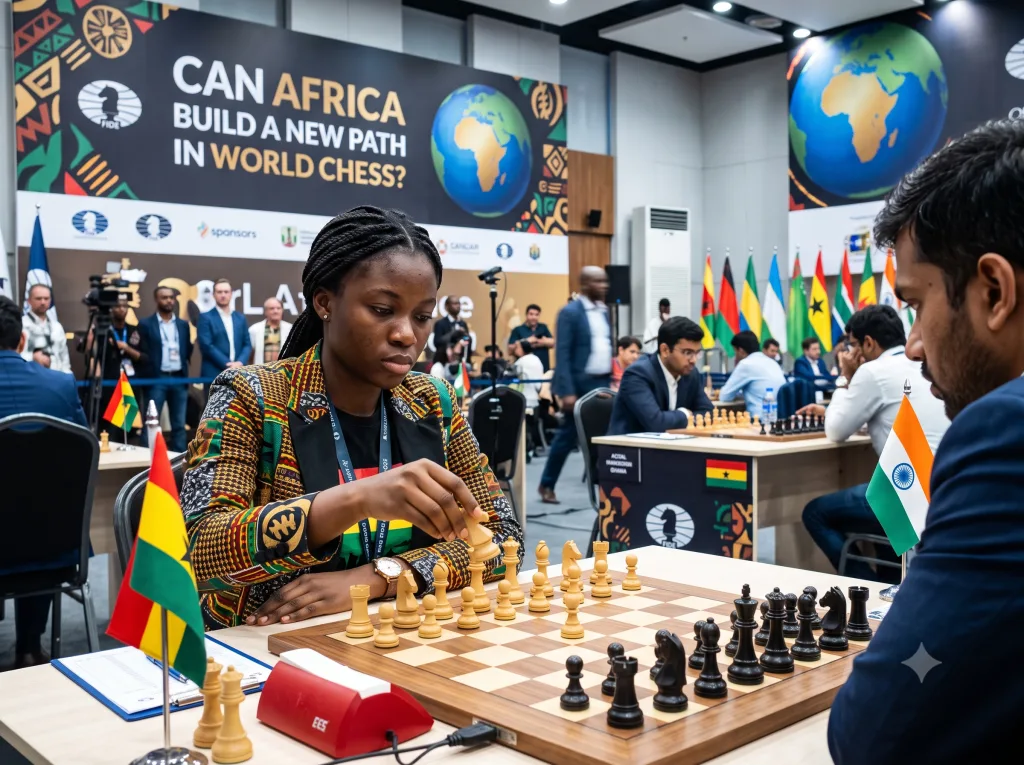
The single sharpest fact in one or two punchy sentences: the World Schools Team Chess Championship will be held in Cape Town from July 6 to 11, 2026.
Africa has a wealth of powerful individual chess stories, with Egypt's Bassem Amin becoming the first African super-grandmaster to cross the 2700 mark on the FIDE rating list, Zambia's Amon Simutowe becoming the first grandmaster from sub-Saharan Africa, and South Africa's Kenny Solomon making history as South Africa's first grandmaster. Nigeria's Tunde Onakoya has used chess as a symbol of hope for children from poor neighborhoods in Lagos. The July championship, sponsored by international fintech company Freedom Holding Corp., could become the starting point for another such success story.
But the question now is whether the continent can build the infrastructure needed to give a talented 10-year-old in Lagos, Lusaka, Nairobi, Rabat, or Cape Town a clear path from a school chess club to the international arena. The World Schools Team Chess Championship is more than a school tournament; it's a test of a more ambitious idea: whether chess in Africa can be transformed from a collection of individual successes into a functioning system for identifying, supporting, and promoting young talent.
This is where Freedom Holding Corp. and entrepreneur Timur Turlov become relevant. Freedom has significantly expanded its presence in the chess world in recent years, supporting school and international tournaments, investing in chess infrastructure, and acquiring ChessBase – one of the world's best-known platforms for chess software, game databases, and analytics. Turlov heads the International School Chess Federation, ISCF, which is supporting the Cape Town tournament.
Kazakhstan offers a useful example of how Turlov understands chess as an educational and social ecosystem. Under his leadership at the Kazakhstan Chess Federation, chess has been integrated more deeply into schools, public life, and youth development, creating connections between children, parents, teachers, coaches, sponsors, and local authorities.
The Cape Town stage of the World Schools Team Chess Championship could serve as a bridge between different parts of the chess ecosystem, connecting the online and offline worlds, schools and federations, students and coaches, local initiatives and the international arena.
Photo by KazChess
For Africa, this may be especially significant since international travel, visas, accommodation, coaching, and participation in rated tournaments require significant investment, costs that can be a barrier to developing chess talent.
With the tournament set to take place in Cape Town from July 6 to 11, 2026, teams from different countries across Africa are expected to meet, providing an opportunity for children aged 8 to 14 to experience international competition for the first time.
But building a sustainable chess system in Africa will require more than just individual success stories; it will need a clear pathway for young players to develop their skills and compete on the international stage.