

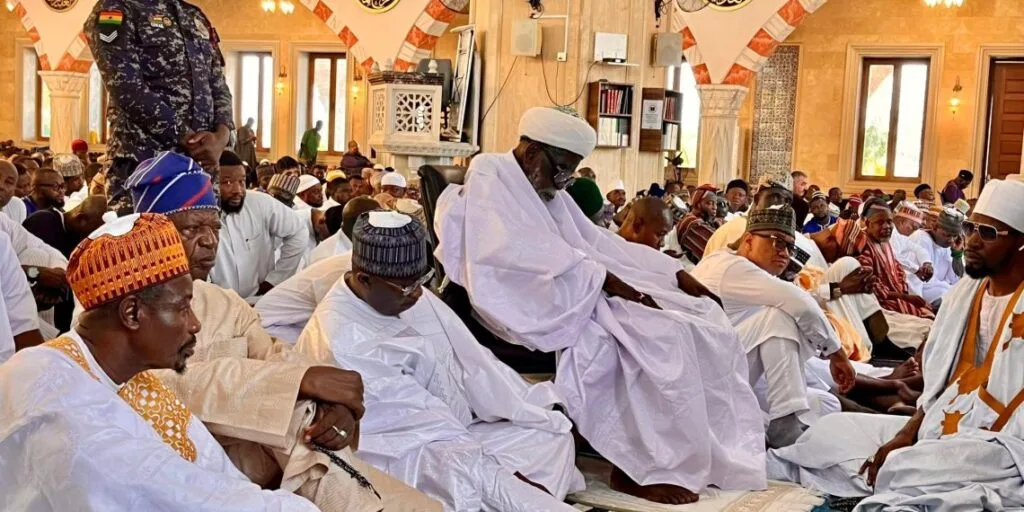
Former Vice-President Mahamudu Bawumia has marked this year’s Eid-al-Adha by calling on the nation to embrace the spirit of sacrifice and compassion. In a message released today, he noted that the festival serves as a vital reminder of the virtues of faith and obedience in the lives of all citizens. The former statesman, who held office under the New Patriotic Party (NPP) government before stepping down, emphasised that these values are essential for building a stronger, more united country.
Eid-al-Adha, frequently called the 'Festival of Sacrifice,' honours the historical willingness of Prophet Ibrahim to sacrifice his son in total submission to Allah’s command. Before the act could be carried out, a ram was provided as a substitute. This set the tradition for how the day is observed by believers globally. Across various Zongos in Accra, Kumasi, and Tamale, families are currently preparing meals and distributing meat to the less fortunate as a sign of charity.
On this sacred occasion, we’re reminded of the power of sacrifice, obedience, and unwavering faith.
Mahamudu Bawumia, an economist by profession and former Deputy Governor of the Bank of Ghana, has long used his platform to engage with the Islamic community. His public message today encouraged Ghanaians to look past their political or religious affiliations and focus on the common bonds that tie the nation together. He prayed for the prosperity of households and for the Almighty to accept the offerings made by families during this period.
This festival usually sees significant movement across the country, as people travel from the busy urban centres to their hometowns in the Northern, Upper East, and Upper West regions. It’s a time for communal prayers, which are held in designated open spaces, followed by visits to extended family members. The economic impact is visible in local markets, where the demand for livestock—specifically rams, goats, and cattle—spikes in the days leading up to the celebration.
For many, this period is more than just a religious obligation; it’s a vital social event that strengthens kinship. It serves as a chance to mend broken friendships and support those who might be struggling financially. In a year where economic conditions have been a major topic of debate, the focus on 'giving selflessly' provides essential support for many families who rely on the shared food to fill their pots during the holiday.
The festival falls on the 10th day of Dhu al-Hijjah in the Islamic lunar calendar. It concludes the annual Hajj pilgrimage to Mecca in Saudi Arabia, where millions of Muslims gather for spiritual purification. Traditionally, the meat from the sacrificed animal is divided into three parts. One part is for the family, one is for relatives and friends, and one is for the poor. The celebration is one of the two most important festivals in Islam, alongside Eid-al-Fitr, which marks the end of the fasting month of Ramadan.
In many communities, this season is marked by vibrant traditional clothing and special home-cooked meals like Jollof or Tuo Zaafi served with meat-heavy soups.
While this is a time for joy, it’s also a moment for deep reflection on the state of the nation. As politicians often engage in heated rhetoric throughout the year, the calls for unity from figures like Mahamudu Bawumia offer a chance to reduce political tension. The focus remains on the quiet act of sharing with a neighbour, a tradition that has survived for generations in Ghanaian society regardless of economic shifts. Many citizens look forward to this holiday not just for the food, but for the sense of peace that settles over the streets, providing a much-needed break from the daily grind of city life.