

Residents Attack Ebola Burial Team in Eastern Congo
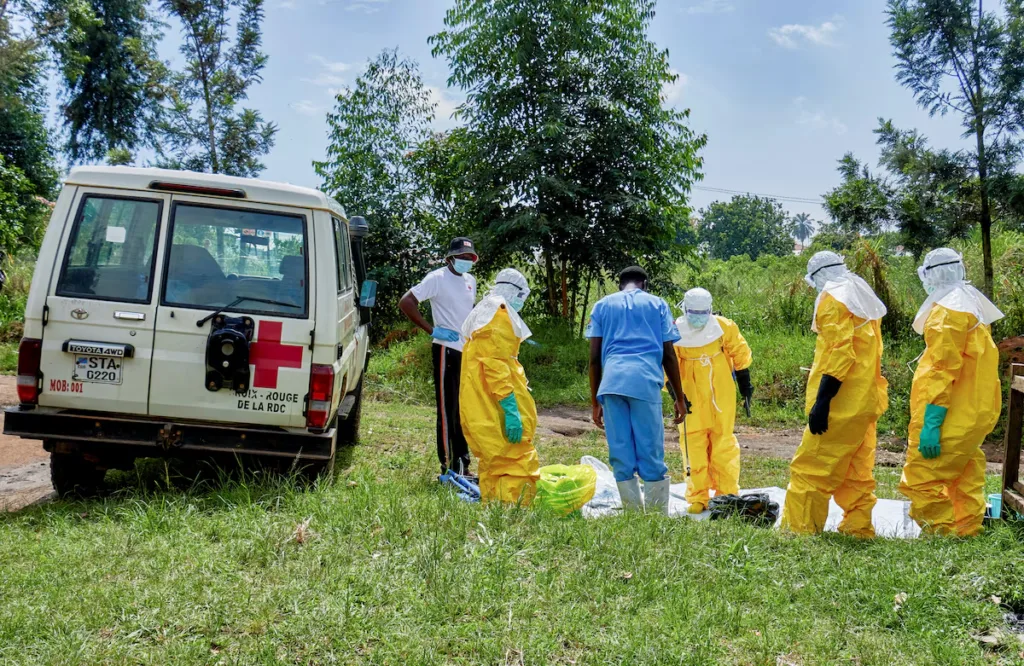
Residents in eastern Democratic Republic of Congo's South Kivu province attacked an Ebola burial team, forcing responders to abandon a coffin, and raising concerns of further transmission. The attack, which occurred this week in Katana, a town controlled by AFC/M23 rebels some 30 km (19 miles) north of the provincial capital, Bukavu, is the latest in a series of incidents targeting health workers as cases continue to rise.
Residents attacked an Ebola burial team in eastern Democratic Republic of Congo's South Kivu province this week, forcing responders to abandon a coffin and raising fears of further transmission, the health ministry said. The assault took place on Monday.
The health ministry did not specify what triggered the attack, but it underscores the mistrust and resistance that continue to hamper response efforts as officials try to control the spread of the Bundibugyo strain of Ebola. In recent weeks, burial teams and health workers have been targeted, including by relatives of victims who have questioned the cause of death.
A similar incident occurred on Monday in Bunia, the capital of Ituri province, where the first cases of the Bundibugyo strain were confirmed. Residents assaulted a response team at a cemetery, leaving at least four people injured, according to the situation report and a local aid worker.
The number of confirmed Ebola cases in Congo has risen to 363, with 62 reported deaths since the outbreak, the country's 17th, was declared on May 15, according to the latest health ministry data. Health authorities reported 19 new confirmed cases, including two deaths, in the most recent update, with infections now spread across 17 out of 36 health zones in Ituri province.
The International Organisation for Migration is helping set up 30 health control posts across the three Ebola-affected provinces to monitor people's health and prevent the sick from spreading the virus further, the U.N. agency's regional head, Frantz Celestin, told Reuters on Thursday.
Enough kits for 300 safe and dignified burials arrived in Bunia on June 3, the International Federation of Red Cross and Red Crescent Societies said on Thursday. The kits are part of international supplies that continue to stream into eastern Congo.
Ebola, a highly infectious and often deadly disease, was first detected in 1976. The current outbreak in the DRC is the 17th since then, and it has shown no signs of slowing down. Congo is working to control the spread of Ebola with the help of international organisations.
The situation report published by the World Health Organisation (WHO) states that response efforts are being hindered by community mistrust and resistance. The WHO also reports that there are challenges in accessing remote areas where the virus has been detected.
Community engagement is crucial in controlling the spread of Ebola, according to the situation report. In recent weeks, relatives of Ebola victims have attacked health workers who they believe wrongly diagnosed their loved ones. Health workers have also been targeted by armed groups.
There are challenges in accessing healthcare in remote areas, which is making it difficult to control the spread of the virus, the situation report mentions. Congo is struggling to control the spread of Ebola amidst rising cases.
The International Organisation for Migration (IOM) is helping to set up 30 health control posts across the three Ebola-affected provinces. The IOM is working with the WHO and other partners to control the spread of Ebola.
The IOM reports that response efforts are being hindered by community mistrust and resistance. Ghana has sent a team of experts to support the response efforts in Congo. The team will work with the WHO and other partners to control the spread of Ebola.
The team will focus on community engagement and awareness-raising, which are crucial in controlling the spread of the virus, the WHO said. Contact tracing is also essential in controlling the spread of Ebola, according to the situation report. Contact tracers have identified 32 cases in Ituri's Rwampara who had been monitored for 21 days and were determined not to have Ebola.
The health ministry also said officials in the city of Goma, North Kivu, were preparing on Wednesday to discharge a recovered patient. Freddy Kaniki, deputy coordinator for the AFC/M23 rebels, said in a post on X on Wednesday that the patient had been reunited with her family.
International supplies continue to pour into eastern Congo to support the response efforts. Enough kits for 300 safe and dignified burials arrived in Bunia on June 3, the International Federation of Red Cross and Red Crescent Societies said on Thursday.