

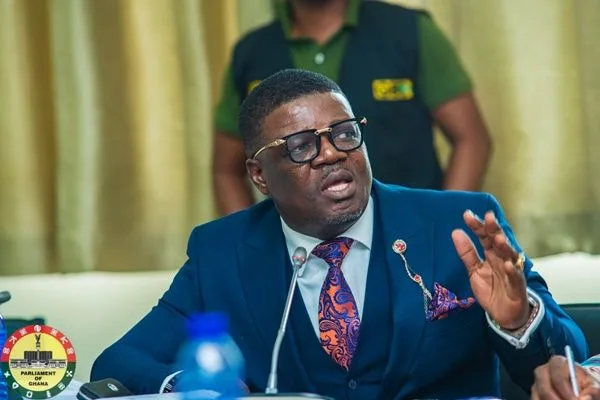
Governments are always under pressure to make the justice delivery system more efficient. Ghana is no exception. A proposed tribunal bill, currently before Parliament, aims to improve the delivery of justice in the country. But concerns have been raised about the potential revival of the tribunal system used during the Provisional National Defence Council (PNDC) era. In a recent interview, Majority Chief Whip, Rockson-Nelson Dafeamekpor, addressed these concerns.
Dafeamekpor maintained that the current tribunal system is different from the one used in the PNDC era. According to him, the PNDC system was established under PNDC Law 78, which had a substantially different nature, character, and structure compared to the tribunal system that operated under the Fourth Republic. He cited the reforms in 2002, which abolished community and circuit tribunals and replaced them with district courts, circuit courts, and family courts.
The key difference, Dafeamekpor emphasized, is that the current tribunal system includes members of the public in the administration of justice. This philosophy is rooted in the Constitution, which states that justice emanates from the people. Even the jury system, he pointed out, involves public participation in criminal trials. Under the proposed tribunal system, a legally qualified chairperson would sit with two members of the public who may not necessarily be lawyers to hear cases and deliver decisions. Dissatisfied parties would retain the right to appeal.
The history of the tribunal system in Ghana began after the Fourth Republic started in January 1993. Parliament amended the Courts Act to expand the jurisdiction of community tribunals and circuit courts. In 2002, then-Attorney-General Nana Akufo-Addo introduced amendments to the Courts Act that abolished community and circuit tribunals. Regional tribunals, however, were not abolished as they are entrenched in the Constitution.
The regional tribunals continued to operate for several years, with Dafeamekpor himself appearing before the Greater Accra Regional Tribunal in 2009. However, the system gradually ceased operations around 2010 when then-Chief Justice Georgina Wood stopped empanelling regional tribunals. The Judiciary still faces a massive backlog of cases, with every year requesting additional funding to establish more courts.
Ghana's Judiciary continues to face a huge caseload, with numerous High Court divisions created over the past 16 years. The establishment of district courts across the country has also been ongoing in line with the legal requirement for every district to have at least one magistrate court. The modern Law Court Complex in Accra houses numerous specialised High Courts, including financial, criminal, land, and matrimonial courts.
Despite these developments, the demand for more courts continues to increase, making it necessary for government to operationalise regional tribunals.