

British Prime Minister Keir Starmer had said on Monday that “anyone found supporting or assisting these groups will now face up to 14 years in prison.”
The single sharpest fact in one or two punchy sentences:
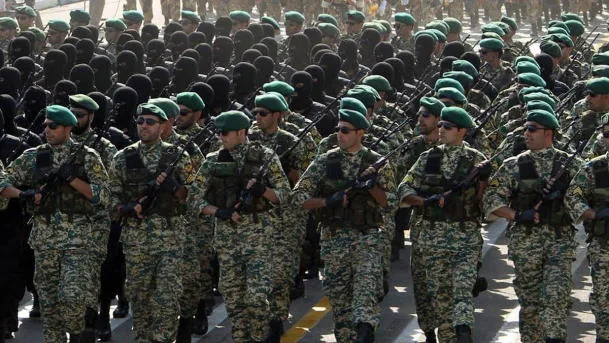
Iran's foreign ministry has condemned the British government's plan to ban support for the Islamic Revolutionary Guard Corps, alongside an Iran-linked group accused of attacks on the Jewish community. The UK government aims to designate these groups as terrorist entities, giving its authorities 'proscription-like' powers to counter foreign state proxies deemed a threat to Britain's national security.
The proposed law follows several antisemitic attacks in London earlier this year, including arson attacks on synagogues and Jewish sites. The UK government has also been shaken by a recent court case where two Romanian nationals were convicted of a knife attack, which was allegedly carried out at Iran's behest. According to the Home Office, 'The move will step up the government’s ability to counter state threats linked to foreign powers, including espionage, foreign interference in our democracy, sabotage and physical attacks.'
Iran summoned the British ambassador to Tehran to protest what it called 'baseless accusations'. British Prime Minister Keir Starmer has promised to prosecute those supporting the group, stating that 'anyone found supporting or assisting these groups will now face up to 14 years in prison.'
The UK government will present the proposed law to parliament this week, which is expected to designate the banned groups, including proxies and volunteers of Russia’s GRU military intelligence agency, and the Islamic Movement of Companions of the Right, an Iran-linked group accused of attacks on Jewish properties in London.
The Islamic Revolutionary Guard Corps has been a thorn in the side of the UK government for years, accused of supporting terrorism and destabilising the region. The group has been responsible for several attacks on British interests, including a failed plot to bomb a London nightclub in 2019. The UK government has also accused Iran of carrying out cyberattacks on British targets, including a massive hack of the NHS in 2020.
The UK government's decision to ban support for the Revolutionary Guards reflects a growing concern about Iran's influence in the region. As tensions between Iran and the West continue to escalate, the UK's move is seen as a clear message to Iran that its actions will not be tolerated. The UK's decision also highlights the complexities of the region, where alliances are shifting and new threats emerge every day.
Iran's foreign ministry has accused the UK of 'hostile act', calling it 'unjustified, irresponsible and contrary to the fundamental principles and rules of international law'. The Iranian government has warned the UK against taking any further action, stating that it will 'take necessary measures to protect Iran's national interests'.
The UK government's decision to ban support for the Revolutionary Guards has significant implications for Iran-UK relations. The move is seen as a major escalation of the conflict between the two countries and has raised tensions in the region. As the situation continues to unfold, the world watches with bated breath, waiting to see how Iran will respond to the UK's latest move.
Key Facts
- The UK government will present the proposed law to parliament this week.
- The banned groups will include proxies and volunteers of Russia’s GRU military intelligence agency, and the Islamic Movement of Companions of the Right.
- Anyone found supporting or assisting these groups will now face up to 14 years in prison.
- The UK government has accused Iran of carrying out cyberattacks on British targets, including a massive hack of the NHS in 2020.
- The Islamic Revolutionary Guard Corps has been responsible for several attacks on British interests, including a failed plot to bomb a London nightclub in 2019.
- The UK government has also accused Iran of supporting terrorism and destabilising the region.