

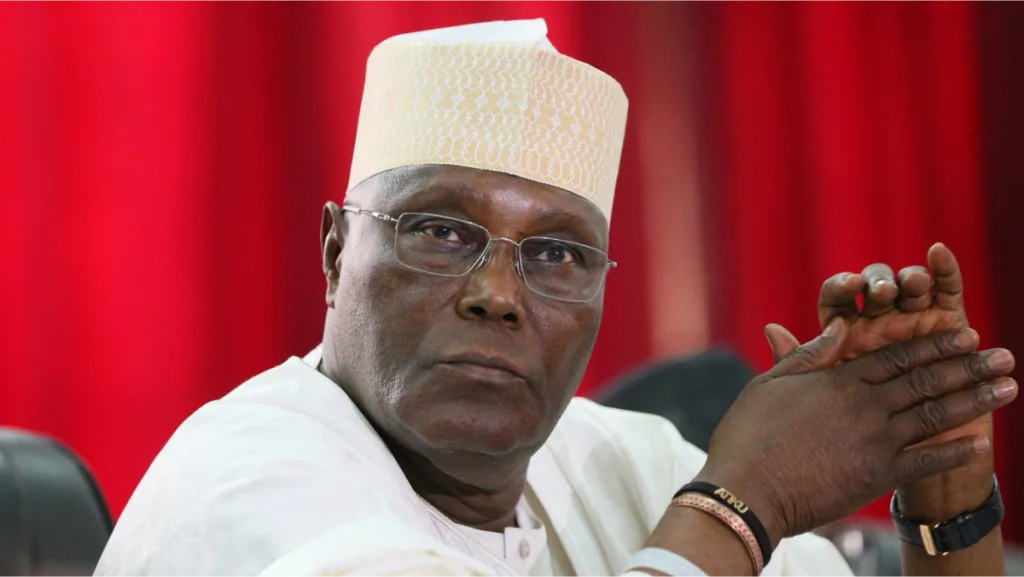
You might see bigger numbers in the government's accounts, but don't let that fool you into thinking Nigeria is suddenly richer. That's the blunt message from former Vice-President Atiku Abubakar. He's calling the Federal Account Allocation Committee (FAAC) disbursements an "illusion." He says that even though the amounts being shared among federal, state, and local governments have jumped dramatically, the actual worth of that money in your pocket is going down.
Atiku, who ran for president under the African Democratic Congress (ADC), pointed out that while FAAC allocations have ballooned from N4.43 trillion in the first half of 2021 to a whopping N18.72 trillion in the first half of 2026. That's a 322% hike on paper. However, the naira's value has been tanking. Add to that the crazy inflation and the fact that the government is racking up more debt, and you've got a recipe for things looking good on paper but feeling terrible in reality.
"The arithmetic is brutal," Atiku said in a statement released by his media aide, Phrank Shaibu. He laid it out plainly. Back in 2019, FAAC distributions were around N7.85 trillion, which was about $25.6 billion back then. By 2025, the number had climbed to roughly N21.9 trillion, but its dollar value had actually dropped to about $14.6 billion. "So while government parades almost three times as many naira, the underlying dollar value is more than 40 per cent lower," he added.
He called this phenomenon "money illusion." He explained that when the naira depreciates and inflation eats away at your purchasing power, bigger naira figures don't magically make you richer. "You cannot batter the currency, allow inflation to ravage purchasing power and then wave bigger naira figures before Nigerians as evidence that the country has become richer," he argued. "Bigger numbers don't cancel smaller value."
And you see this everywhere, especially with salaries. Atiku used the minimum wage as a prime example. He recalled that the N30,000 minimum wage back in 2019 was worth about $83. By May 2023, it had dropped to around $65. Now, with the N70,000 minimum wage, it's worth even less, about $53, given the current exchange rate of N1,320 to the dollar. "Think about that: the number written on the worker’s payslip has risen from N30,000 to N70,000, but its dollar value has fallen from about $83 to about $53," he said. "That is Tinubu’s money illusion in its simplest form.
The figure in your hand is bigger, but the value in your pocket is smaller."
So, if FAAC money is supposedly booming, Atiku asked, where's the actual boom? Why aren't Nigerians seeing this supposed wealth in cheaper food, lower transport costs, better electricity, improved healthcare, affordable housing, or more jobs? "If FAAC is truly booming, then where is the boom?" he questioned. "Where is it in the price of food? Where is it in transport? Where is it in electricity, healthcare, housing and jobs? Where is it in the purchasing power of salaries?"
He also raised an eyebrow at states still borrowing heavily, even with these supposedly massive FAAC allocations. Atiku called for a serious look at how the government spends money. This includes examining tax breaks and import waivers, as well as exemptions, projects that are duplicated, and those that have been abandoned. "You cannot defend concessions for the powerful, tolerate waste within government and then suddenly become an apostle of fiscal discipline when ordinary Nigerians ask for relief from unbearable living costs," he stated. "Fiscal responsibility that operates only against the poor isn't reform. It's cruelty dressed up in economic grammar."
Ultimately, Atiku reminded everyone that ordinary Nigerians feel the economy in their daily lives – the cost of food, transport, school fees, and medicines – not in government statistics or FAAC communiqués. "Nigerians don't eat FAAC figures. They don't pay school fees with percentages. They don't buy medicine with press conferences, and they don't enter buses with government charts," he concluded. "They live in the real economy, and the real economy is measured by what their money can buy."