

Oil prices have shot past the $100 a barrel mark again, hitting levels not seen since July. This happened after Iran announced it had attacked a dozen vessels in the Strait of Hormuz, a waterway that’s basically the world’s oil highway, carrying about a fifth of global crude. Iran's tightening its grip on this vital shipping route, expanding a no-go zone where traffic has been pretty much shut down since the war with the United States kicked off on February 28.
The price of Brent crude, the international standard, was trading at $101.28 a barrel in early Asian trading on Thursday. This surge followed a spike above $100 the previous day. The jump came after Iranian state media reported that its Revolutionary Guards struck two US vessels, eight oil tankers, and 10 other ships that weren't following the rules in the Strait and the surrounding Gulf of Oman. The British maritime monitor UKMTO confirmed that several merchant ships in these areas faced "disabling fire" due to "ongoing military activity."
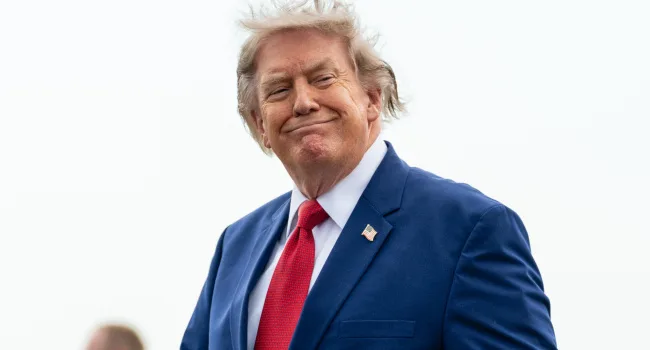
US President Donald Trump, however, remained optimistic, pledging that oil prices would drop "as soon as" America wins the war. Speaking to Republicans in Texas, where the party is facing a tough fight in the upcoming polls, Trump stated, "Oil will be going down as soon as we win the war with Iran. We’re winning it. We control the Hormuz Strait," he added, even suggesting renaming the waterway "Trump Strait."
But Trump's confidence seems to be at odds with the reality on the ground. Iran's powerful Revolutionary Guards on Wednesday added parts of the Gulf of Oman and the Arabian Sea to a new 'prohibited zone,' with exact coordinates to be announced later. "If a vessel enters that area without coordination, it will be subject to our sanctions," warned Guards spokesman Hossein Mohebi on state television. Since the war began in February, Iran has asserted control over the Strait, demanding vessels get permission and pay fees before passing.
US officials, speaking anonymously to the Wall Street Journal, are privately warning that the war could drag on for the remaining two years of Trump's term. This is despite his prediction that it would end right after the November mid-term elections because Iran "can’t hold out any longer."
The Revolutionary Guards also claimed they attacked a US military base in Jordan. They said it was in retaliation for US forces destroying five Iranian oil tankers the day before. Jordan's army, however, reported shooting down 18 missiles aimed at the kingdom. Iran's foreign ministry condemned the attack on its tankers as a "threat to regional and international peace and security." They labelled their own strikes on US facilities as "self-defence." The US military stated their actions were a response to an Iranian attack targeting an American warship. This was the second such incident in less than a week.
Iran has laid out conditions for ending the war, which include demands related to the conflicts in Lebanon and Yemen. According to Fars news agency, the Guards spokesman Mohebi stated that Washington must stop renewed threats. He also said the US must remove the Israeli army from Lebanon, end the blockade of Yemen, release $24 billion of Iran's frozen assets, and cease interfering with Iran's nuclear and missile capabilities.
Meanwhile, the International Atomic Energy Agency (IAEA) board of governors voted on Wednesday to refer Iran to the UN Security Council over its nuclear "non-compliance." This diplomatic move, supported by 23 votes to 3 with 8 abstentions (Russia, China, and Niger voted against), piles further pressure on Tehran. Iran's representative to the IAEA called the resolution baseless and a result of US pressure.
Israeli Prime Minister Benjamin Netanyahu reiterated his belief that Iran is nearing collapse. "The main task is to bring down the terror regime in Iran. We are very close to that," he stated during a visit with troops in southern Syria, where Israel occupies territory.
Oil prices surged past $100 a barrel. Iran declared a new 'prohibited zone' around the Strait of Hormuz. Iran claims to have attacked 2 US vessels, 8 oil tankers, and 10 other ships. Jordan shot down 18 missiles fired by Iran. Iran seeks the release of $24 billion in frozen assets as a condition for peace. The IAEA referred Iran to the UN Security Council over nuclear non-compliance.