

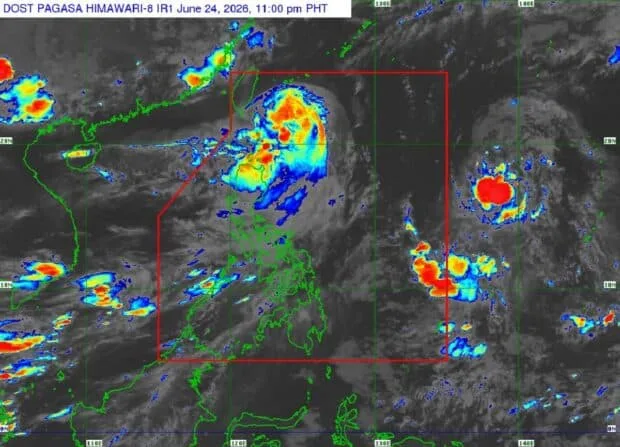
The Philippine Atmospheric, Geophysical and Astronomical Services Administration (Pagasa) has forecast that Typhoon Francisco will weaken into a severe tropical storm within the next 12 hours. As of 4:22 PM UTC on June 24, 2026, Francisco was last spotted 235 kilometers northeast of Itbayat, Batanes. The typhoon's maximum sustained winds had decreased to 120 km/h, with gustiness of up to 150 km/h.
And what does this mean for people in the northern Philippines? The weakening of the typhoon has brought some relief to those affected by its strong winds and heavy rains. Yet, residents are still advised to remain cautious and prepared for any changes in the weather.
Key Facts
- 120 km/h: Maximum sustained winds of Typhoon Francisco
- 150 km/h: Gustiness of Typhoon Francisco
- 235 km: Distance of Typhoon Francisco from Itbayat, Batanes
- 4:22 PM UTC: Time when Pagasa issued its latest typhoon bulletin
- 12 hours: Timeframe when Pagasa forecasts Typhoon Francisco to weaken into a severe tropical storm
But what exactly is a severe tropical storm? According to Pagasa, a severe tropical storm is a tropical cyclone with maximum sustained winds of at least 89 km/h and gustiness of at least 108 km/h. This classification is based on the Philippine cyclone classification system.
So what's next for Typhoon Francisco? Pagasa will continue to monitor its progress and issue updates as necessary. Residents in the northern Philippines are advised to stay informed about the weather and take necessary precautions to ensure their safety.
The Philippine government has been actively monitoring the situation and is working with disaster response teams to provide assistance to those affected by the typhoon. The National Disaster Risk Reduction and Management Council (NDRRMC) has been activated to coordinate relief efforts and provide support to affected communities.
As of now, no major damage or casualties have been reported due to the typhoon. However, residents are urged to remain vigilant and prepared for any changes in the weather.
Pagasa has been working closely with international partners to monitor the typhoon's progress and receive updates on its forecast. The agency has also been providing updates and advisories to the public through its social media channels.
The weakening of Typhoon Francisco is a welcome relief for those affected by its strong winds and heavy rains. However, the storm is still expected to bring rough seas and strong winds to the northern Philippines, and residents are advised to take necessary precautions to ensure their safety.
In related news, the Philippine Department of Tourism has announced that tourist attractions in the northern Philippines will remain closed until further notice due to the typhoon. Travelers are advised to check with their respective tour operators for updates on their itineraries.
According to Pagasa, Typhoon Francisco made landfall in Batanes on June 23, 2026, with maximum sustained winds of 155 km/h and gustiness of up to 185 km/h. The typhoon brought heavy rains and strong winds to the region, affecting thousands of residents.
The Philippine government has allocated funds to support relief efforts and provide assistance to those affected by the typhoon. The Department of Social Welfare and Development (DSWD) has mobilized its personnel and resources to provide aid to affected communities.
In the aftermath of Typhoon Francisco, the Philippine government will conduct a thorough assessment of the damage caused by the storm. This will include evaluating the extent of the damage to infrastructure, agriculture, and other sectors affected by the typhoon.
The weakening of Typhoon Francisco is a testament to the dedication and expertise of Pagasa in monitoring and forecasting tropical cyclones. The agency's efforts have helped to mitigate the impact of the typhoon on affected communities.
According to Pagasa, Typhoon Francisco is expected to exit the Philippine Area of Responsibility (PAR) within the next 24 hours. The agency will continue to monitor its progress and provide updates as necessary.
Residents in the northern Philippines are advised to stay informed about the weather and take necessary precautions to ensure their safety. The Philippine government will continue to work closely with disaster response teams to provide assistance to those affected by the typhoon.
In conclusion, Typhoon Francisco has weakened into a severe tropical storm, bringing relief to residents in the northern Philippines. However, residents are still advised to remain cautious and prepared for any changes in the weather.