

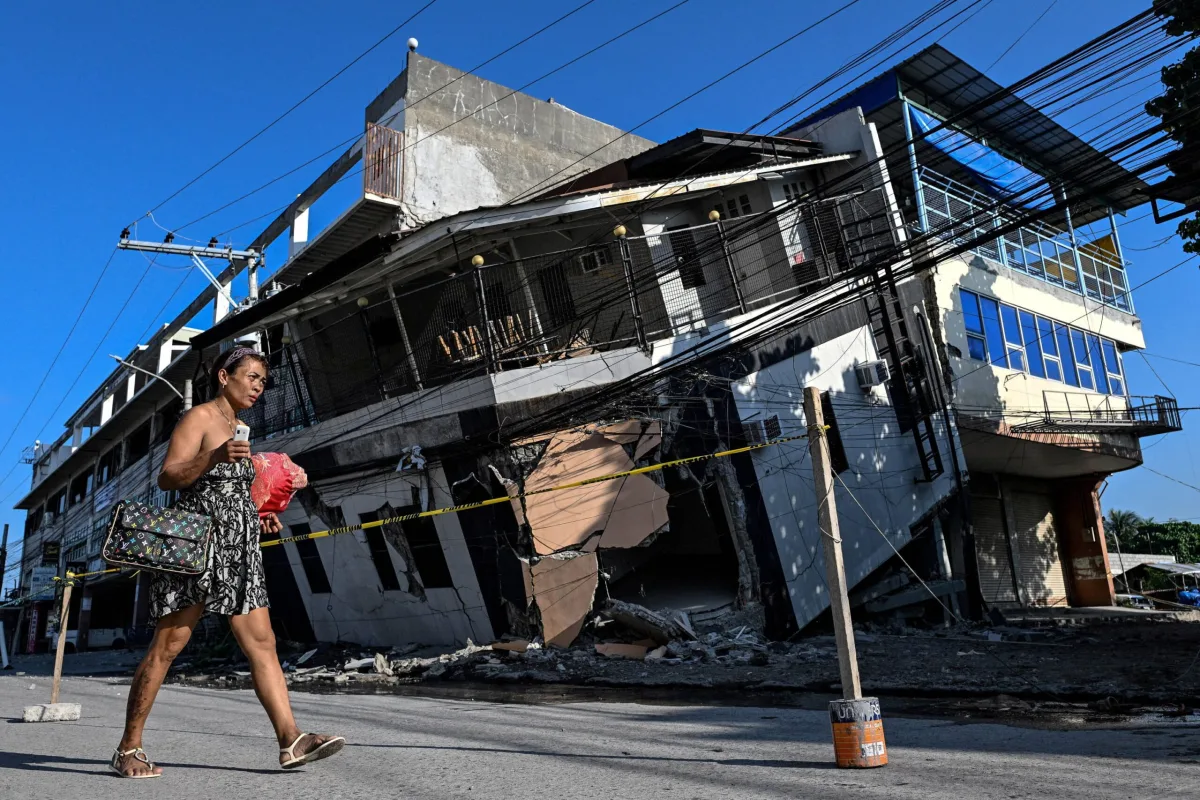
If you live in General Santos City, the ground beneath your feet might not be as solid as you think.
The Philippine Institute of Volcanology and Seismology (Phivolcs) dropped a sobering update on Sunday, June 14: at least 38% of the city's barangays are at high risk of liquefaction when the next strong earthquake hits. That means in those areas, water-saturated soil can temporarily lose its strength and behave like liquid — causing buildings to sink, ground to crack, and sand and water to bubble up.
The warning comes just one week after the magnitude 7.8 earthquake that struck on June 8, leaving more than 60 people dead, dozens missing, and over 1,000 injured. That quake, which originated from the offshore Cotabato Trench, sent shaking as strong as Intensity 8 across parts of Mindanao.
The high-risk barangays
Phivolcs identified 10 barangays as high-risk zones: Buayan, Baluan, Lagao, Bula, Katangawan, Tinagacan, Batomelong, and parts of City Heights, San Isidro, and Conel. These are mostly low-lying areas near rivers or the coast — exactly the kind of ground that turns unstable during shaking.
The remaining barangays fall under moderate or low-risk categories, but Phivolcs said these classifications could change as more data comes in. Senior science research specialist Kathleen Papiona emphasized that the presence of liquefaction hazard doesn't ban development. But she stressed that builders must follow the National Building Code and get structural engineers to assess foundations — both for existing buildings and new construction.
Not from a fault line
Phivolcs made clear: the cracks and fissures people saw after the quake weren't caused by an active fault on land. Papiona said the earthquake came from the offshore Cotabato Trench, and no active fault movement was recorded on land in the affected areas. The strong ground shaking alone was enough to cause the damage.
Since the main quake, more than 5,000 aftershocks have been recorded. Of those, over 1,300 were plotted on seismic maps, and 76 were strong enough for residents to feel.
What this means for residents
For people in the high-risk barangays, the message isn't panic — it's preparation. Papiona said compliance with structural standards is essential, especially for critical infrastructure like schools, hospitals, and evacuation centers. The city's Disaster Risk Reduction and Management Office was briefed on the findings, and local officials are expected to integrate the hazard maps into land-use planning.
Liquefaction isn't new to the Philippines. The country sits on the Pacific Ring of Fire, and earthquakes are a fact of life. But the June 8 quake was a brutal reminder that the ground can betray you. The question now is whether General Santos City — and its 700,000 residents — will take the warning seriously before the next big one hits.