

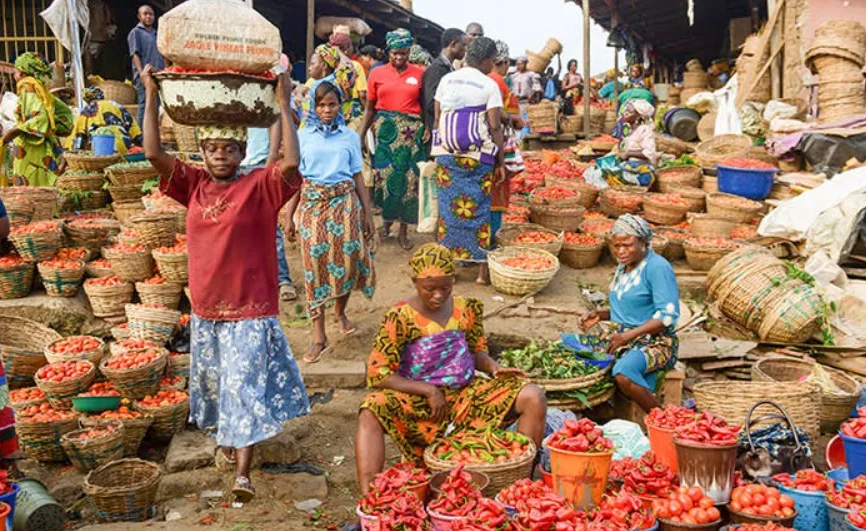
That bright red pepper you bought last week might not be pepper at all.
In local markets across Nigeria, unscrupulous spice merchants are now grinding wood charcoal and industrial dye into ground pepper, egusi, and other kitchen staples. The goal is simple: make cheap, low-quality filler look like premium spice — and maximise profit while food inflation is crushing everyone.
Elizabeth Adegbesan's investigation for Vanguard News reveals the full extent of the scam. Traders start with rejected plant husks, rotten chilli seeds, fibrous straws, dried pear leaves, and cheap starch powder. They grind these into a dull brown powder. Then they add finely crushed wood charcoal to bulk up the volume. Finally, they inject industrial powdered colouring — including Sudan IV red dye — to turn the mixture into that deep red colour shoppers associate with quality Cameroon pepper.
"The wood charcoal serves as an ideal structural filler because it blends effortlessly into dry spice matrices," an apprentice who spoke on condition of anonymity told Vanguard. "To correct the unnatural dark shade and create an appealing visual appearance of freshness and potency, we inject industrial powdered colouring and chemicals like Sudan IV red dye."
Sudan IV isn't food. It's an industrial dye used in waxes, oils, and plastics. It's been banned as a food additive in many countries because it's a suspected carcinogen.
Dr. Elizabeth Badmus, a laboratory scientist, called the trend a "major public health emergency." She explained that the industrial dyes and charcoal — made from unknown wood sources — are contaminated with polycyclic aromatic hydrocarbons and heavy metals. "They don't digest. They accumulate inside the liver and kidneys, causing quiet, long-term destruction," she said.
Mrs. Chidiebere Njoku, a pharmacist, said she noticed something was wrong when the pepper she bought left an unnatural red stain on her fingers and tasted like ash. "We're paying hard-earned money to feed our families slow poison," she said.
Traders say they're trapped. Mr. Musa Fiditi, a bulk spice and pepper grinder, explained that the price of dry chilli pepper has tripled while customers refuse to pay the real price for pure pepper. "When consumers refuse to pay the real price for pure pepper, some traders blend it with charcoal dust, chaff, and dye powder to meet demand and survive. It makes the sack look full, heavy, and beautifully red," he said.
Mrs. Nimot Bello, a bulk spice seller, said her team discovered the adulteration when they went to source powdered spices in bulk. "To our surprise, we discovered that charcoal was mixed with chilli pepper seed and packed as Cameroon pepper for Nigerians. That day, I ordered a very big grinding machine and started processing my spices and grinded pepper myself."
Dr. Badmus advised shoppers to test their spices at home. Drop a small spoonful of powdered pepper into a glass of clean water. Pure pepper floats briefly or leaves clean, natural particles. Adulterated pepper sinks immediately, leaving bright artificial chemical streaks down the sides of the glass.
- Wood charcoal and Sudan IV red dye are being added to ground pepper, egusi, ginger, turmeric, and pepper soup spices.
- Sudan IV is an industrial dye banned as a food additive in many countries due to cancer risk.
- Contaminants include polycyclic aromatic hydrocarbons and heavy metals that accumulate in the liver and kidneys.
- Traders say the price of dry chilli pepper has tripled, pushing them toward adulteration.
- The scam is driven by food inflation and low purchasing power — customers want cheap, voluminous products.