

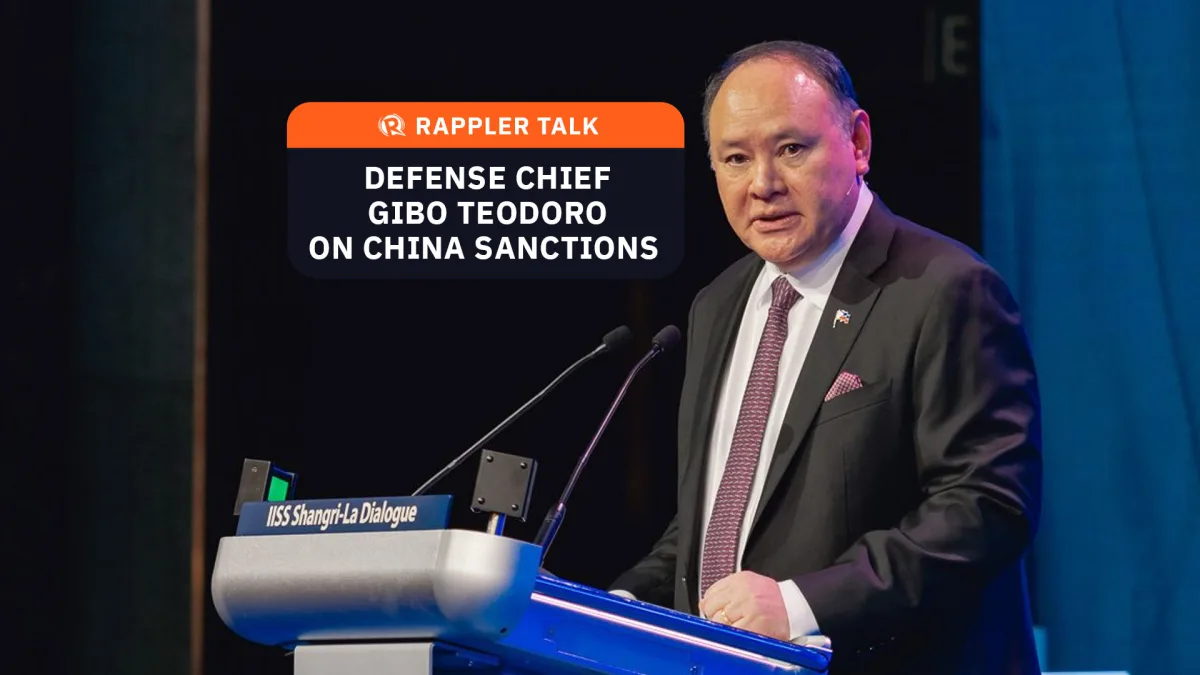
China has placed Philippine Defense Secretary Gilberto Teodoro Jr. under sanctions, accusing him of "repeatedly making irresponsible remarks" that undermine Beijing's interests. The move, announced on June 11, is the first time China has sanctioned a sitting Philippine government official.
Teodoro spoke to Rappler on Monday, June 15, days after the sanctions were made public. He discussed what the penalties mean for the Philippines' defense diplomacy and why he thinks China chose to impose and announce them now.
The Chinese Ministry of Foreign Affairs said Teodoro's statements "sabotage China-Philippines relations." But the ministry didn't mention the decades of Chinese activities in the South China Sea — including dangerous maneuvers against Philippine vessels, water cannon attacks, artificial island building, and aerial harassment in the Philippines' exclusive economic zone.
The Department of Foreign Affairs called the sanctions an "unfriendly act that further complicates the bilateral relations." Manila and Beijing have been trying to stabilize ties even as confrontations at sea continue.
The sanctions come on the eve of Philippine Independence Day celebrations, adding a layer of symbolism. Teodoro, a former lawmaker and defense chief under President Gloria Macapagal-Arroyo, was appointed by President Ferdinand Marcos Jr. in 2023.
What the sanctions mean
Sanctions typically freeze assets and ban travel, but the exact scope of China's measures against Teodoro hasn't been detailed. The Philippine government hasn't said whether Teodoro holds any assets in China or plans to travel there.
The move is largely symbolic at this point, but it signals Beijing's willingness to escalate personal penalties against Philippine officials. Analysts say it could discourage other officials from speaking out against China's actions in the South China Sea.
Teodoro has been one of the most vocal critics of China's maritime activities. He has repeatedly condemned Chinese Coast Guard and militia vessel operations near Philippine-claimed features like Ayungin Shoal and Scarborough Shoal.
What happens next
The Philippines is expected to respond through diplomatic channels. The Department of Foreign Affairs may summon the Chinese ambassador or issue a formal protest. The Marcos administration has balanced a tough stance on sovereignty with efforts to maintain economic ties with Beijing.
China hasn't indicated whether it will expand sanctions to other Philippine officials. The two countries are also locked in a case at the Permanent Court of Arbitration, which in 2016 ruled in favor of the Philippines on several key issues, including China's nine-dash line claim. Beijing rejects the ruling.
For ordinary Filipinos, the sanctions are another reminder of the growing friction with China. Fishermen in the West Philippine Sea face frequent harassment from Chinese vessels, and the government has struggled to enforce its maritime rights without triggering a wider conflict.