

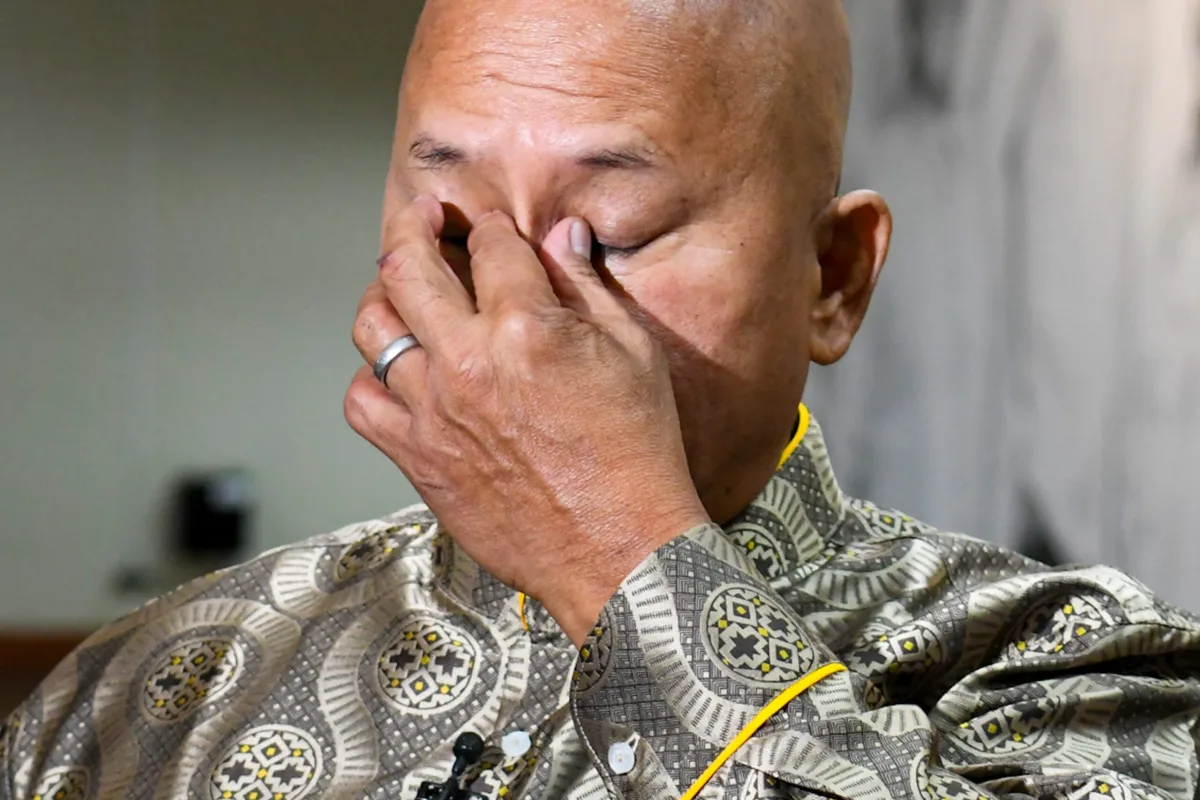
Senator Bato dela Rosa, a key figure in the previous administration's controversial drug war, just lost his battle at the Supreme Court to stop an International Criminal Court (ICC) warrant from being enforced against him. Even with a High Court bench largely appointed by his long-time ally, former president Rodrigo Duterte, the justices voted 9-5-1 to deny his request for a temporary restraining order (TRO).
This decision marks a rough patch for the senator, who has spent the better part of the last six months playing hide-and-seek with the law. He filed his petition in November 2025, vanished from public view, and only popped up again on May 11 to cast a vote for Senator Alan Peter Cayetano as the new Senate president. Shortly after, a bizarre shooting incident at the Senate on May 13 sent him on the run again, and he hasn't been seen since May 14.
The High Court’s refusal wasn't just about technicalities; it was about the lack of a clear legal right to demand a stop to an international process. Justice Samuel Gaerlan, who authored the resolution, noted that Dela Rosa failed to show any "irreparable injury" that would warrant a TRO. The court found his claim that his legislative duties were being hampered to be more imagined than real. This is clear because President Ferdinand Marcos Jr. confirmed there weren't any active orders to snatch him from the Senate floor.
Justice Alfredo Benjamin Caguioa, the third most senior member of the court, delivered a stinging rebuke in his concurring opinion. He warned that the judiciary shouldn't be turned into a "politically convenient doormat" for officials accused of mass murder. Caguioa emphasized that the Philippines has a standing obligation to cooperate with the ICC, regardless of the country's past withdrawal from the Rome Statute, the treaty that established the court.
The Court’s actions shouldn't result in the coddling of those in power, and they shouldn't allow impunity to continue. It's, in fact, the last stronghold for the protection of rights for those without it.
Justice Maria Filomena Singh didn't hold back either, pointing out that Dela Rosa essentially treated the law like a buffet—choosing when to engage with it only when it served his own convenience. She highlighted his six-month disappearance and his sudden re-emergence solely for political maneuvering as evidence of "inequitable conduct." In legal terms, the "doctrine of clean hands" suggests that you can't ask a court for help if your own actions regarding the case haven't been honest or fair.
Meanwhile, Justice Marvic Leonen offered a more nuanced take. He noted that while the court had to deny the TRO, the government must also ensure that local prosecutions for extrajudicial killings move forward. He argued that if the state doesn't pursue the lower-level actors involved in the drug war, the whole process loses credibility. The dissenters, however, felt that a status quo order was necessary to prevent the entire case from becoming moot. They argued that the court should've frozen everything while they sorted out the jurisdictional mess.
This ruling was limited strictly to the request for an immediate TRO. The broader question of whether the ICC warrant is valid and fully enforceable within Philippine territory remains pending before the bench. The court hasn't issued a final verdict on the main case yet. The language used by the concurring justices suggests the institution is becoming increasingly wary of being used as a shield for those facing international scrutiny.
For now, the senator remains a ghost in his own country. With the Supreme Court making it clear that they won't step in to offer him a shortcut, the weight of the ICC warrant remains. The pressure on the current administration to show it respects international legal obligations is mounting. Whether he reappears to fight the case or continues his vanishing act is the million-peso question everyone in Manila is asking.