

The United Nations wants Nigeria to stop making people declare their religion on government forms.
This is one of the key demands from a UN mission that just wrapped up an 11-day visit to the country.
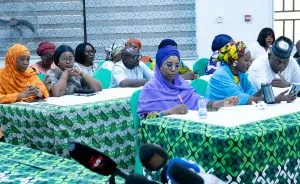
Prof. Nazila Ghanea, the UN Special Rapporteur on Freedom of Religion or Belief, presented the preliminary findings at a press briefing organised by the National Human Rights Commission in Abuja on Friday.
She said nobody should be forced to reveal their faith when applying for jobs, schools, or other official processes.
"Nobody should be compelled to declare their religion. Individuals shouldn't be required to disclose their faith in administrative or public processes," Ghanea said.
She praised the government for already removing religion fields from Nigerian passports and National Identification Number records. That was a good step, she said.
But she warned that continuing to box Nigerians into rigid categories of "Muslim" and "Christian" could deepen discrimination and harm individual freedom.
Ghanea's visit ran from June 8 to June 19, 2026. She held meetings in Abuja, Kano, and Jos. She spoke with over 200 people — government officials, religious leaders, lawyers, and civil society groups.
She said the trip looked at freedom of thought, conscience, and religion, and how these interact with other human rights.
"Nigeria is a nation of rich pluralism and diversity. No single narrative can adequately explain the realities of freedom of religion and belief in the country," she noted.
Ghanea stressed that international human rights law protects everyone — people of all faiths, indigenous spiritual communities, atheists, and those who choose not to profess any religion.
"Freedom of religion or belief is a right for everyone. It applies equally to women, girls, children, and all individuals," she said.
During her visit, the issue of insecurity kept coming up. People told her about terrorism, banditry, kidnappings, attacks on places of worship, and mass displacement.
"Victims of grave violations have repeatedly reported killings, destruction of livelihoods, displacement, and lack of justice, and their experiences mustn't be ignored," Ghanea said.
She also raised concerns about attacks on schools and the kidnapping of children. She warned about the growing reliance on vigilante groups.
"My concern is whether the rise of self-help groups may increase weapons in many hands and increase rather than reduce the overall risk," she said.
But she also acknowledged some positive efforts. She mentioned community policing programmes, youth peacebuilding initiatives, and sustained interfaith dialogue in affected areas.
Ghanea noted that parallel legal systems in some contexts have created tensions. She said her final report will examine this further.
The final report will also look at freedom of expression, non-discrimination, blasphemy laws, hate speech, and criminal sanctions.
She'll submit the report to the United Nations Human Rights Council in March 2027.
"The discussions with over 200 interlocutors have shown the richness of Nigeria's civic space and the commitment of many people to the good of all," she said.
Ghanea said she's confident Nigeria can advance freedom of thought, conscience, and religion — but significant challenges remain.
Key Facts
- UN mission ran June 8–19, 2026, in Abuja, Kano, and Jos
- Over 200 people interviewed: officials, religious leaders, lawyers, civil society
- Religion fields already removed from Nigerian passports and NIN records
- Final report due to UN Human Rights Council in March 2027
- Issues flagged: terrorism, banditry, kidnappings, school attacks, vigilante groups, blasphemy laws, hate speech
"Nobody should be compelled to declare their religion. Individuals shouldn't be required to disclose their faith in administrative or public processes."
— Prof. Nazila Ghanea, UN Special Rapporteur on Freedom of Religion or Belief