

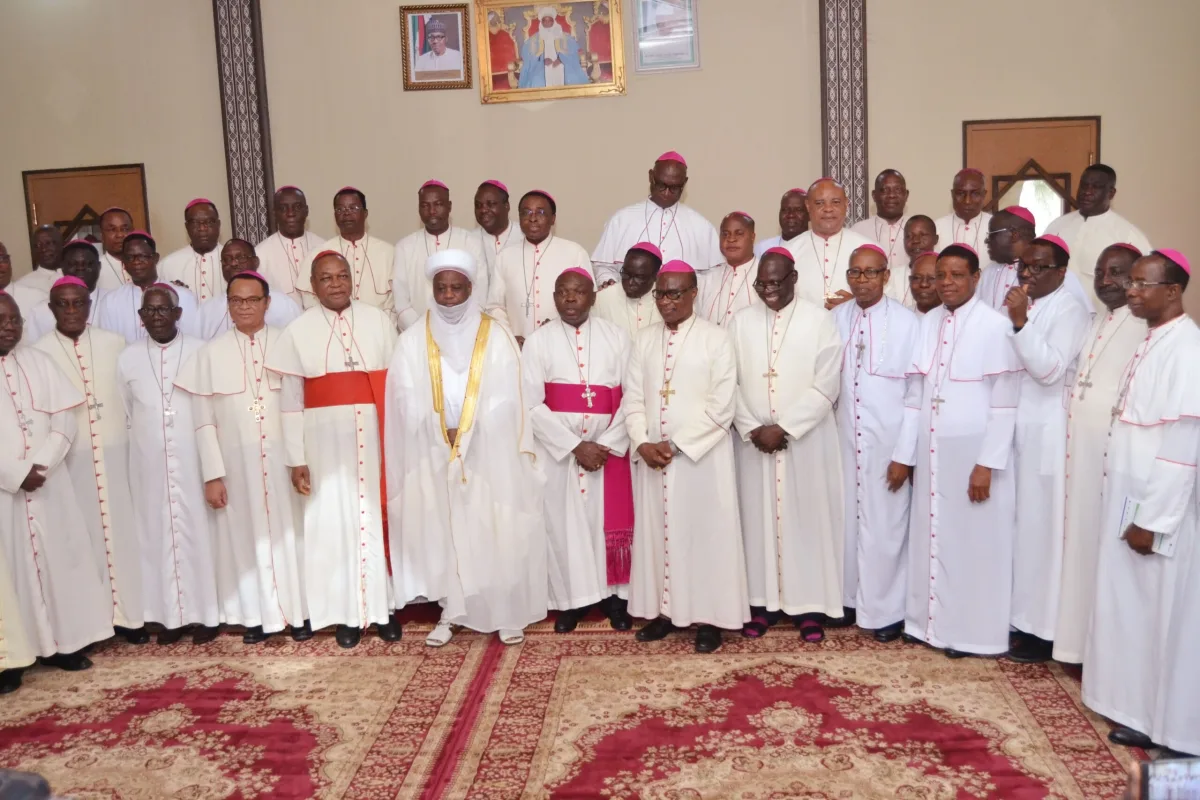
Nigeria's most senior Muslim and Christian leaders are speaking with one voice on insecurity — and it's not a calm suggestion. It's an urgent demand for action.
The Sultan of Sokoto, Muhammad Sa'ad Abubakar, and the Catholic Bishops Conference of Nigeria (CBCN) issued separate but strikingly aligned calls on Tuesday, June 16, 2026, urging the federal government to do more to stop the killings, kidnappings and displacement that have become daily realities for millions of Nigerians.
Their interventions come after a string of devastating attacks — including deadly raids on communities in Sokoto State and the abduction and death in captivity of retired Major General Rabe Abubakar in Katsina. The general's killing, in particular, sent shockwaves through the security establishment and the public.
In a message marking the start of the Islamic New Year (Muharram 1448 AH), the Sultan didn't mince words. He said the security situation demands collective responsibility — not just from government, but from every citizen and religious leader.
"The time has come for us to look inward and rededicate ourselves to Allah while working together with relevant security agencies to stabilise the nation," the Sultan said, according to a statement by JNI Secretary-General Khalid Abubakar Aliyu.
He directed imams across the country to observe Qunootun-Nawazil — special prayers traditionally offered during times of calamity, conflict or distress — during daily congregational prayers. He also asked Muslims to dedicate the first Friday prayer of the new Islamic year, scheduled for June 19, to prayers for peace and national stability.
On the Christian side, Archbishop Alfred Martins of Lagos, who is Vice-President of the CBCN, spoke during a thanksgiving Mass at Holy Cross Cathedral in Lagos. The event celebrated Anthony Okogie's 90th birthday, 60 years of priestly ministry and 55 years as a bishop.
Martins used the occasion to address the nation's leaders directly.
"Every day we hear of people being kidnapped, soldiers being ambushed and killed, communities displaced and traditional rulers fleeing their domains. It's becoming increasingly difficult to understand what's happening in our country," he said.
He said the best gift political leaders could give Nigerians — and Okogie in particular — is a country where people can live, travel and sleep without fear. He called for better welfare, motivation and equipment for security personnel, arguing that the current response isn't strong enough.
While acknowledging that the government has taken some steps, Martins said many Nigerians believe the situation has continued to deteriorate despite official assurances and ongoing security operations.
"As CBCN, we've consistently drawn attention to these challenges and suggested ways forward. While the government has explained steps being taken, the problems persist and, in many cases, are getting worse," he said.
The convergence between the Sultan and the Catholic bishops is significant. Nigeria's two largest religious communities are often divided on many issues, but on insecurity, their leaders are saying the same thing: the situation is unacceptable, and stronger measures are needed now.
The human cost is staggering. Bandits, insurgents and other armed groups continue to carry out attacks that kill dozens, displace hundreds and force traditional rulers to flee their homes. The economic impact is equally severe — farmers can't farm, traders can't trade, and entire communities are abandoned.
The calls from these religious leaders reflect a deepening anxiety across the country. Public confidence in the government's ability to protect lives and property is eroding. With no end in sight to the violence, the pressure on President Bola Tinubu's administration to deliver results is only growing.