

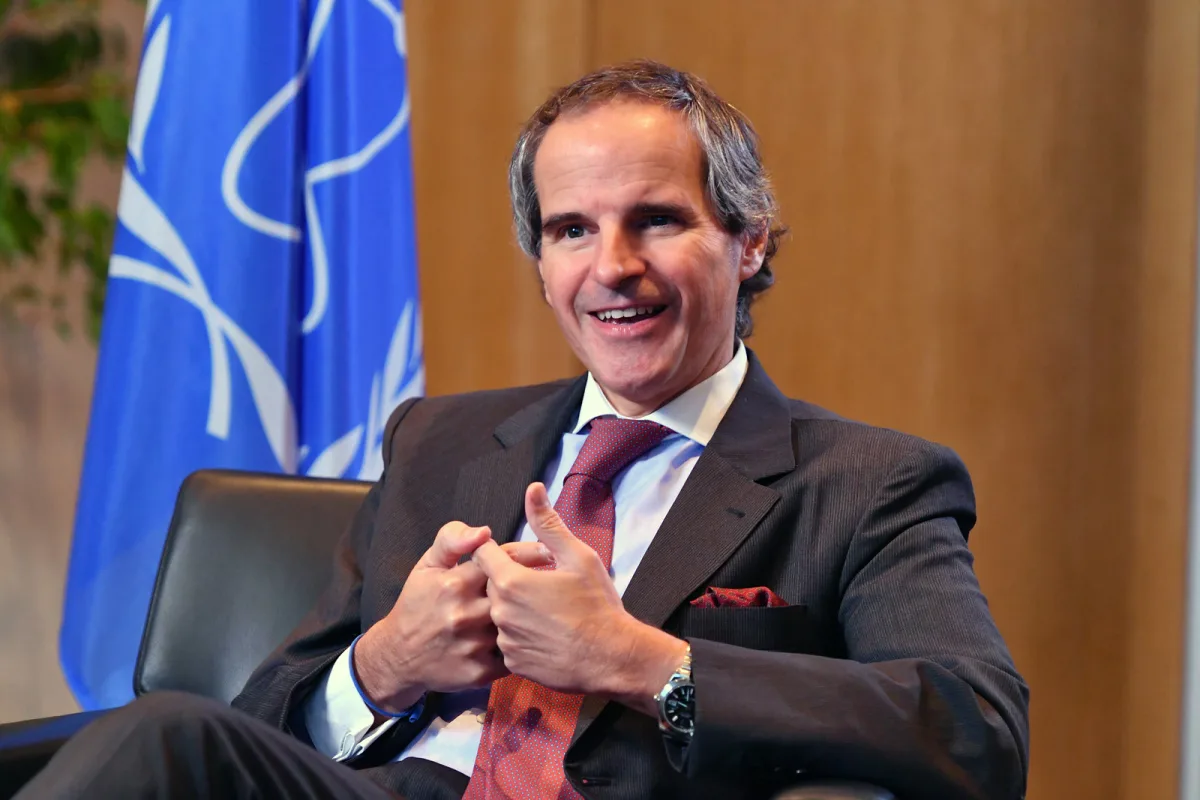
The International Atomic Energy Agency (IAEA) says discussions with Nigeria on building nuclear power plants are still ongoing, but no final decision has been made.
IAEA Director General Rafael Grossi told PREMIUM TIMES in Vienna that technical talks have continued since his last visit to Nigeria in May 2024. "We have continued working with Nigeria," Grossi said. "It's not that after that visit, things stopped."
Grossi first visited Nigeria two years ago for a cancer awareness seminar. During that trip, he met senior government officials, including Secretary to the Government of the Federation George Akume. He then described nuclear energy as "a logical move for a country of your size and importance."
But things have moved slowly since then. Grossi said Nigeria's position as a major oil exporter makes its energy choices different from those of other nations. "The discussion in your country is different from that in other countries," he said.
The IAEA boss said Nigeria is looking at nuclear power more as a way to diversify its energy sources rather than out of urgent need. "It's a matter of diversification more than a matter of need," he said. "But the conversation space is pretty much alive."
Nigeria's nuclear programme is run by the Nigeria Atomic Energy Commission (NAEC). It follows IAEA safety standards and aims to add clean, stable electricity to the national grid. The country is still in the early planning and infrastructure phases.
In September 2023, Nigeria signed a Country Programme Framework (CPF) with the IAEA covering 2024 to 2029. A CPF is a medium-term plan that guides technical cooperation between a member state and the agency. It identifies priority areas where nuclear technology can support national development.
For Nigeria, the CPF focuses on five areas: nuclear and radiation safety and security; food and agriculture; health and nutrition; water and environment; and energy planning and development.
Nigeria has been an IAEA member since 1957. This is its fourth CPF.
"The conversation space is pretty much alive, I must say."
But Grossi made clear that no final decision has been made. The country is still exploring the option. "There hasn't been a decision yet," he said. "There is like a pre-decision to explore the alternative."
For now, Nigeria's energy mix remains dominated by fossil fuels. The country is Africa's largest oil producer and also has significant gas reserves. But power supply remains unreliable, with many Nigerians depending on generators.
Nuclear power could provide a stable baseload of electricity without carbon emissions. But it comes with high costs, long construction times, and safety concerns. Building a nuclear plant typically takes a decade or more and costs billions of dollars.
Several other African countries are also exploring nuclear power. Ghana, Kenya, and Egypt have all announced plans. Egypt is the furthest along, with construction already started on its El Dabaa plant with Russian help.
For Nigeria, the next steps will depend on government decisions and funding. The IAEA says it is ready to provide technical support whenever Nigeria is ready to proceed.