

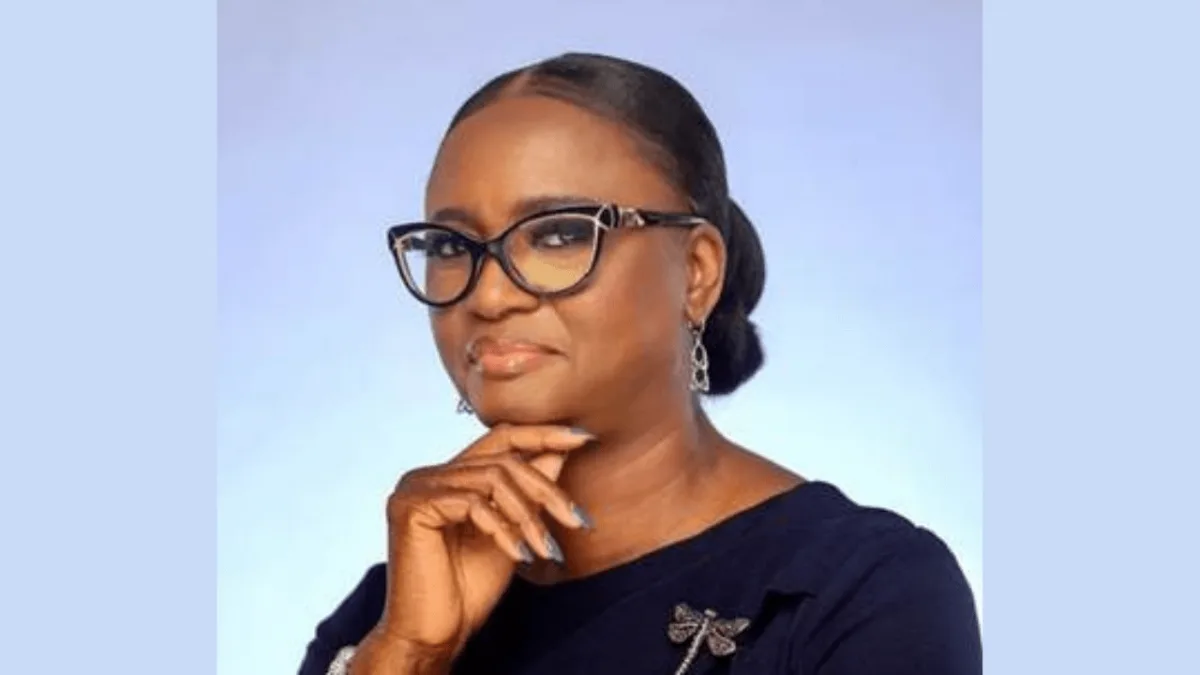
Shell has appointed Elohor Aiboni as its new Executive Vice President and Country Chair for Nigeria, making her the first Nigerian to hold the combined position. She takes over from Marno de Jong, who's stepping down after more than six years leading the company's operations in the country.
The announcement came via Shell's official X account on Thursday. The company said de Jong oversaw a period of strong operational performance and major investment decisions, including the HI offshore gas project and the Bonga North development.
Aiboni brings more than 24 years of experience within Shell. She's worked across Nigeria's offshore, shallow-water, and onshore operations, as well as international assignments in Kazakhstan and Brunei.
In 2021, she became Managing Director of Shell Nigeria Exploration and Production Company (SNEPCo) — the first woman to hold that role. Under her leadership, the Bonga deepwater field hit a major milestone: producing its one-billionth barrel of oil in 2023.
She moved to Brunei in 2024, where she was responsible for overseeing asset performance, production, and project delivery. Her new appointment takes effect on 1 August 2026.
"The new appointment takes effect 1 August 2026," Shell said.
Aiboni's appointment comes about six months after Shell signalled plans to ramp up investments in Nigeria. During a visit to President Bola Tinubu in January, Shell CEO Wael Sawan said the company was increasingly optimistic about opportunities in the country's energy sector.
"We are very keen to invest in Nigeria. But I'd say this hasn't always been the case," Sawan said at the time.
Shell has been a dominant player in Nigeria's oil and gas industry for more than three decades, primarily through the Shell Petroleum Development Company of Nigeria Limited (SPDC). The company's operations have generated substantial revenue for the government but have also been linked to environmental degradation, community grievances, and prolonged legal disputes.
Shell has faced lawsuits in UK and Dutch courts over oil pollution in the Niger Delta. In 2021, a Dutch court ordered the company to compensate Nigerian farmers for environmental damage from oil spills.
A PREMIUM TIMES investigation published last year found that several oil-producing communities, including those in Ogoniland, continue to struggle with widespread hydrocarbon pollution. Residents said recurring oil spills had contaminated farmlands and waterways, destroying farming and fishing livelihoods.
Another PREMIUM TIMES investigation published this week documented how persistent toxic gas leaks from an oil field in Bille, Rivers State, are threatening lives and livelihoods. The field was originally developed by Shell before being sold to Eroton Exploration and Production Company in 2014.
Recent evidence published by the BBC suggested that Shell continued operating the Bille oil field and the Nembe Creek Trunk Line despite internal concerns about environmental risks and ageing infrastructure. The revelations emerged during legal proceedings brought by Niger Delta communities seeking accountability for pollution linked to more than 100 oil spills recorded between 2011 and 2013.