

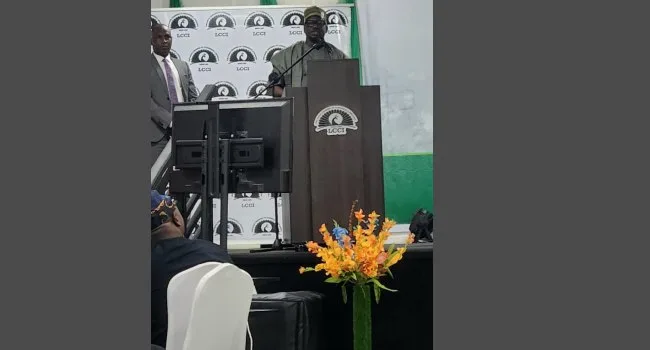
The single sharpest fact is that Nigeria's Rural Electrification Agency (REA) has identified distributed renewable energy as the country's fastest path to sustained economic growth. Dr. Abba Aliyu, the Managing Director and Chief Executive Officer of the REA, made this declaration in a keynote address at the Lagos Chamber of Commerce and Industry (LCCI) Renewable Energy Outlook Conference in Lagos on Wednesday, June 24, 2026.
Dr. Aliyu emphasized that Nigeria's industrial competitiveness will hinge entirely on its ability to build reliable, affordable, and scalable electricity systems. He noted that the country needs a comprehensive approach that incorporates various sources of energy, including the national grid, gas, hydropower, solar, and mini-grids. "Scaling mini-grids and solar infrastructure for industrial production is not about choosing between the grid and off-grid systems," Dr. Aliyu stated. "It is about designing a smarter power system that uses every viable tool available."
According to Dr. Aliyu, the renewable energy market of the future will look radically different from the power architecture of the past. He emphasized that regulation must remain forward-looking, enabling commercial innovation while protecting consumers and preserving market discipline for the future. Dr. Aliyu pointed to recent regulatory milestones by the Nigerian Electricity Regulatory Commission (NERC) as critical instruments moving the market from small pilot projects to industrial-scale deployment.
The REA MD further highlighted the significance of mini-grids, stating that a single mini-grid can power various economic activities, from homes and factories to cold rooms and digital services hubs. To support this vision, the REA has finalized a strategic framework for the National Electrification Plan, which is designed to serve as the operational anchor for universal electricity delivery. The agency has also embarked on a massive rollout of interconnected mini-grids, with over 1,000 mini-grids actively under development.
This massive deployment is funded via the $750 million Distributed Access through Renewable Energy Scale-up (DARES) program, which is administered by the REA and backed by the World Bank. Dr. Aliyu urged commercial banks and financiers to innovate beyond basic equipment asset financing and offer project preparation funds, local currency facilities, and carbon revenue monetization pathways. He emphasized that while the government can set policy, the speed and scale of deployment will ultimately depend on the active involvement of entrepreneurs, financiers, and industrial consumers.
Dr. Aliyu concluded by urging the private sector to step forward and capitalize on this ripe investment environment to secure Nigeria's industrial future. He noted that the country cannot build a sustainable energy future on permanent import dependence and highlighted the significance of industrial localization. Under the Nigeria First policy framework, the REA is leveraging its massive deployment pipelines to serve as anchor demand for local assembly, technical skills, and manufacturing.
The REA MD announced that a 3.7GW domestic renewable energy manufacturing capacity is already in the pipeline, with strategic production hubs being established across Lagos, Ogun, Bayelsa, and Kano states. This development signals a major push toward industrial localization, which is critical to securing Nigeria's industrial future.
Key Facts
- $750 million Distributed Access through Renewable Energy Scale-up (DARES) program
- Over 1,000 mini-grids under development
- 3.7GW domestic renewable energy manufacturing capacity
- Strategic production hubs in Lagos, Ogun, Bayelsa, and Kano states
- 1,000 mini-grids under development
- Distributed renewable energy identified as Nigeria's fastest path to sustained economic growth