

2026 Social Cohesion Report Reveals Dismay in the Country
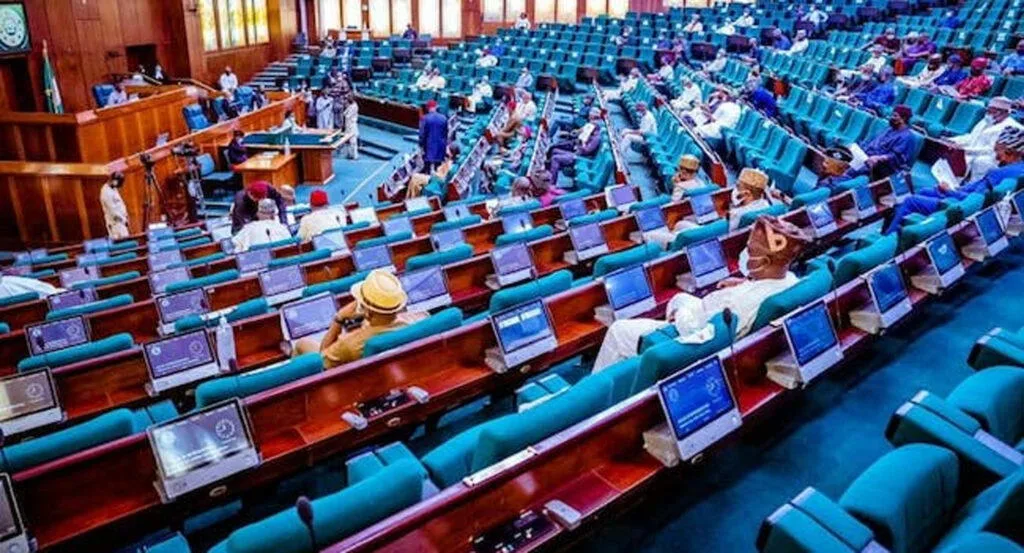
The single sharpest fact in this story is that the National Assembly is now the least trusted institution in Nigeria, with a staggering 77% of Nigerians having no trust in it. This is a huge blow to the legislative arm of government, which is supposed to represent the people.
A report by the Africa Polling Institute, released at the weekend, revealed that Nigerians have lost trust in their institutions. The report, tagged '2026 Social Cohesion Report', was unveiled by the Executive Director of API, Prof Bell Ihua, at a National Social Cohesion Dialogue in Abuja.
According to the report, 77% of Nigerians expressed little to no trust in the National Assembly, while 73% expressed little to no trust in the judiciary. This is a huge dip from last year's figures, which showed that 83% of Nigerians trusted the government of President Bola Tinubu.
The survey, which was conducted via Face-to-face Household visits, involved 5,315 interviews. The interviews were conducted in five major languages: English, Pidgin, Hausa, Igbo, and Yoruba, and geographic quotas were assigned to ensure that all States and senatorial districts were proportionately represented in the sample.
### What it Means
The report is a wake-up call for the government, which needs to take steps to restore public trust in its institutions. The government needs to be transparent and accountable, and citizens need to be given a sense of belonging and participation in the government's decision-making processes.
The report also shows that Nigerians continue to demonstrate resilience and a commitment to coexistence despite prevailing hardships. This is a positive sign, and the government needs to build on this by addressing the root causes of the problems facing the country.
### Polarization in the Country
The report also revealed that Nigerians are becoming more polarized, with 48% believing the country is much more divided today than it was four years ago. Political party affiliation (56%) was identified as the most significant factor leading to conflicts and divisions in communities, followed by ethnic (46%) and religious (44%) differences.
### Civic Participation & Patriotism
Despite the polarization, Nigerians are still willing to participate in the political process to make Nigeria a better place for all. 77% of citizens are "Extremely or Somewhat Willing" to cooperate with fellow citizens from other ethnic groups to make Nigeria more united; and 73% are "Extremely or Somewhat Willing" to participate in the political process to make Nigeria a better place for all.
### Key Facts
- 77% of Nigerians expressed little to no trust in the National Assembly.
- 73% expressed little to no trust in the judiciary.
- 72% expressed little to no trust in the government of President Bola Tinubu.
- 51% and 45% of Nigerians expressed significant trust in religious and traditional leaders, respectively.
- 44% of Nigerians are proud of being equally identified as Nigerian and from their ethnic group.