

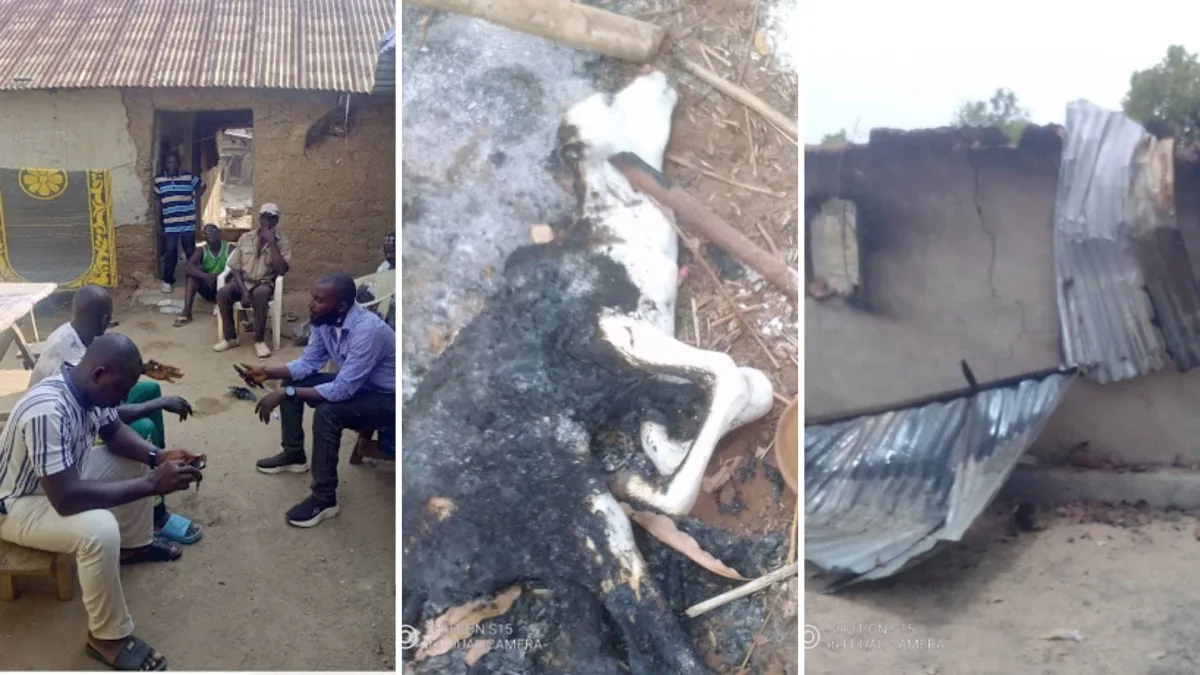
You might have missed the gruesome details of a recent farmer-herder clash in Abuja, one that has left a community in a state of shock and fear. The violence began when herders allegedly attempted to create a passage through cultivated farmland in June 2025, a move that was rejected by farmers. This led to a confrontation that was eventually separated, but not resolved.
The traditional ruler of Gurfata, Adamu Pada, said the disagreement didn't end there. A second confrontation occurred shortly after, during which a farmer was allegedly attacked with a machete and taken to the hospital, where he later died the same day. That death, according to several accounts, marked a turning point in the escalation of tensions in the community as fear and suspicion deepened on both sides.
Residents claim that at least nine individuals were identified in connection with the attack, although arrests remain disputed within the community. Mr Pada insisted that those responsible were known but had not been arrested, while the police maintain a different position.
The Nigeria Police Force, through the FCT Police Public Relations Officer, Josephine Adeh, said farmer–herder disputes in the area are usually handled through mediation rather than prosecution. She explained that whenever incidents are reported, both parties are invited for dialogue aimed at settlement, adding that no arrests were made in relation to the recent killings.
This position, however, contrasts with the accounts of residents who believe that the absence of prosecutions has contributed to a sense of impunity and recurring violence. The community has been plagued by farmer-herder clashes for years, with several people killed and injured in farmland-related confrontations.
A relative of Dahiru Yakubu, one of the victims, said the killings were preceded by years of unresolved disputes over farmland boundaries and repeated cases of crop destruction. He explained that despite repeated complaints to both community leaders and police authorities, no lasting solution was achieved, leaving residents increasingly frustrated and vulnerable to further escalation.
The herders, however, present a different interpretation of the conflict. The Chairman of Miyetti Allah in Gwagwalada, Ibrahim Chiroma, said increasing expansion of farmlands has significantly reduced available grazing routes, forcing cattle into closer contact with cultivated land. He argued that this has resulted in frequent clashes between farmers and herders.
While the conflict has left a trail of blood in its wake, there are concerns that the situation may escalate further if a solution is not found soon. The community is calling for a lasting solution to the conflict, one that would bring an end to the cycle of violence and fear that has gripped the area for years.
Key Facts
• At least nine people were killed in a farmer-herder clash in Abuja. • The clash began in June 2025 when herders attempted to create a passage through cultivated farmland. • The community has been plagued by farmer-herder clashes for years. • Several people have been killed and injured in farmland-related confrontations. • The Nigeria Police Force said farmer-herder disputes in the area are usually handled through mediation rather than prosecution.
The killings were preceded by years of unresolved disputes over farmland boundaries and repeated cases of crop destruction.
The escalation reached its peak in July 2025 when Dahiru Yakubu was killed on 29 July, followed by the killing of Musa Yatsu on 30 July, the same day Isa'ac Abubakar sustained gunshot injuries and Sa'd Yakubu was also injured. For families affected, these are not isolated statistics but repeated losses that have reshaped entire households and deepened distrust in the possibility of lasting peace.