

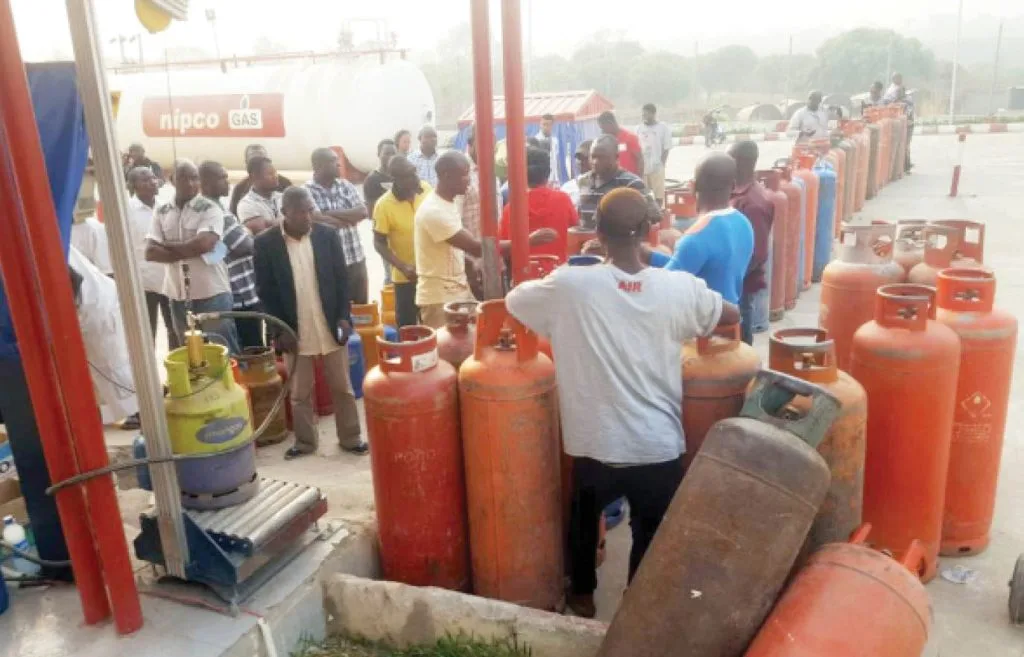
Cooking gas prices have skyrocketed to a whopping ₦1,500 to ₦1,700 per kilogram, leaving many Nigerians struggling to afford this basic necessity. The Nigerian Association of Liquefied Petroleum Gas Marketers (NALPGAM) has warned of potential public outrage against station operators due to the high prices. They're calling on the government to act quickly.
Mr. Edu Inyang, the National President of NALPGAM, has called on the Federal Government to urgently stabilize supply and pricing. He attributed the rising cost of LPG to persistent supply shortages. High depot prices, logistics bottlenecks, and escalating operational costs faced by marketers nationwide are also to blame. Inyang stated that the current trend leaves low-income earners, households, and small businesses facing severe financial strain.
It's pushing a basic necessity out of reach for millions.
"It's sad and rather very pathetic to inform the general public that Nigerians have woken up to buy cooking gas, which should be a social item, at a prohibitive cost of over N1,500 per kilogram," Inyang said. He warned that the price surge is derailing years of progress in Nigeria’s clean energy drive. Many households are already reverting to firewood and charcoal. This shift won't help the country's clean energy goals.
The shift to firewood and charcoal poses severe risks to public health. It also threatens environmental sustainability and national clean energy targets. Inyang cautioned that a failure to address the crisis could worsen food inflation. It could trigger job losses, cripple small retail businesses, and erode investor confidence. The government must act to prevent this.
Marketers are feeling the pinch, shelling out up to ₦26.2 million for a 20-metric-tonne truck. They can't afford to keep paying such high prices. The association recommended boosting domestic supply allocations. They also suggested ensuring transparent distribution, removing import bottlenecks, and deploying strategic interventions to make cooking gas affordable again. The price surge has sparked concerns about the impact on low-income households and small businesses, who are already struggling to make ends meet.
They don't know how they'll afford cooking gas at these prices.
As the situation continues to worsen, many Nigerians are calling on the government to take immediate action to address the crisis. The high cost of cooking gas is not only affecting households but also small businesses, such as food vendors and restaurants, who rely on gas for cooking. They're struggling to stay afloat. The government's response to the crisis will be crucial in determining the fate of millions of Nigerians who are struggling to afford this basic necessity. They're waiting to see what the government will do.
- Cooking gas prices have risen to ₦1,500 to ₦1,700 per kilogram
- Marketers are paying up to ₦26.2 million for a 20-metric-tonne truck
- The price surge is derailing Nigeria’s clean energy drive
- Many households are reverting to firewood and charcoal
- The crisis could worsen food inflation, trigger job losses, and erode investor confidence
The Nigerian government has been urged to take immediate action to address the cooking gas crisis. The situation is a stark reminder of the challenges facing Nigeria's energy sector. There's a need for urgent reforms to ensure that basic necessities like cooking gas are affordable and accessible to all Nigerians. The government's response will have far-reaching consequences for the country's economy and its people. It's a critical moment for the government to act.
They won't be able to ignore the crisis for much longer.