

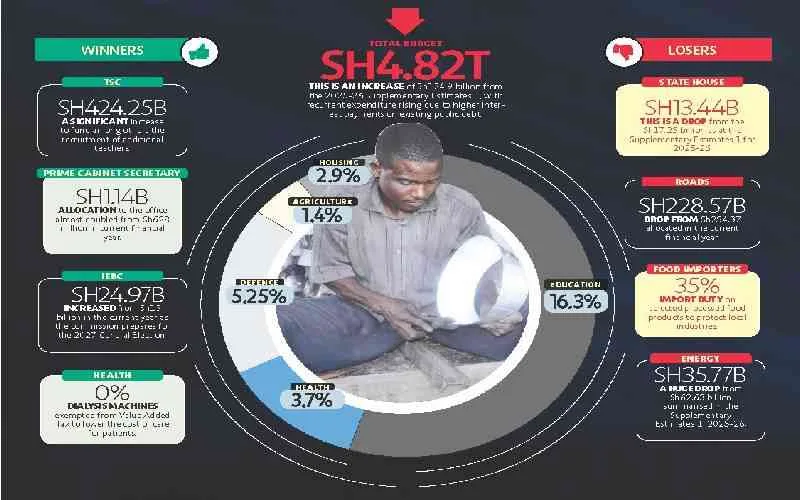
National Treasury Cabinet Secretary John Mbadi walked into Parliament on Thursday with a smile and a contradiction. The economy's healing, he said. Then he spent the next hour explaining why nobody should feel better yet.
Mbadi presented the 2026/27 Budget against a backdrop of high expectations and low patience. Kenyans are still smarting from the cost-of-living crisis, and many hoped the CS would pull a rabbit out of the hat — tax relief, subsidies, something. Instead, he gave them a tale of two worlds: an economy that's technically recovering, and a population that isn't feeling it.
The CS admitted that the government heard the public's cry for a lighter burden. But he offered little hope that the burden would actually lighten soon. Domestic and global headwinds — from a stubborn shilling to unpredictable international markets — are still battering the Treasury's plans.
Mbadi's speech was part of the broader Budget reading, a ritual that usually comes with promises of prosperity. This time, the promises were hedged. He pointed to improving macroeconomic indicators — inflation easing, growth stabilising — but those numbers don't buy flour or pay school fees.
The statement was classic Mbadi: diplomatic, data-heavy, and deflating. He took over the Treasury docket after President William Ruto's first Cabinet was reshuffled. Since then, he's been walking a tightrope between the International Monetary Fund's demands for fiscal discipline and domestic pressure for relief.
The Budget includes allocations for key sectors — health, education, infrastructure — but the details suggest more borrowing and less breathing room for households. Tax revenue targets remain ambitious, and the government is betting on economic growth to fill the gap. If growth stumbles, the shortfall will hit services — or be passed back to taxpayers.
Mbadi didn't announce new taxes in this speech, but he also didn't reverse any of the controversial ones introduced in previous years. The digital services tax, the housing levy, the higher VAT on fuel — all stay. For many Kenyans, that means the cost of living stays high.
The CS's admission that the government heard complaints but can't act on them is a rare moment of honesty in Kenyan budget politics. Usually, the Treasury paints a rosy picture and hopes nobody checks the fine print. Mbadi basically said: we know it's hard, and it's going to stay hard for a while.
Opposition MPs were quick to pounce. They accused the government of being out of touch, pointing out that macroeconomic indicators don't put food on the table. The debate in the House was heated, with several MPs demanding specifics on how the government plans to stimulate job creation and reduce inequality.
For the average Kenyan, the takeaway is simple: no relief is coming soon. The Budget is a document of survival, not transformation. Mbadi's job now is to manage expectations while keeping the economy from tipping into crisis. That means more tough conversations — and no quick fixes.
Key Facts
- Budget presented: 2026/27 fiscal year
- CS John Mbadi appointed after Cabinet reshuffle under President William Ruto
- Key sectors funded: health, education, infrastructure
- No new taxes announced, but no existing taxes repealed either
- Government betting on economic growth to meet revenue targets
The Budget goes to committee for review, then to a vote. Amendments are possible, but the core — more borrowing, no tax cuts — is likely to stay. Kenyans will have to wait for the next Budget cycle to see if the promised healing ever reaches their pockets.