

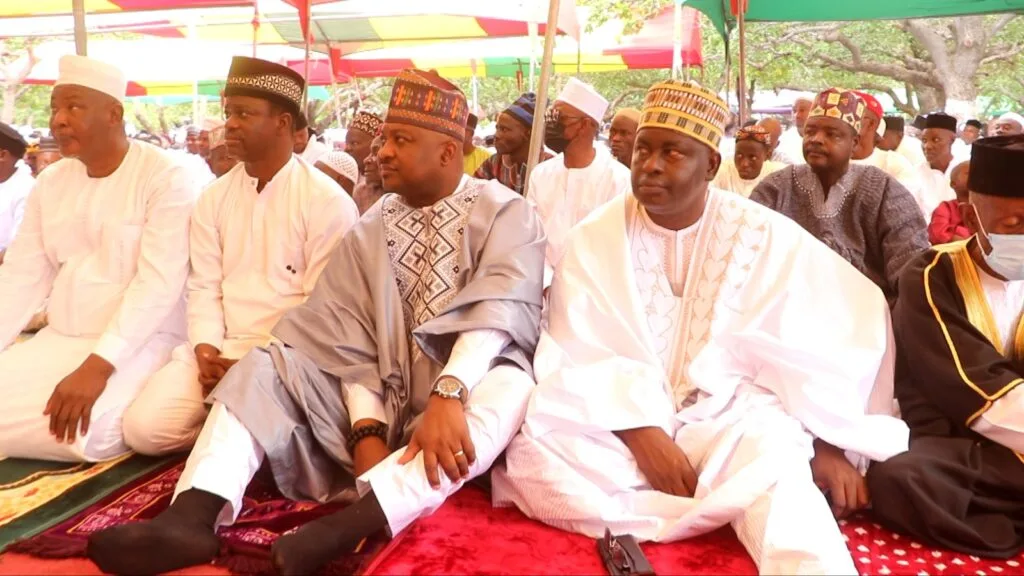
A Rare Sight at the Dzudzeidayiri Gardens
It isn't every day you see a regional minister ditching the office desk to join a religious congregation outside his own faith. That was the scene this morning at the Dzudzeidayiri Gardens in the Wa Municipality. Charles Lwanga Puozuing, the Upper West Regional Minister, made a bold appearance during the Eid al-Adha prayers. He arrived in a sharp, three-piece ash-coloured agbada, standing calmly among the faithful. For the residents of Wa, seeing a self-identifying Catholic leader participating in the two-rakat prayer session was more than just a photo opportunity.
It became an instant talking point about how different groups can actually coexist without the usual political noise.
The Message Beyond the Prayer Mat
After the prayers concluded, the Minister didn't just offer standard greetings. He pivoted to the heavier issues affecting the Upper West region. He framed the concept of sacrifice—the core of Eid al-Adha—not as a ritual, but as a practical choice for citizens.
“Eid al-Adha is about sacrifice. But sacrifice isn't only about what we can give. It's about choosing honesty over corruption, peace over violence, discipline over recklessness, and unity over division.”
He challenged the crowd to see their religious duties as a mirror for their civic lives. He pushed for a standard of living that prioritizes collective progress over individual gain.
Youth, Drugs, and the Cleanliness Crisis
Charles Lwanga Puozuing didn't hold back when he turned his attention to the state of the region. He sounded the alarm on the rising use of opioids among the youth. The Minister urged parents and teachers to step up because he believes the local talent pipeline is being threatened by substance abuse. He linked this decline to other social vices, specifically naming internet fraud and armed robbery as major threats to the region's stability. He also pointed out that the region’s once-pristine reputation for sanitation has started to slide.
He reminded everyone that a clean environment starts at home. It shouldn't just be an expectation of government contractors or municipal cleaners.
Why This Matters for the Local Economy
The Minister took the chance to tie these moral arguments into the government's current economic blueprints. He mentioned the 'Big Push Agenda' and the push for a 24-hour economy as tools meant to benefit the local population. By positioning these policies within the context of a community event, he's trying to bridge the gap between abstract policy documents and the reality of the people in Wa. He wants women and young people to tap into these infrastructure projects rather than standing on the sidelines. Maulvi Hafiz Nashir Bathi, the Ahmadiyya Regional Missionary, praised the gesture.
He noted that the presence of political leaders at such events signals that the community isn't fragmented. This grassroots engagement serves as an initial foundation for ensuring that government projects gain the local buy-in necessary to succeed, especially in areas where faith and tradition hold heavy weight.