

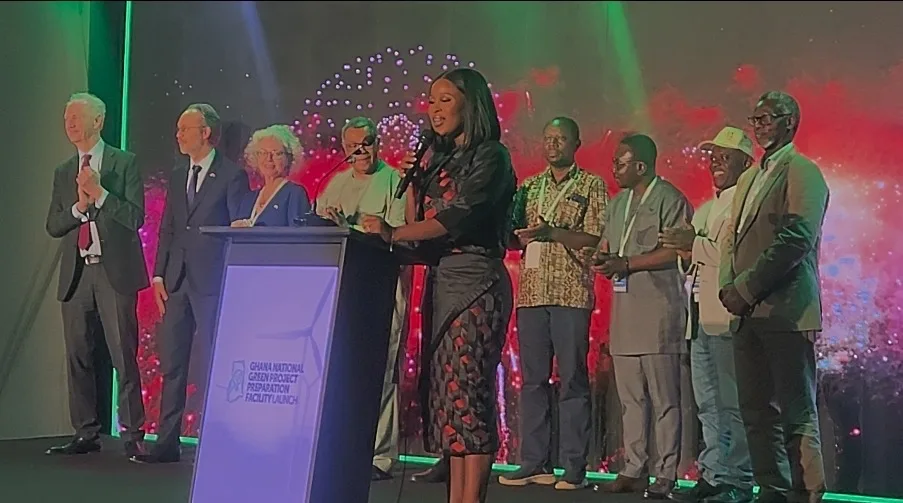
The UK government has put £5 million on the table to help Ghana stop dreaming about green infrastructure and start building it.
The Green Project Preparation Facility (PPF) was officially launched in Accra on June 18, 2026, by FSD Africa, the British High Commission, and the Ghana Infrastructure Investment Fund (GIIF). The money — announced during President John Dramani Mahama's visit to the UK as part of the UK-Ghana Growth Partnership — will be used to prepare climate-aligned projects so they can attract serious private investment.
Here's the problem the PPF is trying to solve: Ghana has plenty of good ideas for renewable energy, better waste management, climate-proof roads, and housing that can survive heavier rains. But turning those ideas into projects that investors actually want to fund is expensive and complicated. Many projects never get past the feasibility study stage. The PPF is designed to pay for that early, boring but essential work — things like environmental assessments, engineering designs, and financial modelling.
"The PPF is both timely and strategic," said Nana Dwemoh Benneh, Chief Executive Officer of GIIF. "It presents a significant opportunity for GIIF and FSD Africa to collaborate in developing a robust pipeline of bankable, climate-resilient, and investment-ready infrastructure projects."
The facility will be hosted and managed by FSD Africa, a Nairobi-based development agency that works across more than 30 African countries. They aren't new to Ghana — FSD Africa has already been advising the Ministry of Finance on debt management, helped develop the Ghana Green Finance Taxonomy, trained the National Insurance Commission on environmental and social governance, and worked with GIIF on setting up a dedicated Climate Sub-Fund.
Deputy British High Commissioner Terri Sarch made it clear the UK sees this as part of a bigger partnership. "Through the Green Project Preparation Facility, we are delighted to be partnering with FSD Africa and GIIF to turn strong Ghanaian ideas into investable projects," she said.
Why this matters now: Ghana is feeling the heat — literally. About a third of the country's electricity comes from hydropower, which is directly threatened by drought and unpredictable rainfall. More than 40 percent of workers depend on agriculture, which is highly sensitive to climate shifts. Rising sea levels and more frequent flooding are already putting pressure on roads, drains, and buildings in cities like Accra and Kumasi. Investing in climate-resilient infrastructure isn't a nice-to-have; it's urgent.
The PPF is open to both public and private sector project developers. Projects will be judged on their climate impact, financial viability, and ability to attract investment. Priority sectors include renewable energy, waste and water management, urban infrastructure, transport, housing, and social infrastructure. An initial pilot cohort of projects is already being worked on. The full pipeline will be developed through a structured appraisal process in partnership with GIIF and other Ghanaian stakeholders.
FSD Africa CEO Mark Napier described the launch as a pivotal step. "We hope that the PPF will prove instrumental in crowding domestic private capital into a series of important projects that will add value to the economy and boost Ghana's climate resilience."
The facility is expected to grow over time as more development partners come on board. For now, the £5 million from the UK is the seed money that gets things moving.
Key Facts
- £5 million initial capital from UK Government
- Launch date: 18 June 2026 in Accra
- Hosted by FSD Africa in partnership with GIIF
- Open to public and private sector developers
- Priority sectors: renewable energy, waste/water, urban infrastructure, transport, housing, social infrastructure
- 33% of Ghana's electricity comes from hydropower; 40%+ of the workforce works in climate-sensitive agriculture